Heat and drought: natural forests resist better, planted forests recover faster
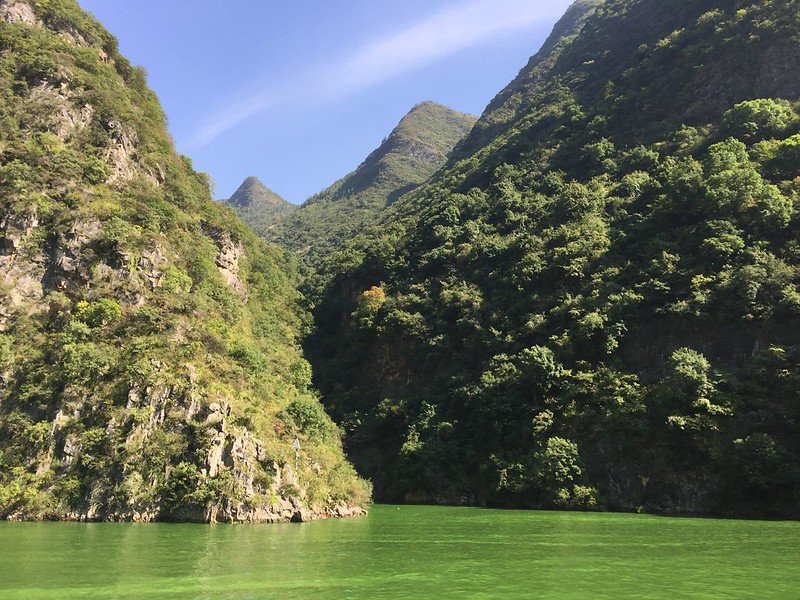 Tom Jarrett, Attribution-NonCommercial-ShareAlike 2.0 Generic (CC BY-NC-SA 2.0) Deed
A Yangtze Basin study reveals a trade-off between resistance and recovery in forests: biodiversity and structure protect natural forests, while young, fast-growing trees promote recovery in planted forests
by Matteo Cavallito
When droughts and heatwaves occur simultaneously, natural forests are more resistant than planted ones. The latter, however, recover more quickly. This is highlighted by a study published in the scientific journal Water Resources Research that analysed the response of forests in the Yangtze River Basin to the exceptional climate event of summer 2022. Using three satellite indicators related to vegetation condition, photosynthesis and productivity, researchers from the Chengdu Institute of Mountain Hazards and Environment of the Chinese Academy of Sciences were able to monitor the dynamics affecting forested areas. The findings thus revealed an unexpected trade-off between resistance and recovery.
A basin increasingly exposed to extreme events
The Yangtze Basin is China’s largest river basin by runoff volume and, the researchers note, is home to some of the country’s most important forests, which help prevent soil erosion, regulate water resources and support biodiversity. Following large-scale deforestation, which made the region more vulnerable to major floods — particularly the one in 1998 — the region subsequently underwent a major restoration effort that led to the expansion of planted forests, which now cover an area comparable to that of natural forested areas. In recent years, however, these ecosystems have increasingly been affected by climate change, particularly the growing frequency and intensity of compound drought and heatwave events.
Phenomena that, “unlike isolated droughts or heatwaves”, the authors explain, “can amplify plant physiological stress, deplete soil moisture, and trigger a cascade of ecosystem disturbances due to their co-occurrence and prolonged duration”.
Against this backdrop, the researchers set out to determine not only which forest type was more severely affected, but also which could recover more quickly. In this respect, the study notes that “the unprecedented compound drought and heatwave (CDHW) event in 2022 provided a unique opportunity to assess the responses of planted and natural forests to such extreme climatic disturbances”.
The greater resistance of natural forests
By assessing specific variables such as the kernel normalized difference vegetation index (kNDVI), which measures plant activity and vigour, and gross primary productivity (GPP), which indicates the carbon fixed by vegetation itself, and by considering the high-resolution global dataset of solar-induced chlorophyll fluorescence (GOSIF), which describes photosynthetic activity, the authors reached a clear conclusion: during the 2022 event, planted forests recorded a greater decline in vegetation activity. Natural forests, by contrast, showed a greater capacity to limit damage.
The explanation lies largely in the structure of the two systems, whose differences appear to translate directly into their differing ability to cope with the extreme event.
With their greater species diversity, taller and more layered canopies, and greater biomass, for example, the natural forests examined “buffered the direct impacts of the compound drought and heatwave events event and exhibited greater resistance”. Forested areas “established through planting or seeding”, on the other hand, “are typically single-aged, fast-growing stands characterized by simplified canopies, lower species diversity, and higher stand density, traits that can increase exposure to simultaneous water and thermal stress”.
A trade-off between resistance and recovery
In the aftermath, however, the picture changes. In 2023, the study notes, planted forests experienced significantly faster recovery than natural forests, especially under the most extreme conditions. The authors attribute this result to the prevalence in plantations of young trees and fast-growing species, which are able to quickly resume their activity once water availability is restored.
In contrast, the features that protect natural forests during the crisis — older trees, greater biomass and a more complex structure — can slow the return of natural forests to pre-event conditions.
Overall, the study shows “a clear trade-off between resistance and recovery among forest types”, thus highlighting the need to consider both dimensions in the management of these ecosystems. The authors, in particular, suggest replacing single-species plantations with the creation of mixed and more diverse forested areas. At the same time, the conservation of natural forests remains essential to maintaining ecosystem stability and hydrological functions in the face of increasingly disruptive climate events.
 Quintin Soloviev, CC BY 4.0