Utilizing agricultural waste to reduce plastic in soils
The European project SOUL has concluded its first year of activity. Seventeen partners are working to develop 11 innovative products, each composed of at least 95% renewable raw materials. Field trials are planned in five European countries
by Emanuele Isonio
Is it possible to transform agricultural waste into innovative materials—such as compostable biopolymers—that can replace conventional plastics and, once their purpose has been served, biodegrade in the soil without harming the environment? This is the challenge being addressed by SOUL, a European research and innovation project that aims to develop 11 bio-based products intended for use in agriculture and other outdoor applications.
After twelve months of activity, the 17 consortium partners met in Madrid on October 7th and 8th to take stock of the results achieved and plan the next stages of the research. The outcome of the first year is positive: the initial biomaterials have already been shared with the companies tasked with transforming them into finished products, and one formulation has been produced on an industrial scale.
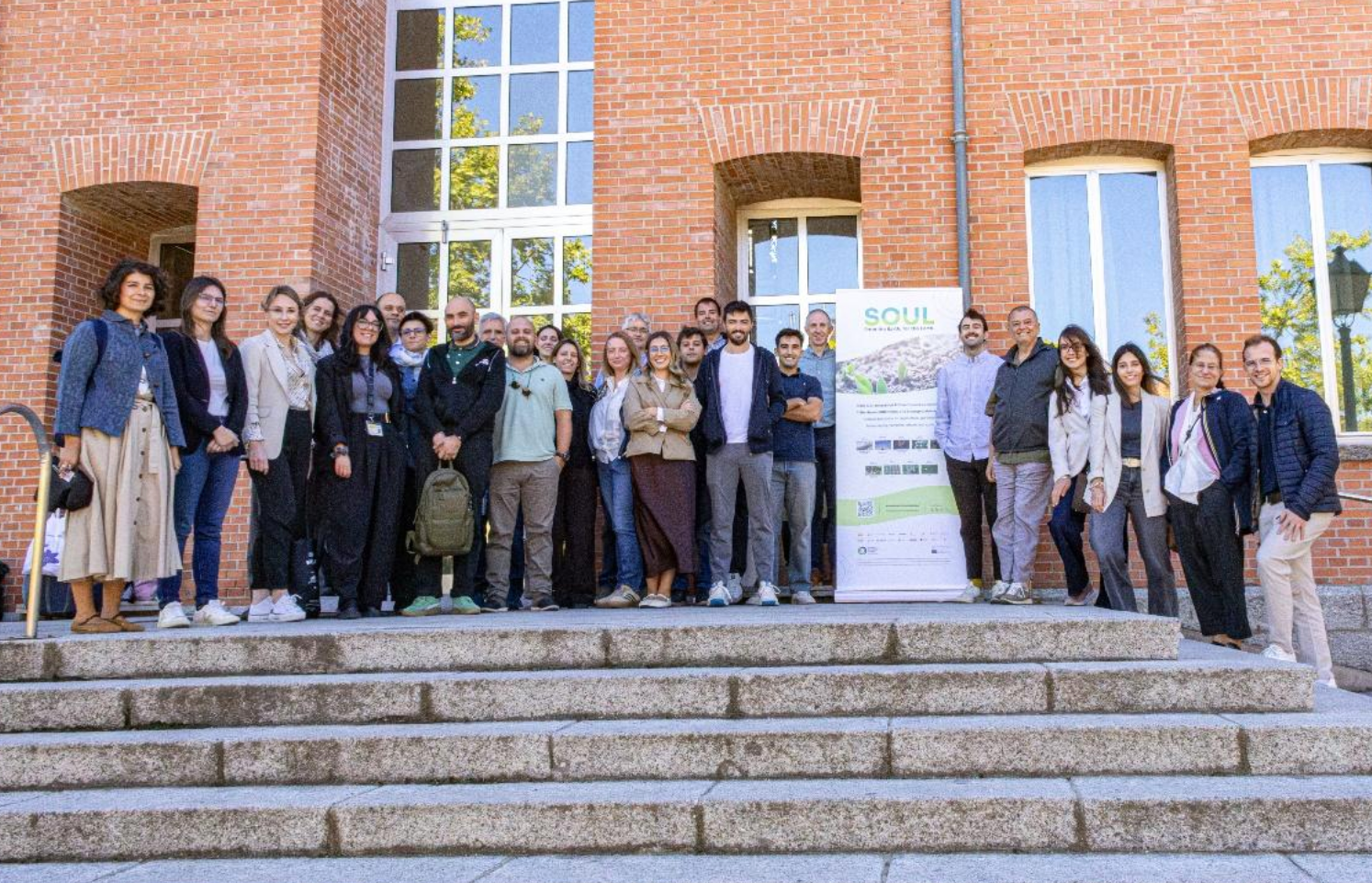
Representatives of the 17 SOUL project partners during the meeting in Madrid in early October. PHOTO: SOUL project
Eleven products to reduce the impact of plastics
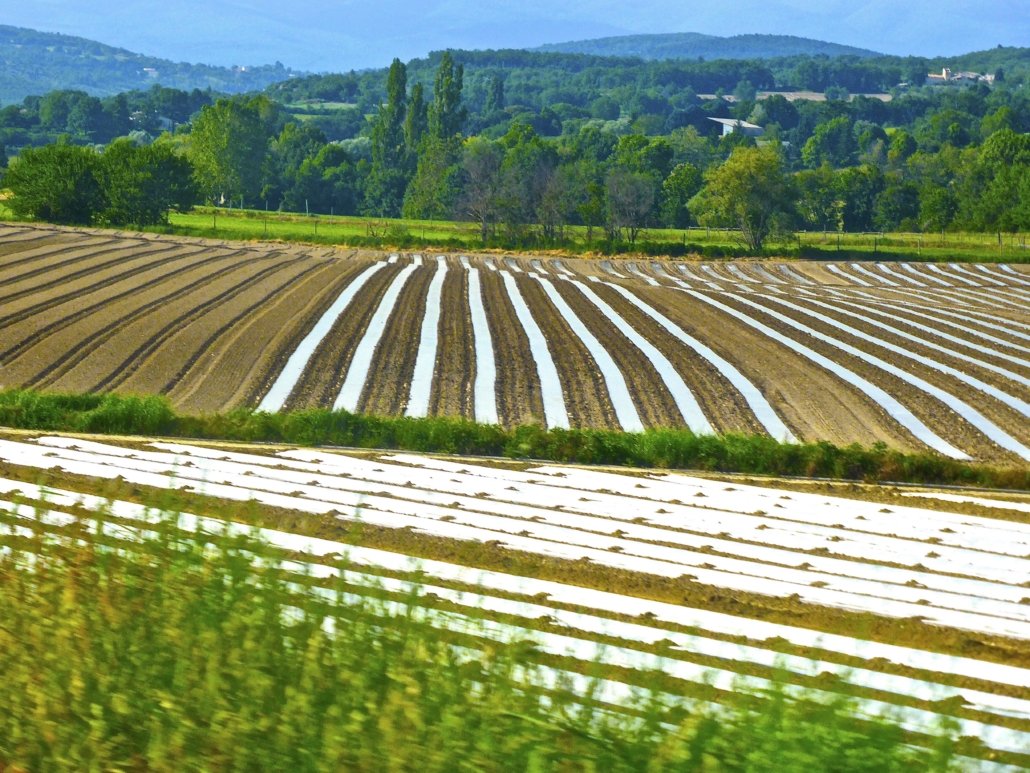
Agriculture makes use of numerous plastic products that can be difficult to recover once they have served their purpose. Examples include mulching films—used to protect crops and suppress weed growth—as well as the ties and clips used to support plants. In some applications, fragments of these materials may remain in the soil, contributing to microplastic contamination.
SOUL focuses on products that deliver the necessary performance during use while offering more sustainable end-of-life management solutions.
The project encompasses 11 innovative products, including mulching films, coatings for controlled-release fertilizers, agricultural clips and ties, pheromone dispensers, turf reinforcement netting, tree guards for saplings, and infill materials for sports fields.
A common feature is their high content of renewable raw materials—at least 95%, according to the project’s objectives. The resources used are derived from agricultural residues, by-products of the agri-food industry, and low-impact crops grown on marginal land.
The ambition is twofold: to reduce reliance on fossil-based raw materials and to improve the management of products at the end of their life cycle. Depending on the specific application, the proposed solutions include soil biodegradation, composting, reuse, or recycling.
Innovative materials, yet compatible with existing technologies
One of the most significant challenges concerns the feasibility of producing these new materials using technologies already available within the plastics industry.
For this reason, the project involves both research centers and companies specializing in the development and processing of biomaterials.
Novamont, CSIC, EVOenzyme, and AITIIP are working on refining the new formulations, sharing scientific expertise and experimental results. In parallel, industrial partners such as Tenax, Sicor, and Moses are handling the transformation of these materials into finished products.
The first year has already yielded concrete results. As explained by Carolina Peñalva, the project coordinator at AITIIP, all planned interim objectives and milestones have been met on schedule. “The partners have already begun sharing the first soil-biodegradable materials with manufacturing companies, and one formulation has been produced on an industrial scale,” Peñalva stated during the annual meeting in Madrid.
In the coming months, validation activities on an industrial scale will continue, alongside preparations for field trials.
Biodegradable does not automatically mean harmless
A central aspect of the project concerns the assessment of the environmental performance of the new materials.
The fact that raw materials are derived from renewable sources does not, in itself, guarantee that a product will be biodegradable. Furthermore, a material’s ability to biodegrade must be evaluated under the specific environmental conditions expected during its use and at the end of its life cycle, while also ensuring there are no unintended ecotoxic effects.
For this reason, SOUL dedicates a significant portion of its activities to evaluating biodegradation, ecotoxicity, and the impact on soil fertility.
Normec OWS has begun analyzing samples of biomaterials provided by the project partners, while AIMPLAS is developing a tool to model and predict how these materials behave during the biodegradation process.
The project also follows the “Safe and Sustainable by Design” approach, which integrates safety and sustainability considerations from the very earliest stages of design. These evaluations include a Life Cycle Assessment (LCA) to examine the environmental impacts of the solutions being developed.
The goal is to ensure that replacing conventional plastics with new materials does not simply shift environmental impacts from one stage of the production cycle or end-of-life phase to another.
Five countries to put new products to the test
Following an initial year primarily dedicated to developing materials and defining verification protocols, SOUL is preparing for a new phase: testing under real-world conditions.
Five demonstration sites are planned—in Italy, Spain, Portugal, Poland, and Ireland—where the performance of the products will be evaluated across various environmental and operational contexts.
The validation program is coordinated by the Polish institute IUNG (Institute of Soil Science and Plant Cultivation). A detailed testing plan will be finalized in the coming months, with input from the project’s consortium partners.
These trials will make it possible to assess how the materials perform in their intended applications and to gather data essential for evaluating their potential for future commercialization.
A European network connecting research, businesses, and farmers
SOUL goes beyond mere technological development. The project also aims to foster dialogue among researchers, businesses, farmers, policymakers, and other stakeholders interested in innovation within the bioeconomy.
To this end, a Multi-Actor Advisory Panel (MAP) was established; this consultative group held its first meeting in September 2026. The panel serves as a channel for gathering input and observations from parties outside the consortium, helping to steer product development toward addressing concrete needs.
Re Soil Foundation – a project partner responsible for communication, dissemination, training, and stakeholder engagement – presented the results of initiatives carried out during the first year at the meeting in Madrid.
Meanwhile, the European Bioeconomy Bureau monitors the evolution of European policies concerning the bioeconomy and innovative materials. Last May, it helped organize the project’s first workshop in Brussels, which focused on sector-specific policies.
Coordinated by the Spanish organization Fundación AITIIP and supported by the Circular Bio-based Europe Joint Undertaking (CBE JU)—with co-funding from the European Union—SOUL brings together 17 European partners and one Swiss associate partner.
The challenge for the coming years will be to demonstrate that materials derived from renewable resources can deliver adequate industrial performance, reduce the environmental footprint of products, and help prevent soil contamination.
If confirmed through testing and environmental assessments, this outcome could open up new opportunities for the use of bioplastics in agricultural activities and other sectors where recovering materials after use remains a significant challenge.

 Quintin Soloviev, CC BY 4.0
 obi Kellner, CC BY-SA 4.0