In Alaska, soil is warming faster in regions with continuous permafrost
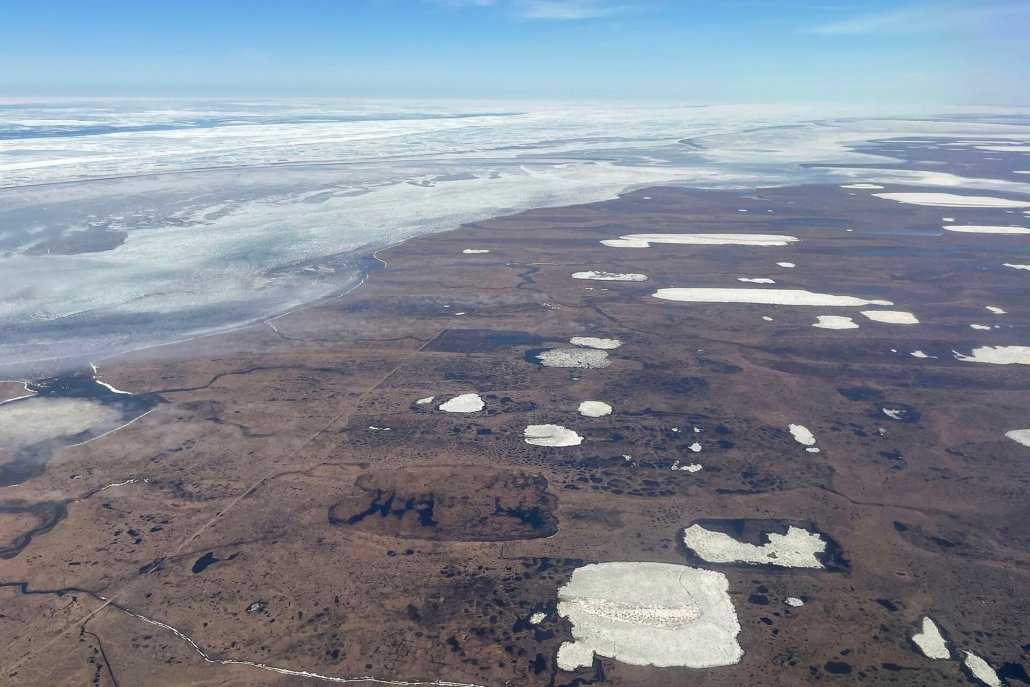 Quintin Soloviev, CC BY 4.0
A study tracks permafrost temperatures from 1997 to 2023, providing new data to forecast thaw and plan infrastructure. Greater depth does not slow the warming trend
by Matteo Cavallito
Alaska’s soil is warming even at depth, with the fastest increases occurring in the Arctic region characterised by continuous permafrost. These findings come from a study by Washington State University, which analysed temperatures recorded between 1997 and 2023. The findings show that polar amplification, the phenomenon whereby warming is more intense at higher latitudes, also extends to soil temperatures.
“Soil and air temperatures warmed significantly throughout Alaska”, states the study, published in Frontiers in Climate. “Polar amplification was evident in soil temperatures as well as air temperatures, with warming occurring fastest in the continuous permafrost region (the Arctic) and decreasing with latitude”.
Understanding how soil responds
In Alaska, air temperatures are rising twice as fast as in the contiguous 48 US states. Against this backdrop, understanding how soil responds is essential: permafrost thaw can lead to the release of carbon dioxide and methane, fuelling further warming and compromising roads, buildings and pipelines constructed on frozen ground. However, atmospheric warming does not affect soil temperatures to the same extent.
“Although air and soil temperature trends are certainly coupled, they are not interchangeable, because soils are likely to be buffered from extreme air temperatures during long winters with consistent snow cover”, the study notes.
Snow cover insulates the ground, keeping it warmer than the air in winter while also buffering the soil against atmospheric warming. Moisture, vegetation and landscape features also play a key role. Understanding these processes requires direct measurements, which are difficult to collect across such a vast and often remote territory.
Soil warms fastest in the continuous permafrost region
To address this challenge, Washington State researchers Erin E. Oliver and Claire L. Phillips combined data from 43 weather stations, with records ranging from 10 to 27 years, grouping the stations according to whether they were located in regions with continuous, discontinuous or no permafrost. Soil temperatures were analysed at depths of 5, 20 and 50 centimetres, with measurements at 70, 95 and 120 centimetres included only in the continuous permafrost region. Average soil warming reached 0.64 °C per decade in the continuous permafrost region, compared with 0.37 °C in the discontinuous permafrost region and 0.35 °C in areas without permafrost.
In the continuous permafrost region, air temperatures rose even faster: 1.15 °C per decade, compared with 0.64 °C for soil. In the other two regions, the difference between air and soil warming rates was not statistically significant.
Greater depth, however, did not slow the warming trend: “Soil temperatures were warming across the soil profile (measured from 5 to 120 cm in the Arctic, and 5–50 cm at lower latitudes) and with no significant differences across measured depths within a region”, the study reports. “People tend to think that soil temperatures are more stable as you go deeper. The seasonal fluctuations do drop out, but the long-term warming trend was actually more obvious at depth“, Phillips explained. In deeper soil layers, temperatures fluctuate less from season to season, making it easier to distinguish long-term warming from normal seasonal variations.
Snow and seasons help predict changes
Warming follows different seasonal patterns. In the continuous permafrost region, the largest increases occur in winter and spring; in the discontinuous permafrost region, mainly in winter; and in areas without permafrost, in summer. Snow depth also makes a difference: the thicker snowpack in central and southern regions provides greater insulation than the thinner cover in the Arctic region.
“In all three regions, the correlation was stronger when snow was not present than when it was present. Additionally, snow depth affected the extent of thermal insulation of soil from snow cover”, the authors write.
The study thus provides a basis for improving forecasts of future thaw and informing infrastructure planning. It does not directly measure the emissions but clarifies where and when the ground is warming. Future changes in precipitation and snow cover could alter this response: monitoring air, soil and snow together will therefore be essential to understanding changes in permafrost and guiding adaptation efforts.
 obi Kellner, CC BY-SA 4.0
 Oded Gilad, CC BY-SA 4.0
 Hans Hillewaert, CC BY-SA 4.0