Rainfall controls how African winds fertilize the Amazon
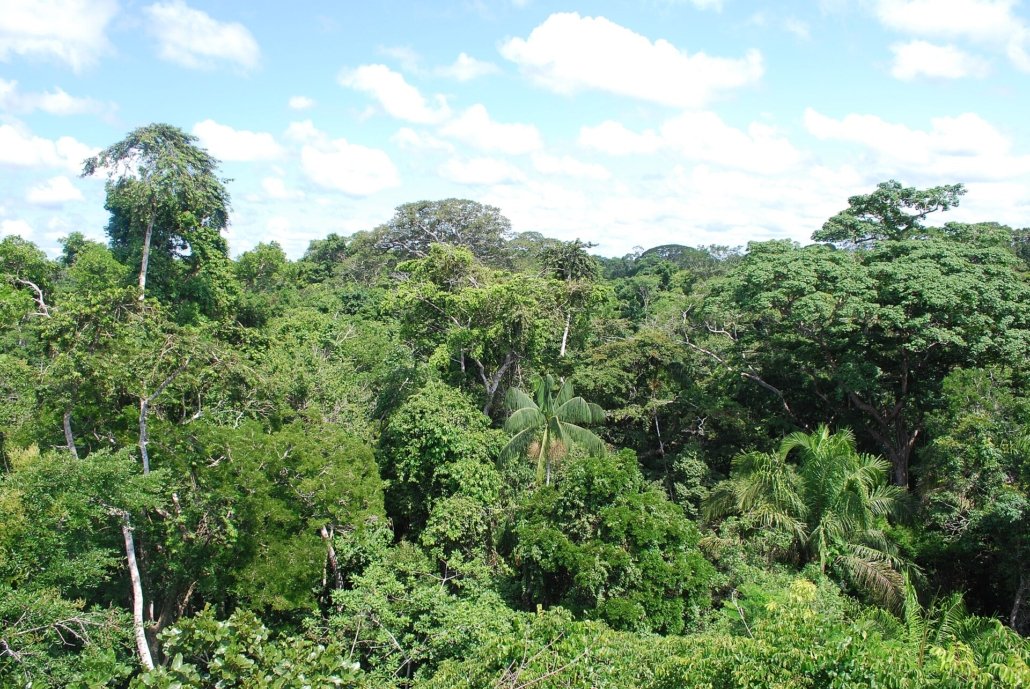 Ivan Mlinaric Attribution 2.0 Generic CC BY 2.0 Deed
International study reveals how atmospheric systems regulate the availability of nutrients carried by air currents across the Atlantic from Africa to the Amazon
by Matteo Cavallito
The advance of cold air masses in the Northern Hemisphere may influence the fertility of Amazon soils. This is the finding of a study coordinated by Brazilian and German researchers and published in the journal Geophysical Research Letters, according to which large-scale atmospheric systems control the transport of nutrient-rich aerosols from Africa to the Amazon. According to the authors, cold waves and high-pressure anomalies in the South Atlantic alter rainfall patterns and, in turn, determine whether the world’s largest tropical rainforest receives “clean” air or air laden with particles.
The discovery calls for a rethink of the causes behind the phenomenon. Until now, scientists believed that changes in wind direction played an almost exclusive role. The study instead highlights the central role of rainfall and its ability to “wash” the atmosphere as aerosols travel across the Atlantic.
Amazon soils depend on African nutrients
For Amazonian soils, the external input of nutrients has always been crucial. “The atmospheric transport of trace gases and aerosol particles plays a critical role in ecosystem dynamics by delivering essential macro- and micronutrients”, the study explains. “In strongly weathered and leached rain forest soils, phosphorus is the most limited element, followed by calcium, potassium, and magnesium”.
To understand the mechanisms regulating atmospheric transport between Africa and South America, researchers used daily measurements of “black carbon” collected at the Amazon Tall Tower Observatory (ATTO), a 325-metre-high tower located in the Uatumã Reserve in Brazil.
The study
Black carbon is a soot produced by the combustion of biomass and fossil fuels and serves as a useful indicator for tracking the transport of particles over long distances. During the rainy season, 60% of the total amount found in the Amazon comes from Africa.
In the study, data collected between 2015 and 2022 were compared with global meteorological information to identify possible correlations between atmospheric circulation, rainfall and aerosol concentrations.
The researchers identified days characterised by maximum and minimum rainfall along the tropical Atlantic belt, distinguishing between “clean” and “polluted” periods. The resulting atmospheric maps made it possible to observe how aerosols cross the ocean before being distributed across the Amazon basin through low-level jet streams.
Rainfall, not wind, determines nutrient transport
The results showed that the rainiest days along the tropical belt generally coincide with clean-air conditions over the Amazon. Furthermore, the authors explain, “composite analysis linked these rain events to synoptic systems like U.S. cold air outbreaks and South Atlantic high-pressure anomalies, which enhance moisture convergence and rainfall, promoting aerosol removal”.
This atmospheric configuration strengthens low-level wind convergence over the equatorial Atlantic, increasing moisture transport towards South America and intensifying rainfall.
Rain, in turn, “cleans” the atmosphere by removing much of the suspended particulate matter before it reaches the Amazon rainforest. The discovery therefore challenges the hypothesis commonly accepted by researchers. In other words, it would not primarily be the direction of air masses that determines nutrient transport; rather, the process appears to be driven mainly by rainfall intensity along the transatlantic route.
Climate balance at risk
According to Luiz Augusto Toledo Machado, professor at the University of São Paulo and co-author of the study, quoted by FAPESP Agency, the data “demonstrate that there’s an interconnection, a symbiosis of life on the Planet”. However, Machado — who also collaborates with the Max Planck Institute in Mainz, Germany — adds that “climate change affects this pattern, causing a disruption whose outcome and consequences for future ecosystems are still unknown”.
Understanding how temperature variations will affect atmospheric circulation is therefore essential not only for predicting the future of the Amazon rainforest, but also for assessing the effects on the Earth’s climate balance. If nutrient transport were to decline or shift course, the Amazon’s ability to absorb carbon could be put at risk — and with it, its capacity to help mitigate the effects of global warming.
 Photo: Thomas Bjørkan CC BY-SA 3.0
 Re Soil Foundation