Bees and biodiversity: a revolutionary radar is changing the way pollinators are monitored
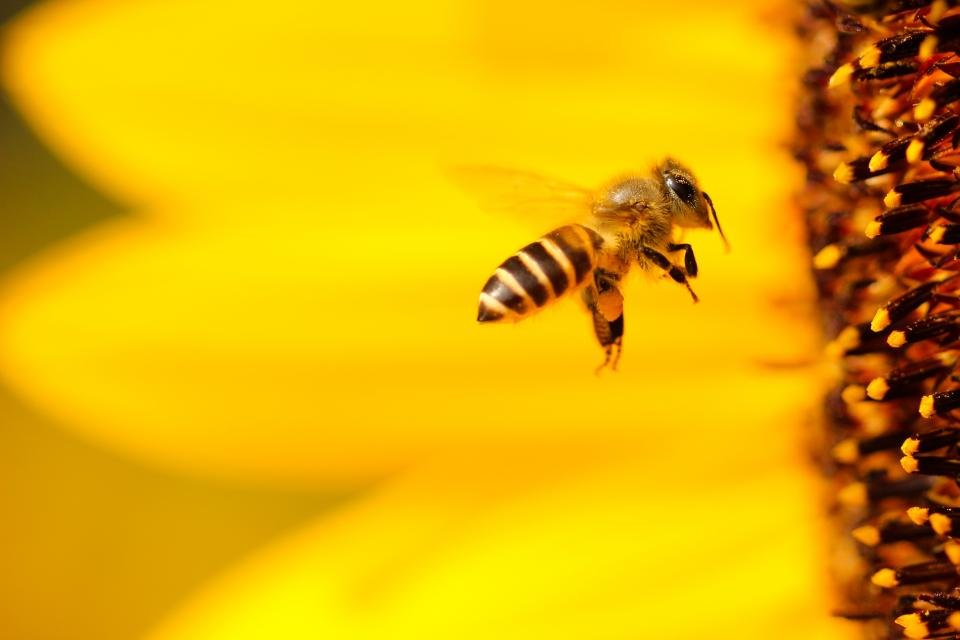 Boris Smokrovic CC0 1.0 Universal CC0 1.0 Deed
 The technique developed by Trinity College Dublin and the Technical University of Denmark can identify bees with 85% accuracy while monitoring their health and behaviour. A millimetre-wave radar system proved decisive
by Matteo Cavallito
A new technology could open up fresh opportunities for the identification and monitoring of bees and, more broadly, the world’s main pollinators. Developed by scientists at Trinity College Dublin and the Technical University of Denmark, the new approach is described in a study published in PNAS (Proceedings of the National Academy of Sciences) Nexus. The researchers outline a new radar-based technique that could fill a crucial gap in global conservation efforts for these insects.
Over the years, the researchers note, most monitoring activities have focused on counting insect numbers without taking species diversity into account. This is a major limitation, considering that not all insects visiting flowers contribute equally to pollination. The newly proposed method aims to address this issue.
A new method for identifying insects
The new method relies on a detailed analysis of insects’ “wingbeat signatures”, derived from radar reflections of millimetre electromagnetic waves, making it possible to distinguish species with a high degree of accuracy. “Although ML-based species identification has been proposed for image systems, its application to monitoring and classification of insects remains limited, due to high susceptibility to poor image quality and varying light conditions”, the study explains.
“mmWave radar offers access to biomechanical characteristics that are not visible to the human eye or cameras”, the researchers continue. “These characteristics are encoded in the harmonic patterns generated by insect wingbeats and reflected in the radar signal”.
Another key factor is the use of machine learning, which makes it possible to identify the most relevant characteristics for classifying pollinators with 85% accuracy. Given the growing integration of millimetre-wave systems, such as 5G/6G networks and IoT technologies, into communication infrastructures, the study notes that the new method offers a scalable and cost-effective solution for high-resolution monitoring of insect biodiversity.

Bees and pollinating insects in general play a crucial role in food security and ecosystem health. Here are five of the “services” supported by their presence. SOURCE: FAO archive.
A useful tool for conservation strategies
The implications of the new technology are significant. “Crucially, the approach means we can accurately identify different species, even telling apart very closely related insects. That is very hard to do visually, or via other existing technological tools”, explained Ian Donohue, professor at Trinity College and co-author of the study. “And unlike large-scale monitoring systems, this technique can also operate cheaply and effectively over a small spatial range, making it particularly suited to studying insect activity directly in and around flowers.”
In other words, the new system allows researchers to identify in real time which insects are actually performing the role of pollinators, rather than simply passing through the area.
The system also makes it possible to monitor the number of different species over time, providing a much more accurate assessment of their health status. By identifying the range of species visiting specific plants, this approach could also help design targeted conservation strategies and improve ecosystem restoration efforts. Developed under controlled laboratory conditions, the new method will now be tested in real outdoor environments.
Three out of four crops depend on bees and pollinators
In the future, the researchers explain, it should be possible “to push the limit of the technology to provide not only species classifications and detection of changes in biodiversity and community structure but also potentially to monitor shifts in insect behavior through detection of unusual perturbations in their wing-beat patterns”. Such an enhanced system could provide concrete support for efforts to protect bees and pollinators in general, on which, as is well known as is well known, three quarters of the world’s food crops depend.
The global decline of pollinators is now considered one of the main threats to biodiversity and food security.
In Europe alone, the European Commission notes that one pollinator species out of three is declining, while one in ten is threatened with extinction. According to the FAO, factors such as fragmented habitats, pesticides, intensive agriculture and climate change are all contributing to this trend, with the risk of serious consequences for both the global economy and food security.
 Photo: Thomas Bjørkan CC BY-SA 3.0
 Re Soil Foundation