
Crucial trees: urban canopy loss drives up mortality rates
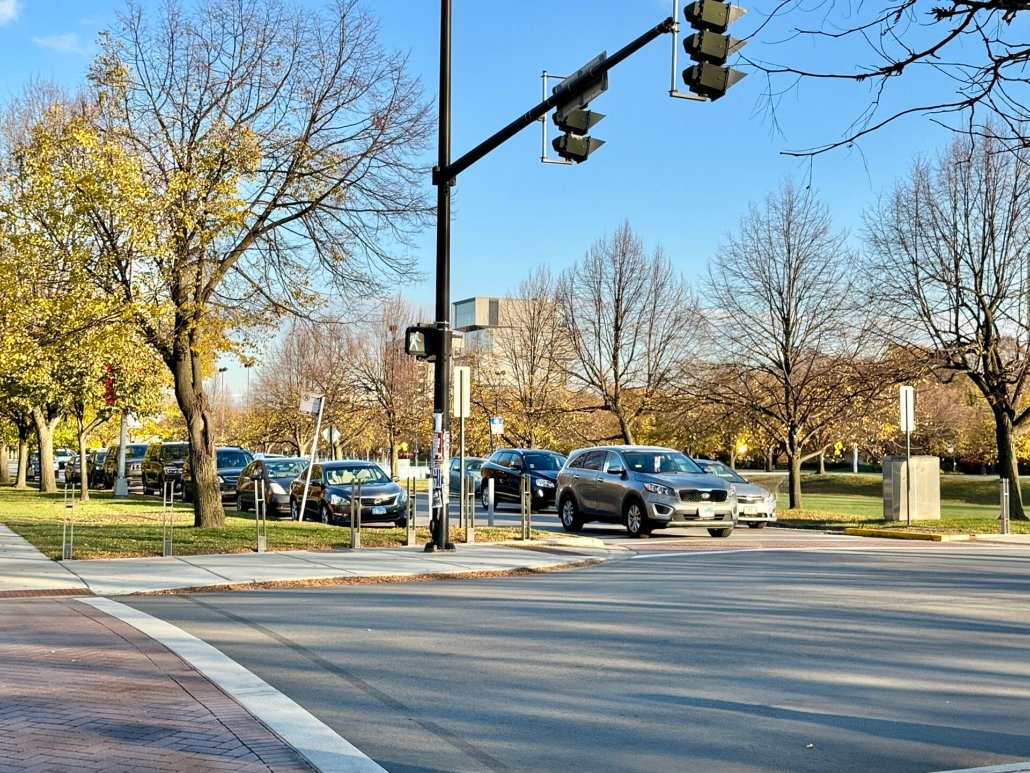 Warren LeMay CC BY-SA 2.0
A research conducted in Chicago links increased tree canopy cover to lower mortality. Protecting mature trees is more effective than planting new ones, the study has found
by Matteo Cavallito
Changes in tree canopy cover over time, rather than the amount of tree cover alone, may affect the health of urban residents. This is according to a study conducted by Northwestern University in Evanston, Illinois, and published in the journal GeoHealth. The research, which examined a decade of data from the city of Chicago, does not prove that tree loss directly caused the deaths recorded. It does, however, point to a clear link “between increasing tree canopy cover (TCC) over time and reduced mortality.” More specifically, reductions were observed “for all-cause, cardiovascular, respiratory, mental health, and musculoskeletal(MSK)-related deaths.”
Urban heat and inequality
Trees can reduce temperatures through shade and evapotranspiration, helping to counter the urban heat island effect. However, these effects and their impact on health are unevenly distributed within cities. In this respect, Chicago offers a particularly relevant case study. The Illinois city has experienced substantial warming in recent decades and is still marked by the severe 1995 heat wave, which caused more than 700 deaths, the researchers note. It also has a long history of unequal investment in urban green spaces, which appears to have consequences for public health.
“Our spatial analysis reveals the clustering of persistent health disparities,” the authors explain. “Neighborhoods on the South and West Sides of Chicago continue to experience elevated mortality rates despite higher-than-average TCC, underscoring the complexity of contributing factors such as heat stress, canopy loss over time due to poor maintenance, and socioeconomic inequities.”
By contrast, neighborhoods close to Lake Michigan generally benefit from lower temperatures, while those near forest preserves have the most extensive tree canopy cover. The overall picture, however, remains complex. Factors such as income, access to healthcare, pollution, population age, features of the built environment and proximity to water all help shape health risks.
A 1% increase in tree canopy cover means 10% fewer deaths
To understand the consequences of all this, the researchers used annual satellite measurements of tree canopy cover across Chicago’s approximately 800 census tracts and cross-referenced them with data on maximum summer temperatures, nitrogen dioxide concentrations and demographics, as well as 220,711 recorded deaths. Among other factors, the statistical models accounted for income, population, geographic area and residential segregation in order to distinguish, as far as possible, the association with trees from pre-existing differences between neighborhoods.
Overall tree canopy cover in any given year was not statistically significantly associated with all-cause mortality. By contrast, a significant link emerged with changes recorded from one year to the next.
More specifically, for every one-percentage-point increase in the area covered by tree canopies, the model identified an approximately 10% reduction in mortality. Year-on-year increases were also associated with fewer deaths from several causes, including cardiovascular and respiratory diseases, psychiatric disorders and certain musculoskeletal conditions that may be affected by levels of physical activity. In short, “The stronger associations with mortality observed for year-to-year TCC change compared with annual TCC levels suggest that the health benefits of TCC may be most closely linked to sustained canopy expansion and maintenance, rather than static differences in baseline cover.”
Protecting existing trees is essential
The study also found that, in the hottest neighborhoods, limiting annual tree canopy loss was associated with a larger reduction in predicted mortality. The authors explain that, according to one simulation, an annual increase in canopy cover of 0.03% — equivalent to planting around 14,000 trees — would be associated with 105 fewer deaths over the same period. Finally, the predictive models “suggest that the quality and maintenance of tree canopy may be even more important to consider than increasing tree planting.”
Young trees, the researchers note, take many years to develop canopies capable of providing shade and cooling comparable to those provided by mature trees.
The loss of a large tree, by contrast, can rapidly erase decades of growth. For this reason, “expanding, and even more importantly, maintaining tree canopy in areas affected by high summer temperatures presents a key opportunity to enhance public health, mitigate climate-related impacts, and potentially reduce health inequities,” the study concludes.
 Quintin Soloviev, CC BY 4.0


