Climate and pollinators: for bumblebees heat isn’t always their enemy
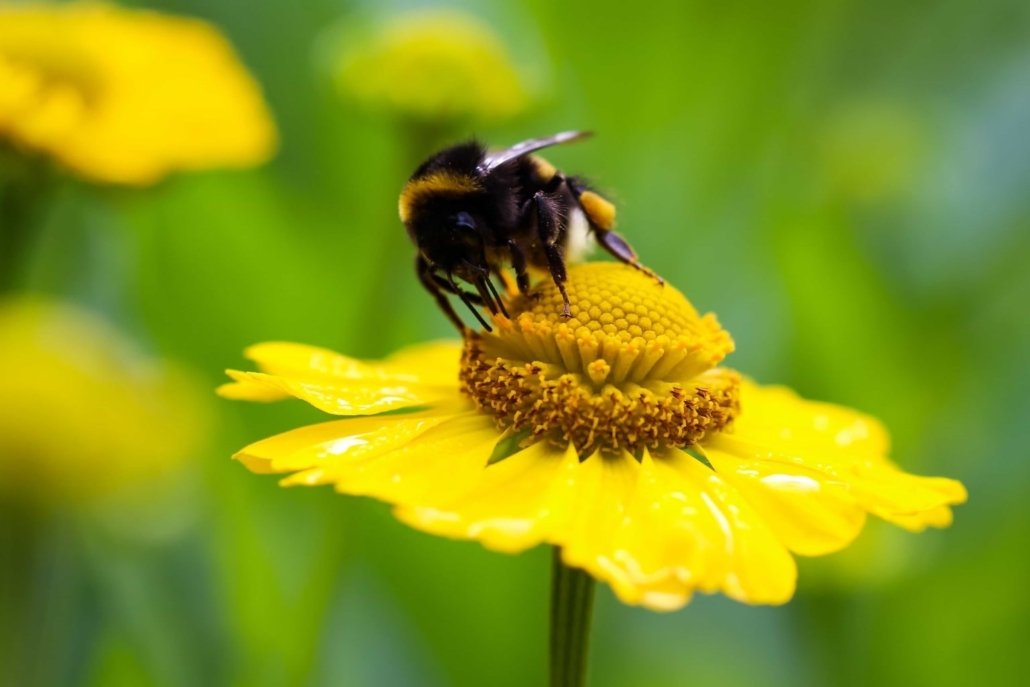 pixnio Public Domain – Free Creative Commons Zero (CC0) Photos
 American study finds that major agricultural pollinators can adapt better than expected to moderate temperature increases. But extreme heat waves may jeopardize entire colonies
by Matteo Cavallito
Climate change could have more complex effects than previously thought on bumblebees, pollinating insects that are essential for agriculture and natural ecosystems. This is highlighted by a new study published in the Journal of Animal Ecology, which emphasizes that rising temperatures are not necessarily a negative phenomenon for all species.
“Climate warming is a major driver of global pollinator declines, including social bees that live in large colonies and provide critical pollination services”, explains the research. “Nesting biology plays a key role in determining a colony’s resilience to climate change, but its influence on colony performance has received little attention”. To fully understand the mechanisms at work, scientists note in a statement, it is especially important to extend observations from individual specimens to the colony as a whole, since the survival of every insect depends on its balance.
Laboratory and field research
Bumblebees, the researchers explain, have developed sophisticated thermoregulation systems: when temperatures rise, they ventilate the nest by rapidly beating their wings, while on colder days they warm the brood by vibrating their muscles. To date, however, there have been only limited attempts to directly monitor temperatures inside nests and, consequently, limited data on the effects of climate on the biological balance of pollinators.
During the study, scientists examined “how climate warming affects bumble bee foraging efficiency and thermoregulatory behaviours under mid-century and late-century climate projections”.
The research focused on Bombus impatiens, a species that is widespread across the eastern United States and widely used in agriculture, and was divided into four phases. First, researchers compared temperatures in simulated underground nests and artificial above-ground boxes. Some colonies were then moved into the laboratory and exposed to different thermal conditions to observe how the bees’ behaviour changed. The study also analyzed cucumber flower pollination in six locations between Georgia and Michigan. Finally, all the data were integrated into mathematical models to estimate the impact of climate on bee colonies.
The benefits of warmth and the risks of extreme heat waves
The findings were surprising: colonies nesting underground appear to be protected from heat thanks to the natural insulation provided by the soil, with beneficial effects on nectar and pollen collection. “Contrary to predictions, our results show that warming will increase optimal foraging hours for bumble bees and reduce brood incubation needs, potentially improving foraging performance”, the study states.
The situation is more delicate for above-ground nests, where bees must expend significant energy to cool the internal environment. Even in this case, however, the advantages of a milder climate appear to partially offset the energetic costs.
The real problem, however, emerges when certain thresholds are exceeded. “Extreme summer temperatures could greatly increase fanning demands, particularly for above-ground nests”, the study explains, “which would divert workers from foraging and other essential colony tasks”. In Georgia, exposed nests reach unsustainable temperatures for around nine hours per year and, according to the most critical climate scenarios, this figure could rise in the future to as many as 200 hours. In any case, just a few extreme episodes are enough to cause larvae to die or develop abnormally, thereby compromising the entire colony.
How to protect pollinators
According to the researchers, the findings suggest the need to rethink agricultural practices related to bumblebee breeding, especially by improving the cooling systems of artificial boxes used for pollination. Other simple yet practical actions to help pollinators include planting native flowers in gardens or on balconies to reduce the distances bees must travel to find food. Finally, protecting woodland areas is essential, as they provide shade and suitable nesting habitats.
Protecting insects remains a key issue considering that, as the FAO previously noted on the occasion of World Bee Day, celebrated every year on May 20, three quarters of the world’s food crops depend to some extent on bees and other pollinators.
The study showed that the climate factor has a potentially enormous impact. And while moderate warming may provide better conditions for bumblebees during much of the year, researcher Elsa Youngsteadt observed that “just a few damaging hours could really set a colony back, for example if the larvae die or develop abnormally”. For this reason, the research concludes, conservation efforts “should consider nesting environment as a critical factor in climate resilience strategies for bees and other animal species”.
 Photo: Thomas Bjørkan CC BY-SA 3.0
 Re Soil Foundation