Thermal waters against desertification: the Hungarian experiment
In the Central European country, a grassroots project is bringing together citizens and local farmers. The goal: redirect thermal waters to the fields, restoring natural cycles and countering the drying out affecting agricultural land in the Great Plain
by Emanuele Isonio
At the heart of Central Europe, Hungary is facing one of the most insidious environmental challenges of our time: the progressive aridification of soils. The area most affected is the Great Hungarian Plain, a historic mosaic of grasslands and farmland that is now showing increasingly evident signs of water stress. In this context, an unexpected solution is emerging at the intersection of tradition and innovation: the use of thermal waters to restore natural hydrological processes.
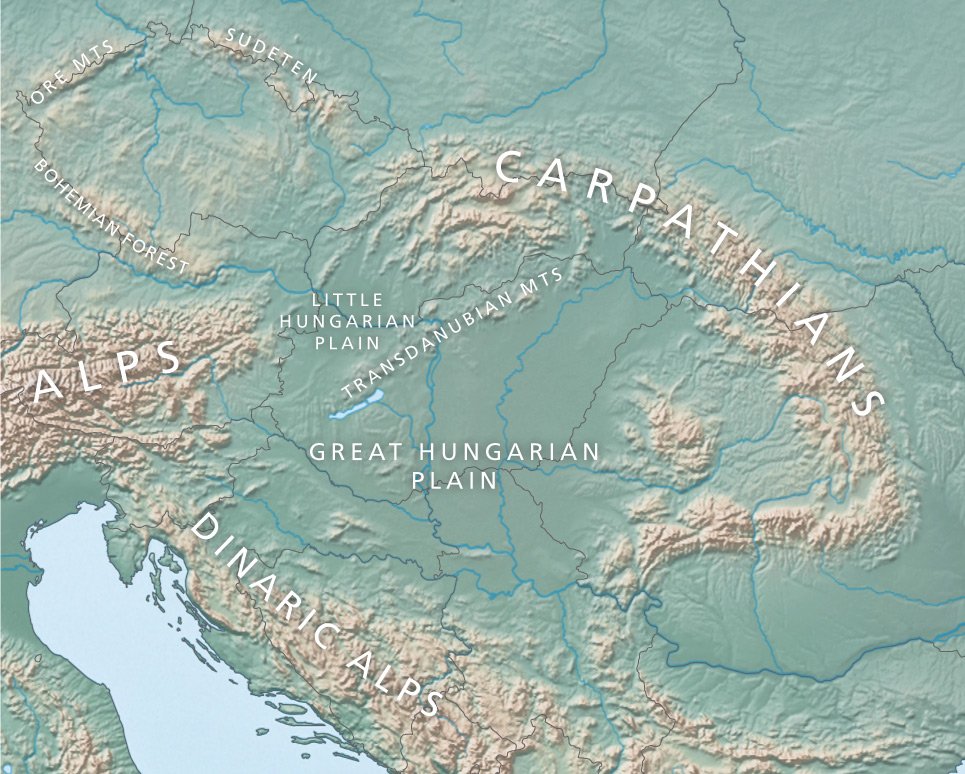
The Great Hungarian Plain covers an area of approximately 100,000 km², spread across seven countries: Slovakia, Ukraine, Romania, Serbia, Slovenia, Croatia, and Hungary. Hungary alone accounts for more than half of the plain’s total area. PHOTO: CC BY-SA 3.0, https://commons.wikimedia.org/w/index.php?curid=2295902
From social pillar to ecological aid
The country is famous both for its steppe landscapes and its spa culture, particularly widespread in the capital, Budapest. For centuries, hot waters rising from underground have fed a system of public baths that represent a social and cultural cornerstone. Today, however, these same waters are taking on a new role: contributing to the regeneration of terrestrial ecosystems.
In the south of the country, in the Homokhátság region, groundwater levels have dropped dramatically in recent decades. Increasingly hot and dry summers, combined with the historical canalization of rivers and streams, have interrupted the natural flooding processes that for centuries ensured the recharge of soil water reserves. Without these dynamics, the landscape has lost a key ecosystem function: the ability to retain and redistribute water.
The consequences are typical of desertification processes: soils breaking down, loss of organic matter, and a collapse in microbial and plant biodiversity. Rainfall, increasingly erratic, is no longer able to infiltrate effectively. Even intense downpours are of little use, as water quickly runs off depleted soils that can no longer retain it.
The “Water Guardians”
In this scenario comes the initiative of the so-called “Water Guardians,” a group of citizens and local farmers working to restore the area’s hydrological functions. Among them, farmer Oszkár Nagyapáti had an idea as simple as it was effective: intercept wastewater from a thermal spa and redirect it towards lower-lying agricultural land.
Traditionally, this water would be channeled into canals and eventually discharged into the sea. Today, thanks to an agreement with local authorities, it is instead used to temporarily flood certain areas near Kiskunmajsa. After a particularly dry summer in 2025, the group modified the canal system, allowing thousands of liters of water to flow onto about two hectares of land.
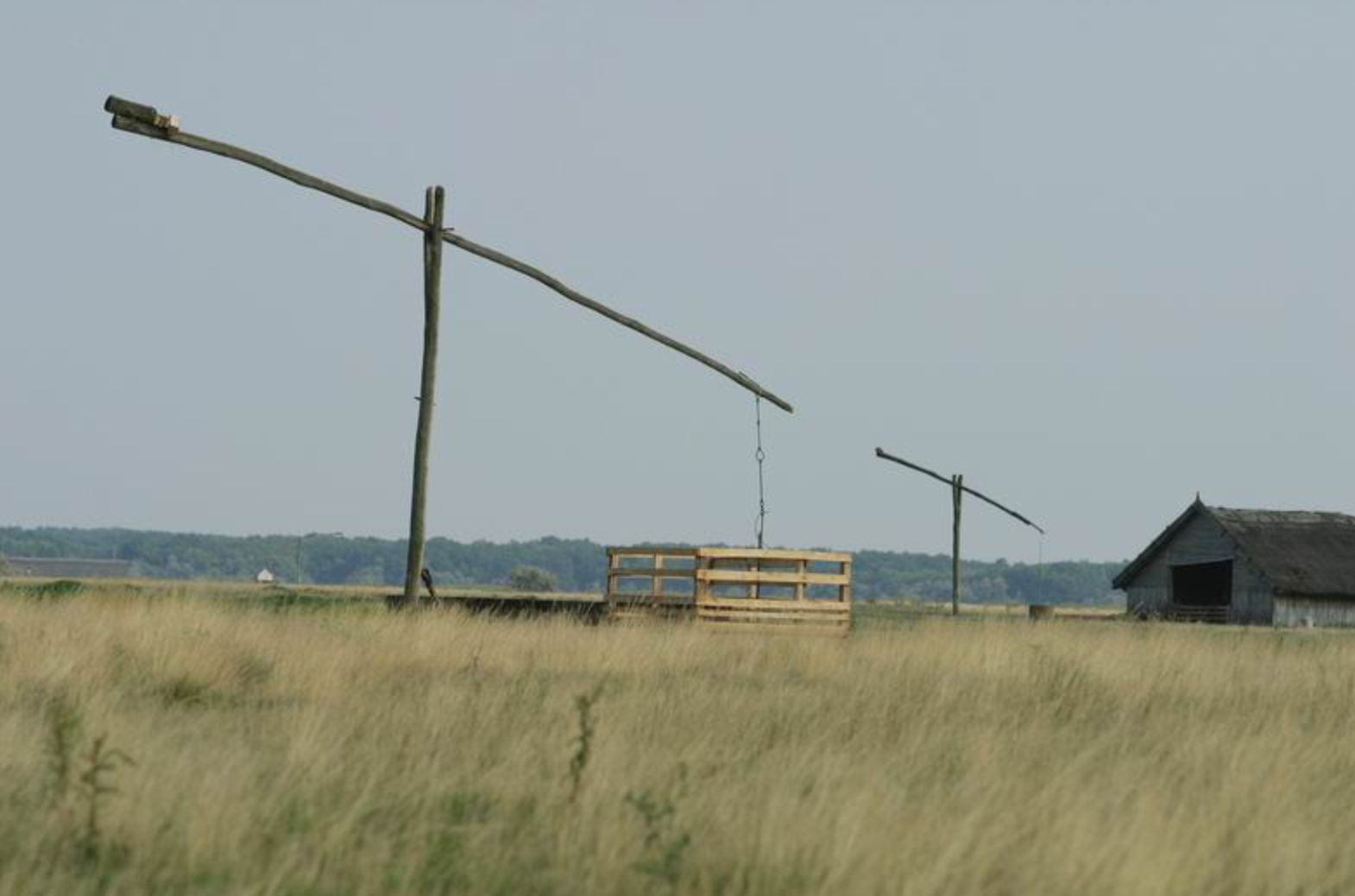
A well in Hortobágy National Park – Puszta, Hungary. PHOTO: Andreas.poeschek by CC-BY-2.0-at
Surprising effects
Although limited in scale, the intervention has produced remarkable results. According to the researchers involved, the flooding has helped raise groundwater levels over a much wider area, estimated at several square kilometers. It is a concrete example of how reintroducing—even artificially—flooding dynamics can reactivate natural water cycles in the soil.
The benefits have not been limited to hydrology. In the following months, an increase in local biodiversity was observed, with the return of plant and animal species typical of wet environments. This confirms that water management is a key lever not only for agricultural productivity, but also for overall ecological resilience.
The Hungarian experience offers valuable insights at the European level. In a continent where climate change is profoundly altering the water cycle, strategies for water retention and redistribution are becoming crucial. The reuse of thermal water demonstrates that effective solutions can emerge from already available resources, if integrated into a systemic vision of the territory.
As Nagyapáti points out at Euronews channel, retaining water—regardless of its origin—represents an extraordinary opportunity to regenerate soils and combat desertification. A simple, yet often overlooked principle that could guide new sustainable water management policies in many other regions of Europe.
 Photo: Thomas Bjørkan CC BY-SA 3.0
 Re Soil Foundation