Soil erosion, drought and fertility loss: the practices that can help save the land
On World Day to Combat Desertification 2026, a new report showcases real-world solutions from researchers, farmers and experts. At its core is the Lighthouse Farms network led by Re Soil Foundation
by Emanuele Isonio
There is a silent emergency beneath our feet. It affects agriculture, climate, water, biodiversity and even public health: soil degradation is spreading across Europe under the pressure of erosion, loss of organic matter, land consumption, drought and the intensive use of chemical inputs. Yet new experiences emerging directly from farmland are showing ways to reverse the trend.
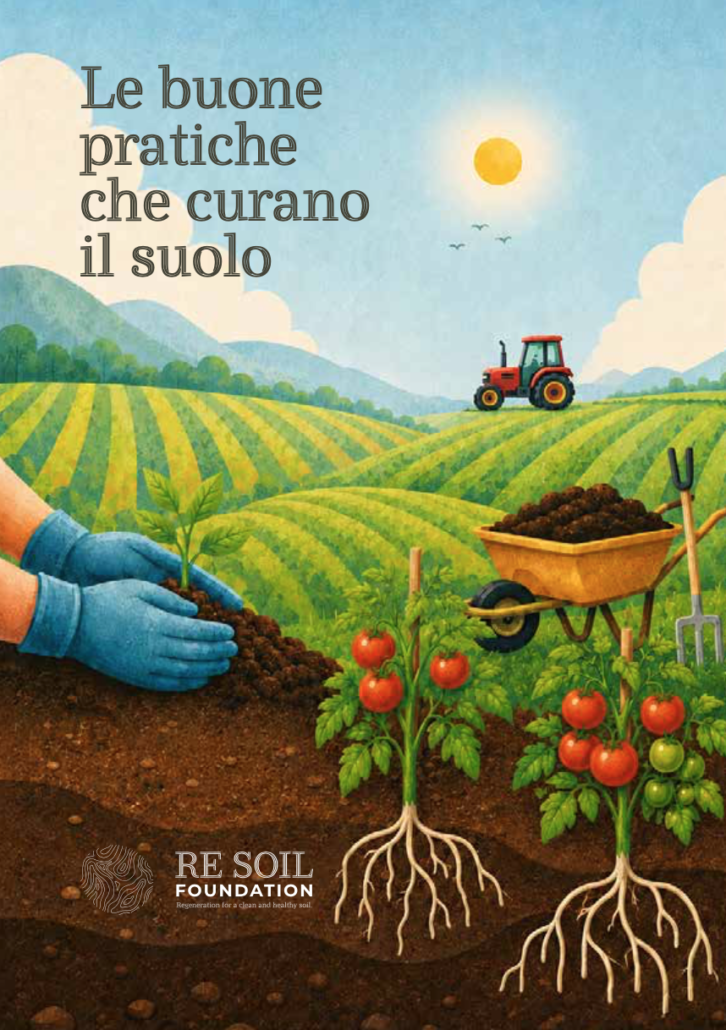
From this awareness comes “Le buone pratiche che curano il suolo”, the new report promoted by Re Soil Foundation, to be distributed on the occasion of the World Day to Combat Desertification. The publication brings together agronomists, researchers, environmental experts and farming businesses engaged in soil regeneration through innovative and sustainable practices. Contributors include representatives from the European Commission’s Joint Research Centre, the EU Soil Mission, the FAO Global Soil Partnership, ANBI, the University of Bologna, the University of Pisa, Novamont, the Italian Composting Consortium and the Biorepack Consortium.
The importance of synergistic action
A diverse and interconnected set of actors clearly shows that the challenge of soil care—and the many problems affecting it—can only be addressed through the combined contribution of public institutions, businesses, academic research, and stakeholders engaged in the innovative field of the circular bioeconomy. The transition towards healthy soils must also involve civil society through innovative approaches such as citizen science, exemplified by the European ECHO project featured in the book.
“Soil health is a major environmental issue, but also an economic and social one,” says Margherita Caggiano, director of Re Soil Foundation. “Restoring soils means increasing the climate resilience of farms, protecting water and biodiversity, reducing the costs associated with chemical inputs, and strengthening rural communities. With this book, we aim to demonstrate that concrete experiences already exist that are able to combine environmental sustainability, innovation, and economic competitiveness.”
Reversing a dangerous trend
The book highlights how soil health is now one of the major strategic challenges of our time. As already noted in the first Soil Health Report ublished by Re Soil Foundation in previous years, on average 47 out of every 100 square metres of land show some form of degradation. Around 80% of agricultural soils—nearly a quarter of the national territory—are affected by erosion processes; 68% have lost more than 60% of their original organic carbon content. In addition, 23% of agricultural land shows excessive nitrogen levels, while 7% is affected by secondary salinisation.
The consequence? A loss of fertility, as well as reduced water retention capacity and lower climate resilience, with direct impacts on agricultural productivity and food security.
Among the measures identified by the EU Soil Mission to reverse this trend and restore degraded soils is the creation, by 2030, of at least 100 Living Labs and 100 Lighthouse Farms across Europe—true territorial laboratories dedicated to soil health.
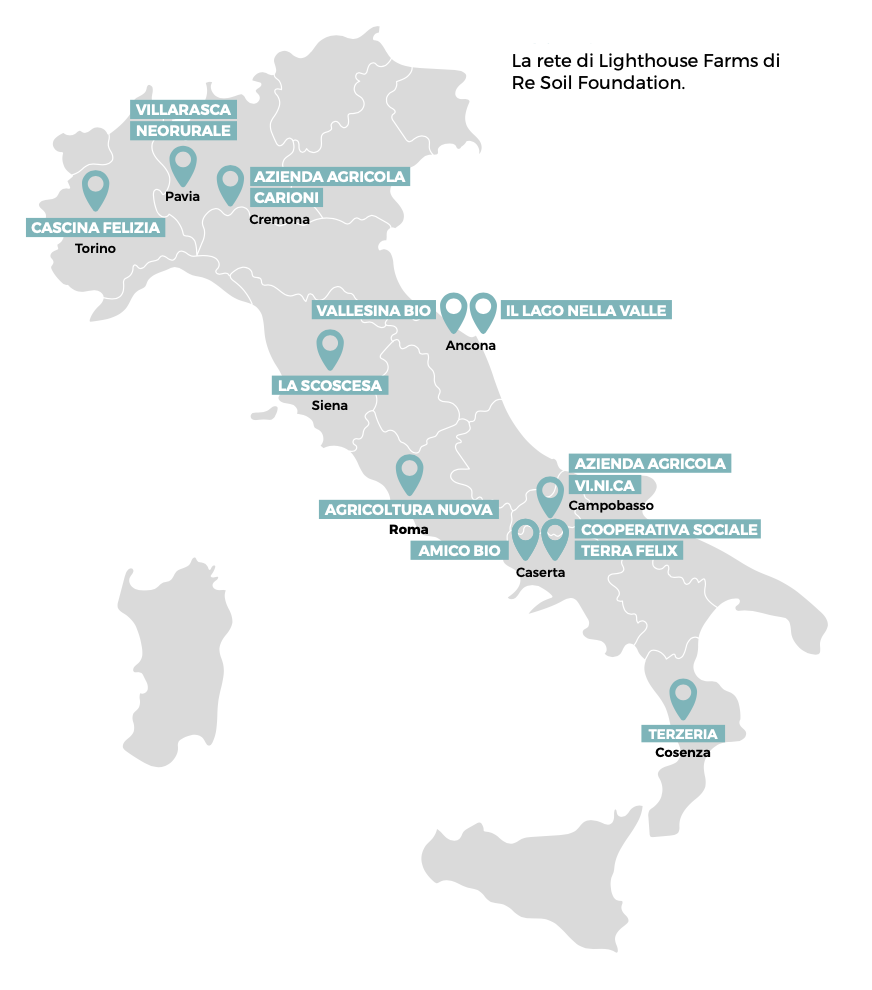
The Lighthouse Farms network of Re Soil Foundation.
A guide for the sector from leading agricultural farms
The Lighthouse Farms are one of the most significant elements of both the volume and Re Soil Foundation’s strategy: fully operational farms embedded in local territories, they test regenerative practices in the field that can be replicated, translating scientific research into concrete solutions for farmers. Today, the Re Soil Lighthouse Farms network includes farms located across the Italian peninsula—from Lombardy to Calabria, from Marche to Lazio, and from Tuscany to Molise. Eleven farms have already signed a Memorandum of Understanding to share knowledge, data and innovative practices in sustainable land management.
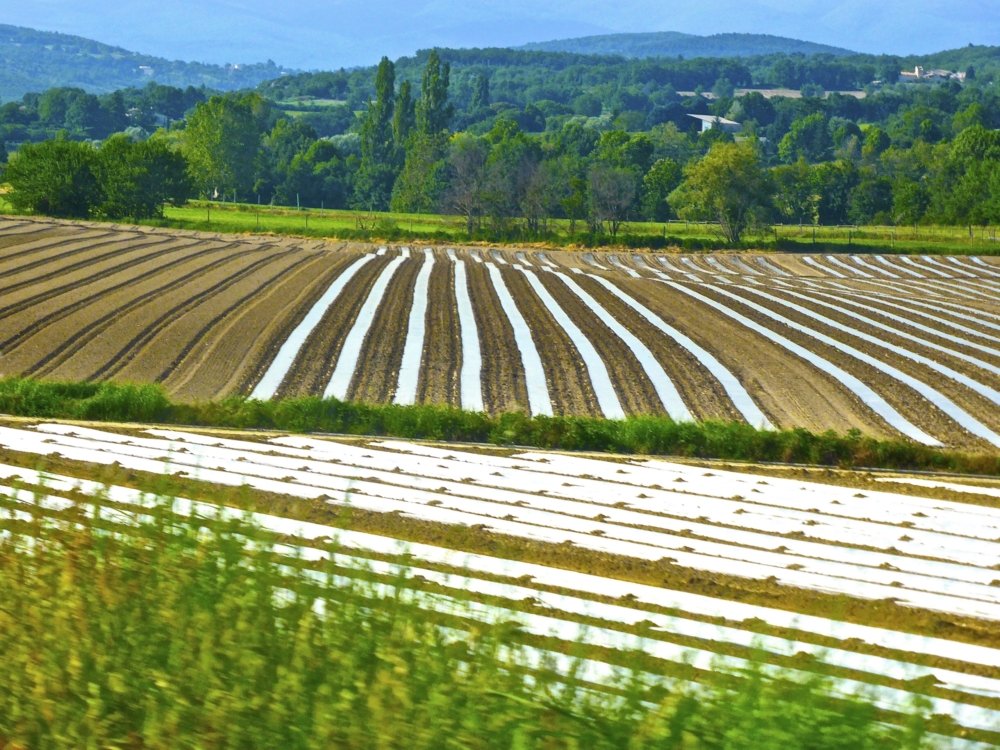
The volume brings together a wide range of experiences, all united by a common goal: restoring soils to improve the environmental and productive quality of agricultural systems. These include farms using compost to increase soil organic carbon, holdings applying precision agriculture and reduced tillage, cooperatives transforming the organic fraction of urban waste into natural fertiliser, and enterprises restoring biodiversity and water resources through agroecology, biodegradable mulching, crop rotation and circular systems.
“The Lighthouse Farms are real-world businesses, not theoretical laboratories. They demonstrate that the ecological transition in agriculture can be both economically viable and technically feasible. Their value lies in their ability to transfer innovation, build territorial networks and foster trust among farmers,” say Sara Guerrini and Caterina Capri, the two agronomists from Re Soil Foundation who curated the volume. “Giving them visibility means recognising the foresight and social value of their approaches, while also providing an incentive to Italian and European farmers to adopt these virtuous practices, helping to accelerate the transition towards a new model of agriculture.”
Four-dimensional benefits
Browsing through the pages of the Re Soil publication, it becomes clear in particular that the benefits of regenerative practices operate simultaneously across four dimensions: environmental, agronomic, economic and social. The farms involved report increased soil biodiversity, reduced erosion, improved carbon sequestration, greater resilience to climate stress, lower production costs and stronger territorial networks.
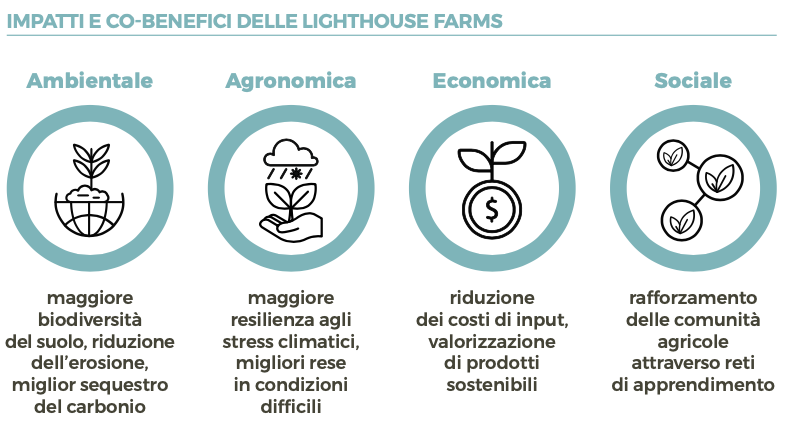
Lighthouse Farms represent not only places of experimentation, but actual systems capable of generating integrated benefits across multiple dimensions. SOURCE: “Good practices that care for the soil” – Re Soil Foundation, 2026.
The message of the book is clear: soil can no longer be regarded merely as a productive substrate or an economic asset, but as a true life-sustaining infrastructure that must be restored and protected. This is a challenge that directly concerns agriculture, businesses, institutions and citizens alike, and represents one of the key levers for addressing climate change and building more resilient agri-food systems.
Il messaggio del libro è preciso: il suolo non può più essere considerato soltanto un supporto produttivo o un bene economico, ma un’autentica infrastruttura vitale da rigenerare e proteggere. Una sfida che riguarda direttamente agricoltura, imprese, istituzioni e cittadini e che rappresenta una delle chiavi decisive per affrontare il cambiamento climatico e costruire sistemi agroalimentari più resilienti.
 Quintin Soloviev, CC BY 4.0