Europe’s forests: why we need to measure their resilience
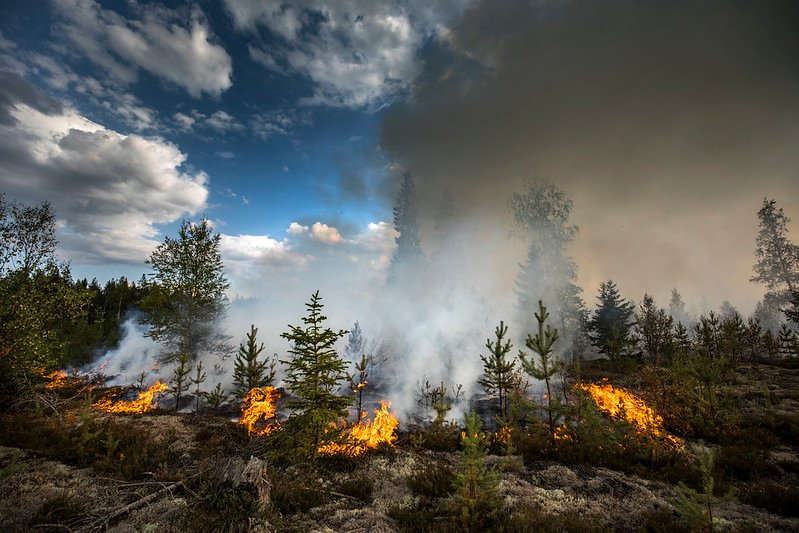 © European Union 2018 (photo by Pavel Koubek), CC BY-NC-ND 2.0
eLTER recommendations: forest area and biomass are no longer enough to assess forests’ capacity for recovery. New indicators, long-term observations and models capable of anticipating risks are needed
by Matteo Cavallito
Some forests may still be standing but may have already lost part of their capacity to recover from adverse events. This is the premise of the new policy brief from eLTER, a European research infrastructure coordinating a network of sites dedicated to the long-term observation of ecosystems and socio-ecological systems. At the heart of the issue, the authors explain, is not only the immediate loss of trees but also, and above all, the capacity of ecosystems to continue to protect biodiversity, store carbon, regulate water and sustain rural communities. All these aspects need to be taken into account in forest management.
“Europe’s forests are increasingly exposed to climate extremes, yet their resilience can be strengthened if it becomes a central management objective: forest resilience needs to be systematically monitored, assessed, and forecasted,” the recently published document states. Only by doing so will it be possible “to detect early warning signals, quantify resilience, and evaluate management outcomes.”
The impact of climate change is not just a matter of forest area and biomass
Over the past three decades, the document notes, the disturbance rate in European forests has more than doubled. Climate-related events such as droughts and wildfires, for example, already cause several billion euros in damage each year. If warming continues unchecked, losses caused by compound events could triple by mid-century. The consequences extend beyond economic losses, affecting biodiversity, cultural landscapes and rural livelihoods while increasing the risk of floods and landslides.
The contribution of forests to climate change mitigation is declining: European forest ecosystems currently sequester around 360 million tonnes of CO₂ each year.
However, factors such as ageing stands, intensified harvesting and increasingly frequent disturbances continue to weaken the forest carbon sink and, under these conditions, the authors warn, climate targets are at risk. In this context, the ability to anticipate risks and take action is hampered by inadequate monitoring systems that fail to adequately capture forest resilience. “Current reporting focuses on area and biomass, overlooking key measures of recovery capacity, structural diversity, or regeneration,” the document explains. However, “Forest management plans are rarely informed by climate scenarios and forest dynamics projections.”
New models for assessing forests
Forest area and biomass, in other words, remain important parameters, but they cannot tell us how close a forest is to losing stability or whether it will be able to recover. According to eLTER experts, it is therefore necessary to use indicators capable of measuring regeneration, structural and functional diversity, fragmentation, landscape connectivity, and the ability of species to adapt or shift their ranges as the climate changes. Satellite data can play an important role by providing early warning signals: increasing variability in photosynthetic activity, combined with slower recovery, may signal an impending collapse in growth or vitality.
According to the experts, greater attention must also be paid to compound disturbances, which remain poorly represented in conventional systems.
In particular, risk should be assessed by considering three elements: climate hazards, forest vulnerability and adaptive capacity. “Simulation models at stand to landscape scales can combine these components to forecast disturbance regimes and forest trajectories under future climates, supporting “what_conn-if” scenario analysis and preparing for intensified and novel risks,” the document stresses. But this approach also requires management that works more closely with natural processes and takes climate change into account, the carefully planned assisted migration of species and provenances suited to new conditions, forest diversification and the restoration of hydrological functions.
Planning for extreme events
At the policy level, the document recommends introducing quantitative resilience targets into forest strategies, adaptation plans, climate and energy plans, and nature restoration plans. Payments for ecosystem services, nature credits and biodiversity credits could provide financial support for these measures. It is also essential to adopt models capable of simulating different scenarios in order to anticipate extreme climate events and assess their environmental, social and economic consequences.
Local planning must also be forward-looking and focus on the areas at greatest risk, using climate projections and models of vegetation dynamics and fire behaviour to identify priority areas for intervention. Extending this approach across Europe could reduce damage and strengthen forest resilience. “Forests that are better adapted to extremes protect biodiversity, store carbon, regulate water, and safeguard communities,” the authors conclude. “By mainstreaming resilience forecasting in planning, policymakers can turn today’s challenges into opportunities for a safer and more sustainable future.”
 Penn State. Attribution-NonCommercial-NoDerivatives 4.0 International, CC BY-NC-ND 4.0 Deed.
 Eric Guinther, CC BY-SA 3.0
 Warren LeMay CC BY-SA 2.0