Extreme drought: biodiversity helps grasslands, but not forests
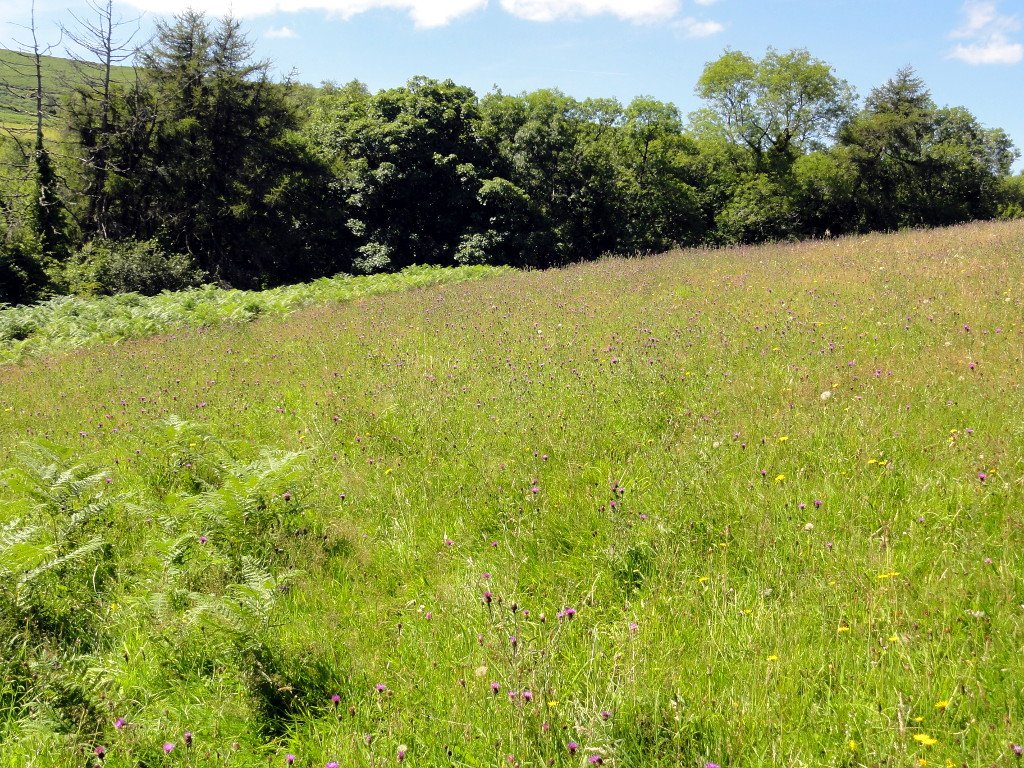 Steve Daniels Attribution-ShareAlike 2.0 Generic CC BY-SA 2.0 Deed
An international study finds that high biodiversity levels can reduce productivity losses in the driest grasslands during extreme drought events. However, the same pattern is not found in forested areas
by Matteo Cavallito
Biodiversity is one of nature’s most important tools for climate change adaptation, but its effectiveness varies across ecosystems. In the driest grasslands, in fact, the presence of a diverse range of plant species significantly reduces productivity losses during extreme drought events, while this effect does not emerge with the same clarity in forests. This is the main conclusion of an international study led by Yokohama National University and the German Centre for Integrative Biodiversity Research (iDiv).
The research, published in the journal Nature Ecology & Evolution, provides new insights by showing where efforts to conserve plant diversity can make the greatest contribution, helping ecosystems respond more effectively to the consequences of rising temperatures.
The benefits of biodiversity vary across ecosystems
Scientists have long known that species-rich ecosystems tend to be more productive and stable. However, one crucial question has remained unanswered: does biodiversity continue to play this role when ecosystems are exposed to extreme climatic events? And does its effect remain the same across different environments? Answering both questions has so far proved difficult.
“A key barrier to resolving how biodiversity–productivity relationships shift across environmental contexts during climate extremes is the restricted geographic and temporal scope of most experiments and observational datasets”, researchers note.
To overcome this limitation, the authors brought together data from dozens of experiments conducted across very different climatic contexts, with the aim of identifying, through a meta-analysis, the environmental conditions under which biodiversity makes the greatest contribution to ecosystem resilience. “Our ultimate goal is to move away from a broad ecological insight to a practical basis for climate adaptation”, explained Takehiro Sasaki, ricercatore della Yokohama National University e principale autore dello studio.
Grasslands respond better to extreme heat
By analysing data from 75 long-term experiments conducted in grasslands and forests across different regions of the world, and by combining ecological observations with historical climate data series and information on aridity and soil characteristics, the authors made several important discoveries. First, they found that “biodiversity most strongly enhanced productivity in more arid grasslands during extreme drought”. In forests, by contrast, these effects “were not clearly modulated by site-level environmental context”.
In grasslands exposed to climate-related impacts, the study explains, different species are able to use resources in complementary ways or support one another, maintaining higher ecosystem productivity despite water scarcity.
In less arid grasslands, on the other hand, productivity during drought depends mainly on a few particularly high-performing species. As for forests, as mentioned above, this pattern did not emerge, although caution is needed. Available forest experiments, in fact, are fewer and cover shorter time spans. While the effects of biodiversity on trees may require many years to become evident. Finally, the study shows that neither heat waves nor soil nutrient availability significantly alter the benefits provided by species diversity.
Guiding climate adaptation strategies
The findings take on particular importance in the current scenario, characterised by the increasing frequency and intensity of extreme events. Understanding where biodiversity can effectively limit productivity losses would help guide conservation strategies and climate adaptation interventions, directing efforts towards the ecosystems where these benefits are greatest.
“Rather than assuming that biodiversity universally buffers environmental stress, our synthesis identifies the conditions under which it is most likely to have strong impacts, thereby offering a clear basis for targeted, nature-based strategies for climate adaptation”, the authors say. In the future, however, new experiments will be needed. The goal is to assess forest ecosystems and regions of the world that remain underrepresented in research. This will help to understand whether the mechanisms identified elsewhere also occur in other climatic contexts.

 Quintin Soloviev, CC BY 4.0