Landfill methane emissions could be far higher than estimated
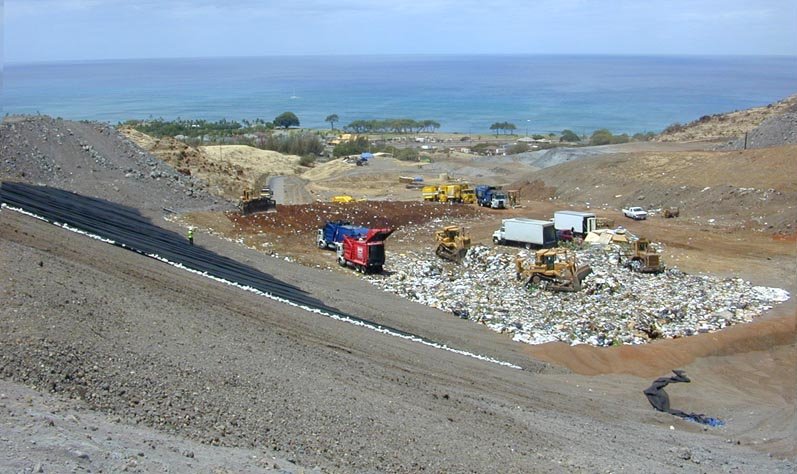 Eric Guinther, CC BY-SA 3.0
A study of two New Jersey landfills finds emissions five times higher than official figures. Cold weather and falling atmospheric pressure drive higher releases. Occasional measurements may miss emission peaks
by Matteo Cavallito
Landfills could be releasing far more methane into the atmosphere than official inventories indicate. The discrepancy may stem not only from the models used to produce the estimates but also from the way direct measurements are conducted. Occasional surveys, often concentrated in summer and on clear days that are more favorable for aircraft and satellite observations, may fail to capture the peaks that occur in winter and when atmospheric pressure falls. These are the findings of a study published in Environmental Science & Technology by researchers at the Lamont-Doherty Earth Observatory, a Columbia University institute located in Palisades, New York.
The research, based on two and a half years of monitoring, examined a large landfill complex in New Jersey, and its findings cannot automatically be generalized to all landfills. Nevertheless, it highlights the limitations of short-term surveys, suggesting that they may significantly underestimate actual landfill emissions.
Landfills and methane emissions
The United States produces hundreds of millions of tons of waste each year, sending a substantial share of it to landfills. Decomposition of the organic component of this waste produces methane, which then follows different pathways: some is oxidized by methanotrophic microorganisms in the soil cover, some is intercepted by gas capture systems, while the remainder reaches the atmosphere.
Methane, in fact, “is the second most important anthropogenic greenhouse gas, behind carbon dioxide (CO2), with a global warming potential 80 times that of CO2 over 20 years”, the study explains.
The increase in its atmospheric concentration is also estimated to have contributed to more than a quarter of anthropogenic global warming since the mid-19th century. “In 2022, the most recent year for which official U.S. emissions data exist, methane accounted for roughly 12 percent of the country’s greenhouse gas emissions”, the authors note, and a “similar proportion applies to global emissions”. Landfills, meanwhile, are estimated to account for 17% of national methane emissions in the United States. This figure, however, may be an underestimate.
Data and methods under scrutiny
Official estimates are primarily based on the amount and age of the waste or on the volumes of gas recovered, applying an assumed capture efficiency. Yet the picture of improvement presented by official statistics is not supported by several satellite and aircraft observations, which have detected emissions exceeding reported levels.
“Landfill methane emissions reported to the EPA Greenhouse Gas Reporting Program (GHGRP) have decreased by 40% since 1990, with this reduction attributed to the adoption of gas capture technology and better management”, the study explains.
Other studies, however, have challenged this figure, suggesting that it “may reflect changes in the methodology used to calculate methane emissions; from a method based on the amount of waste-in-place to a method based on the amount of gas captured, assuming a constant capture rate”. Against this backdrop, the researchers applied multiple methods to a specific case study.
2023 emissions five times those reported to the EPA
The researchers studied a landfill complex comprising the active Middlesex County landfill and the nearby Edgeboro landfill, which closed in 1994 but continues to emit gas. Middlesex, operational since 1992, contains more than 16 million metric tons of waste and receives about 500,000 additional metric tons each year. Both facilities have extensive gas capture systems. From January 2023 to July 2025, atmospheric methane concentrations were measured from a 20-meter tower located about 3.3 kilometers away. Monthly emissions were calculated using a Gaussian plume dispersion model and compared with mobile ground-based measurements and data from two aircraft campaigns, with consistent results across the different methods.
“We observed a strong seasonality in methane emissions”, the authors explain, “with a peak in the winter and a minimum in the summer, driven by a strong dependence on the change in atmospheric pressure and air temperature”.
Many measurements conducted to date, however, have provided only snapshots, often concentrated in summer, partly because aircraft campaigns are generally carried out when flying conditions are favorable. This introduces both seasonal and meteorological bias. Overall, the researchers estimate that in 2023 the landfill complex released an average of 2.7 metric tons of methane per hour. That is about five times the 536 kg/h reported to the Environmental Protection Agency (EPA).
Better measurements to support action
The case study therefore indicates that emissions may be higher than expected and, above all, that assessing them requires observations covering the entire seasonal cycle. Including periods when weather conditions are less favorable for measurements. The methodology could be applied to other large facilities, improving estimates and making it possible to assess the effectiveness of mitigation policies.
“Long-term measurements of methane emissions allow policymakers to target climate mitigation efforts and track the efficacy of these policies”, the authors note.
As the authors add, “active landfills, with their large but uncertain methane emissions, are a perfect target for long-term measurements”. Monitoring can also support operational measures. Including increasing gas capture before low-pressure systems arrive, scheduling leak detection when barometric pressure is falling or on days with below-freezing temperatures, and applying additional daily cover to open areas during winter.
 Photo: Thomas Bjørkan CC BY-SA 3.0
 Re Soil Foundation