Ice comes alive: a new challenge for climate models
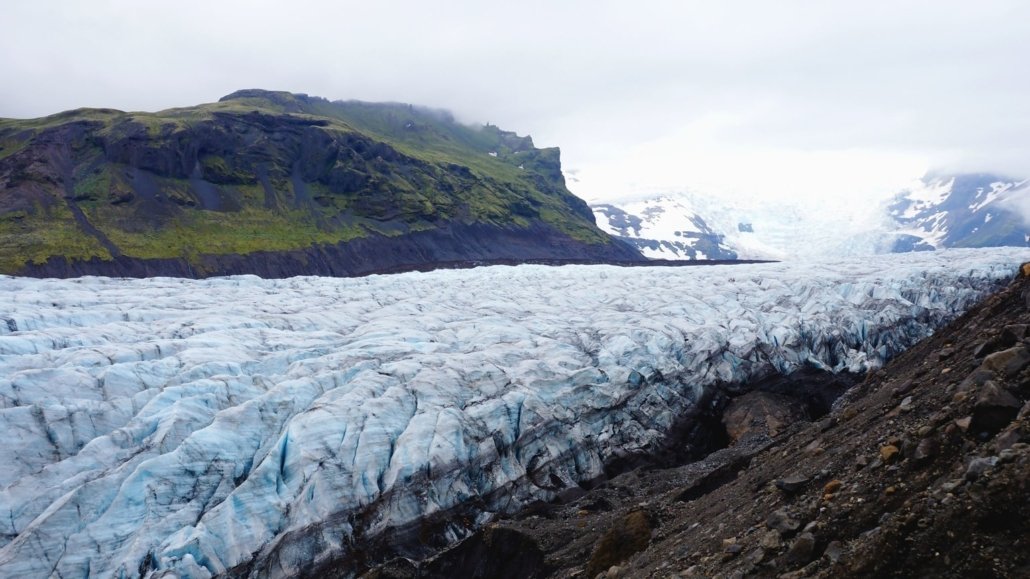 PIXNIO public domain Creative Commons Zero CC0 free to use
Umeå University study: far from inert, ice promotes the release of iron from minerals, with possible implications for the carbon cycle and climate projections
by Matteo Cavallito
Far from being a stable environment, ice is highly dynamic. On the contrary, it can act as a very reactive medium, capable of accelerating the dissolution of iron-bearing minerals and increasing the release of iron into the environment. This is according to a study conducted by Umeå University and published in the journal Proceedings of the National Academy of Sciences (PNAS).
The study, the researchers note, “challenges the assumption that ice is geochemically inert, revealing it as a dynamic reactor that accelerates iron oxide dissolution through microscale liquid water networks. The finding that common environmental anions enhance mineral weathering rates in ice has profound implications for understanding biogeochemical processes in Earth’s extensive frozen regions”. In other words, understanding how iron is released in cold regions is becoming increasingly important in the context of rapid climate change.
Iron plays a key role in cold regions
Today, the authors further note, around 17% of the Earth’s land surface is underlain by permafrost, while vast areas of the Northern Hemisphere undergo seasonal freezing. Global warming, however, is profoundly reshaping these environments, increasing the frequency of freeze–thaw cycles and accelerating the degradation of permanently frozen soils. To fully understand the effects of climate change, the researchers argue, it is also necessary to look inside the ice itself and, in particular, at one of the key elements in these ecosystems: iron.
Iron plays an essential role, as algal growth in lakes and oceans contributes to carbon storage in soils and influences both the colour and quality of water bodies.
Any change in the mechanisms that control its release can therefore have cascade effects across ecosystems, from mountain streams to Arctic coastal zones. To investigate this, the researchers analysed the behaviour of goethite, one of the most common iron-bearing minerals in nature, found in soils, sediments, and atmospheric dust. The aim was to understand how different salts commonly found in the environment influence its dissolution under freezing conditions.
Microscopic liquid pockets trapped in ice play a decisive role
The results were striking. “We show that ice systematically enhances mineral dissolution through freeze concentration into microscale reactive hot spots”, the authors explain. “Using goethite nanoparticles as a model iron oxide and environmentally relevant inorganic anions common in soils, waters, and aerosols (chloride, fluoride, sulfate), we demonstrate that ligand-promoted dissolution rates under mildly acidic conditions scale with binding affinity in both ice and liquid water, with ice enhancing rates across all reactive ligands”.
Fluoride, which binds most strongly to iron among the tested substances, led to iron release levels more than four times higher than those observed in liquid water, according to a statement from the Swedish university.
Sulfate produced a more moderate but still measurable effect, while perchlorate, which interacts only weakly with iron, showed no significant impact. The explanation lies in the structure of ice itself. When water freezes, many dissolved substances are excluded from the ice crystals and become concentrated in tiny pockets of liquid trapped within the ice. In these microenvironments, salinity can increase by up to 500 times compared with initial conditions, dramatically accelerating chemical reactions. These processes, the study notes, can continue even at very low temperatures.
Climate models may need to be revised
The discovery is not only relevant to mineral geochemistry but may also have implications for models used to predict the future of the Earth’s climate. The study results, the authors explain, “suggest current models could underestimate nutrient mobilization, trace element cycling, and weathering rates in cold regions”. Increased iron availability, in particular, “helps explain observed increases in Arctic river iron fluxes, carbon mobilization, and greenhouse gas emissions, providing critical insights for predicting biogeochemical feedbacks in our warming world”.
Greater iron release could enhance microbial and algal activity, potentially accelerating the decomposition of organic matter stored in cold soils and permafrost, and indirectly contributing to carbon dioxide and methane production.
In other cases, however, it could help retain carbon in soils through binding with mineral particles. The overall effect will depend on the ecosystems involved and the balance between carbon release and sequestration processes. All these factors will need to be taken into account in climate models. If the behaviour identified in this study also applies to other substances, ice could emerge as a key element in understanding how biogeochemical processes will respond to global warming in the coming decades.
 obi Kellner, CC BY-SA 4.0
 Oded Gilad, CC BY-SA 4.0
 Hans Hillewaert, CC BY-SA 4.0