
Meat and soybean (plus coffee) are driving deforestation in the Amazon
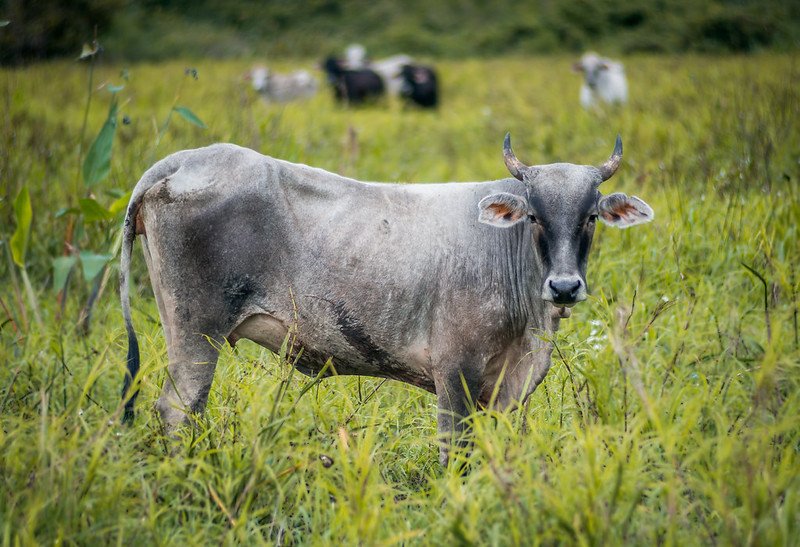 Ben Lamb Attribution-NonCommercial-ShareAlike 2.0 Generic CC BY-NC-SA 2.0 Deed
The latest WWF report identifies the main factors behind the ongoing phenomenon in the Amazon. Meat and soy top the list in terms of impact, ahead of cocoa, palm oil, and coffee
by Matteo Cavallito
Demand for beef meat continues to be the main contributor to deforestation in the Amazon region, ahead of soy cultivation. This is revealed in the latest WWF report released in recent weeks and produced in collaboration with Chalmers University of Technology in Gothenburg and the Stockholm Environment Institute (SEI).
In the study, researchers used satellite images of land use in the area, combining them with data on agricultural production and trade flows. Deforestation is mainly driven by the internal markets of countries in the region, although the role of global consumers remains significant.
Amazon has lost 8.6 million hectares in 5 years
“Crop commodities, beef production, and – to a lesser extent – timber plantations are associated with 8.6 million hectares of deforestation in the Amazon region between 2018 and 2022. This accounts for 36% of the total global deforestation during the same period,“ the report notes. ”Cattle-linked deforestation is the main direct driver, resulting from pasture expansion, and accounts for 78% (6.7 million hectares) of the total commodity-attributed deforestation in this period.”
To date, moreover, “59% of the world’s total cattle deforestation footprint and 33% of the world’s soy deforestation footprint originated from the Amazon region.”
In Brazil, in particular, production systems are largely linked to the Amazon region, impacting a total of 6.5 million hectares. Over 20% of global deforestation induced by market demand from countries such as Portugal, Switzerland, Spain, and South Korea, the researchers explain, originated in this same area.
Meat, soy, and… coffee
Currently, “It is known that expansion of pasture for meat production is an important factor behind deforestation especially in Brazil, but the picture is significantly more complex than that,” explained Martin Persson, professor at Chalmers’ Division of Physical Resource Theory, in a statement. “The increased production and demand of crops such as soy, palm oil, cocoa and coffee is an important driver in other areas, especially Bolivia, Ecuador and Peru.”
The professor also notes the particular case of Sweden, where the demand for another product, coffee, has the greatest impact on deforestation.
According to the latest surveys, starting in 2022, this product will surpass even beef in the ranking of commodities that impact deforestation. That year, coffee consumption in Sweden will contribute to the destruction of 331 hectares of Amazon rainforest, an area corresponding to approximately 463 soccer fields. Beef accounts for 236 hectares. However, Persson points out that the study is based on an average impact calculation for each product category and does not provide disaggregated data for those products certified as ‘sustainable’.
Data helps prevent deforestation
Factors such as the expansion of pastures or the spread of crops, which impact land use change, play a decisive role. In this scenario, the study concludes, it is essential to continue investing in data provision and transparency. Improving information gathering, in particular, is crucial for developing new insights and improving continuous monitoring processes.
“Existing gaps in knowledge about where crops are grown and where trade flows originate require enhanced levels of production and supply chain disclosure,” the study points out.
This will make it possible to carry out better risk assessments, target conservation practices at areas at risk, prevent the displacement of deforestation activities to neighboring landscapes, and ultimately promote accountability among actors operating inside and outside the Amazon region.
 Jonathan Wilkins Attribution-ShareAlike 3.0 Unported CC BY-SA 3.0 Deed
  Melissa McMasters Attribution 2.0 Generic CC BY 2.0 Deed



