In bean roots, researchers have identified a previously unknown resource for agriculture
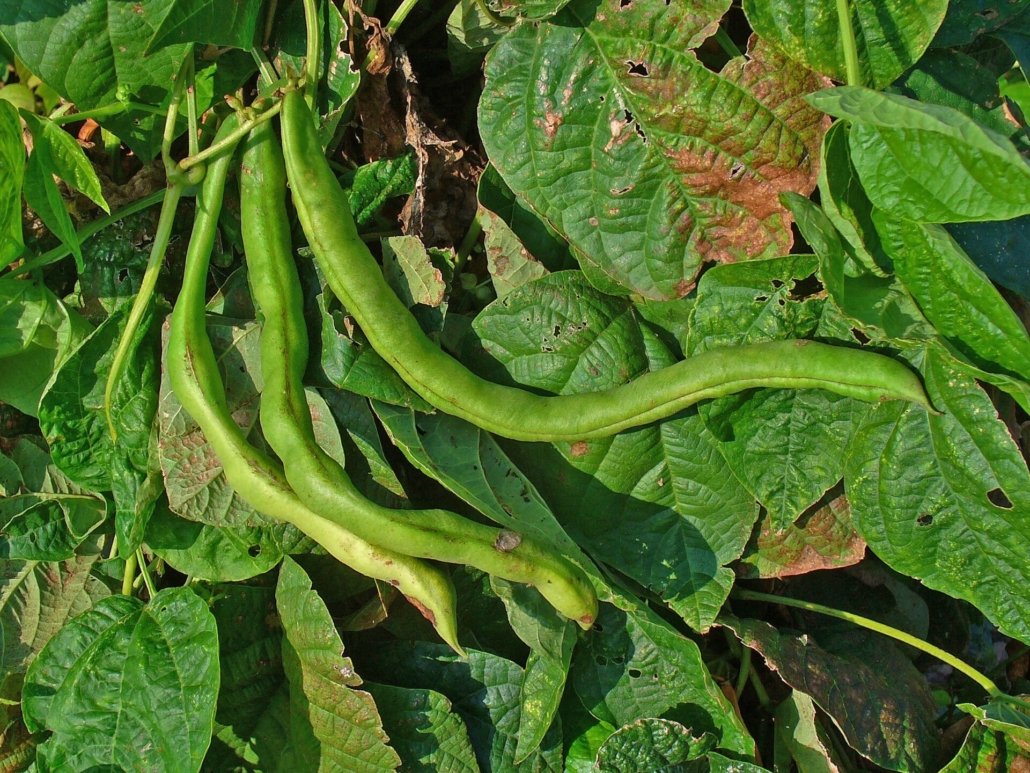 H. Zell Attribution-ShareAlike 3.0 Unported CC BY-SA 3.0 Deed
 An American study has identified microscopic hair roots capable of absorbing nutrients and retaining water within the very first days of a plant’s life, thereby improving its chances of survival even in the driest soils
by Matteo Cavallito
The discovery of a new type of cell hidden within the roots of common beans could pave the way for crops that are more resistant to drought and less dependent on fertilizers. This is according to researchers at the University of Arizona in a study published in the journal Science Advances. The structures identified are the so-called hooked hairs, or hooked root hairs, microscopic appendages that form during the earliest days of the plant’s life and are believed to play a crucial role in its survival.
More specifically, these structures would allow seedlings to absorb nutrients and retain water long before the root system is fully developed, thereby increasing their chances of growing even in poor or arid soils.
Many plants do not survive the early stages of growth
“Seedling resilience mechanisms before root hair emergence remain largely undocumented in literature”, the study explains. “Despite advancements in phenotypic and cellular characterization of root systems, the diversity of belowground epidermal microstructures is underexplored”. The research was therefore designed to fill this gap, but not only that. It was also driven by the need to address an increasingly evident issue: the vulnerability of plants during the early stages of growth.
In the first days after germination, plants must cope with water scarcity, high temperatures, nutrient deficiencies and pest attacks, without being able to rely on a fully developed root system. Under these conditions, a significant proportion of young plants fail to survive, leading to major economic losses for farmers, according to a statement from the University of Arizona. It was precisely by observing this critical phase that researchers identified these cellular structures for the first time.
The structure appears before ordinary root hairs
Unlike ordinary root hairs, which appear after about a week, these structures emerge within three days of germination. Their pointed and curved shape increases the contact surface with the soil and appears to promote the early absorption of essential elements such as phosphorus and nitrogen.
“The morphological observations strongly suggest that hooked hairs emerge postgermination to help seedlings cope with nutrient and water limitations before other uptake mechanisms”, the study explains.
They also produce suberin, a waxy substance that helps the plant limit water loss and withstand high soil temperatures. Researchers also hypothesize that the hook-like shape may serve a defensive function against soil organisms such as nematodes, which can damage crops and cause major agricultural losses.
The study on the roots
To achieve this discovery, the research team, which also included scientists from the Universities of Georgia and Missouri, had to overcome one of the main limitations of root research: the inability to accurately observe what happens underground. Soil, in fact, interferes with many traditional imaging techniques, making it difficult to detect such tiny cellular structures. Researchers therefore combined controlled laboratory growth systems with advanced microscopy and specially developed software designed to analyze microscopic details.
“By integrating image-based phenotyping with single-cell transcriptomics, we systematically characterized epidermal microstructures based on their geometry, morphology, and molecular profiles”, the researchers explain.
Through this system, scientists were able to detect minimal differences in the shape and development of the new cells. The work was then integrated with single-cell sequencing techniques, which made it possible to identify the specific molecular signature of these structures. Which, the researchers explain, are not simply a variant of ordinary root hairs, but an entirely new cell type, characterized by “specific biological functions that refuted our initial notion of hooked hairs being a trichome cell state resulting from acclimatization responses”.
More resilient crops with fewer fertilizers
The implications of the discovery could be significant. Understanding how these structures help plants survive during the early stages of growth could make it possible to select or develop more resistant varieties capable of withstanding drought and using soil nutrients more efficiently. This would mean reducing the use of chemical fertilizers, lowering both farming costs and environmental impact.
The next step will be to determine whether similar structures are also present in other plant species, why some crops, such as soybeans, appear to lack them, and whether these characteristics could ultimately be transferred or reproduced in other cultivated plants. “Our research will encourage further exploration of cell types and structures in nonmodel plants to develop resilient crops and advance combined single-cell phenotyping and sequencing techniques”, the authors conclude.
 Mokkie/Wikimedia Commons – CC BY-SA 3.0
 Yuriy Kvach/Wikimedia Commons – CC BY-SA 4.0
 © European Union 2018 (photo by Pavel Koubek), CC BY-NC-ND 2.0