
Rice cultivation helps protect soil health
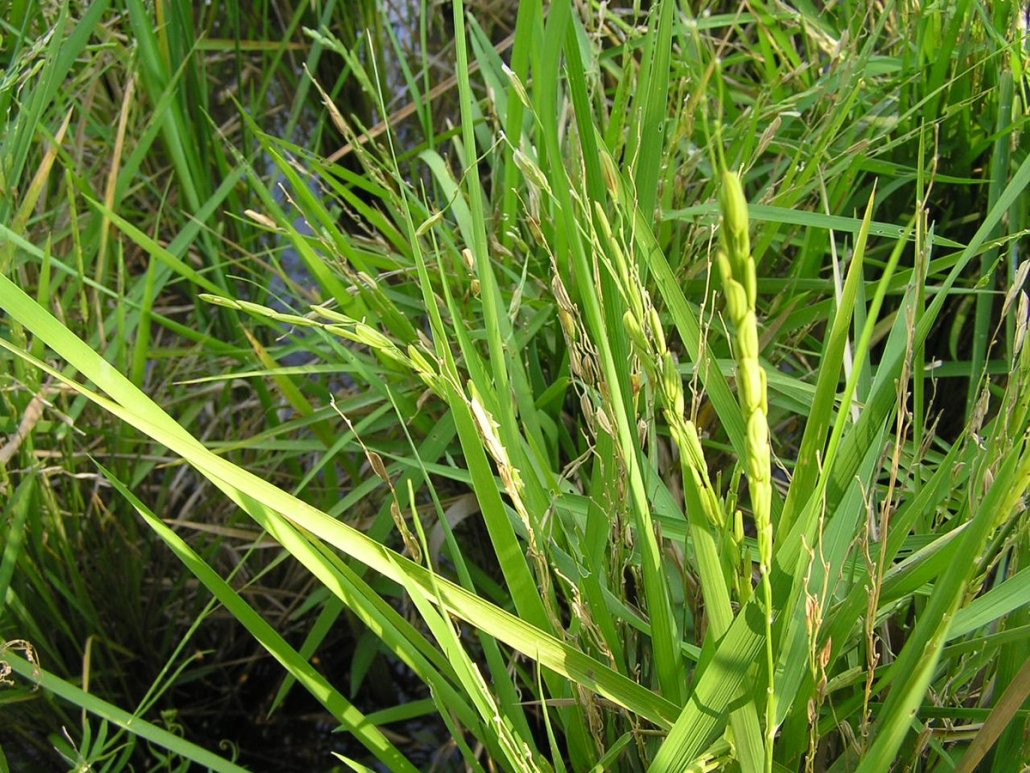 Damien Boilley Attribution 2.0 Generic CC BY 2.0 Deed
 Cultivating rice in sugarcane fields protects soil moisture and counteracts pathogens. From Florida, the story of a successful agricultural practice
by Matteo Cavallito
Suppressing harmful microbial activity, increasing the soil’s water retention capacity and thus counteracting drought, and improving the health of the ecosystem by fostering biodiversity. These are the beneficial effects that can be achieved by doing something extraordinarily normal: growing rice.
This is a successful story of the use of agricultural practices with a positive impact for soil coming from Florida, and more specifically from the Everglades, a wetland area in the south of the state. It was told by Jehangir Bhadha, professor and expert on the issue, in an interview with the Australian website The Conversation.
Rice is grown in sugar cane fields
“Rice was grown in the Everglades Agricultural Area for a brief period in the 1950s, but it was limited to about 2,000 acres (800 hectares),” explains Bhadha, a professor at the University of Florida. ‘“Then came the discovery in Florida of a rice virus called hoja blanca, or white leaf, which stunts the plants or even kills them. This virus was first reported in the late 1950s in Colombia and Venezuela.”
The resumption of activity came in the mid-1970s when agronomists, with the pathogen now under control, had an idea: to cultivate rice during summer in fields used for sugar cane.
As a result, “During late spring and summer, more than 50,000 acres (20,000 hectares) of fallow sugarcane land in the Everglades Agricultural Area is available for rice production”, prosegue Bhadha. “In 2023, about half of these acres were planted with rice. The remaining land either remains fallow or is flooded but bears no rice – a practice commonly referred to as ‘fallow flooding’.”
Beneficial effects for the soil
In recent years, researchers at the University of Florida’s Institute of Agricultural and Food Sciences have been studying new rice varieties and contributing to their planting in the area concerned (more than 10 different types on 9,300 hectares of fields). Here, the presence of a considerable amount of nutrients in the soil allows good yields without the use of fertilisers. But what stands out above all are the positive effects on the soil.
“By flooding these fields for prolonged periods, growers suppress both the microbial activity that causes oxidation and the hatching of pest insects,” the professor explains.
“It also increases the water-holding capacity of the soil, which allows for more moisture retention during drier periods of the year.” While “The improved soil health benefits the sugarcane crop and maximizes the longevity of the soil.” Finally, “Growing flooded rice has also proved to attract wading birds like great white heron, snowy egret and glossy ibis.”
A resource against subsidence
Among the positive effects of rice cultivation is also the fight against a phenomenon known as subsidence. That is, the loss of soil volume and depth caused by precisely that microbial-mediated oxidation – produced by a shortage of water – that cereal crops tend to hinder.
Under normal circumstances, microbial-mediated oxidation leads to the disintegration of organic matter resulting in the gradual loss of soil. The observed area was no exception, yielding almost 1.8 metres of soil in the space of a century.
However, this phenomenon has been slowed down in recent decades by the aforementioned flooding of fields for rice cultivation. Over time, explains the University of Florida, the rate of land subsidence has halved from one to half an inch (2.54 to 1.27 centimetres, ed.) of loss per year. This improvement has been attributed in part to the use of better management practices by farmers.

 Quintin Soloviev, CC BY 4.0


