
The Planet’s fastest water cycle runs through plants
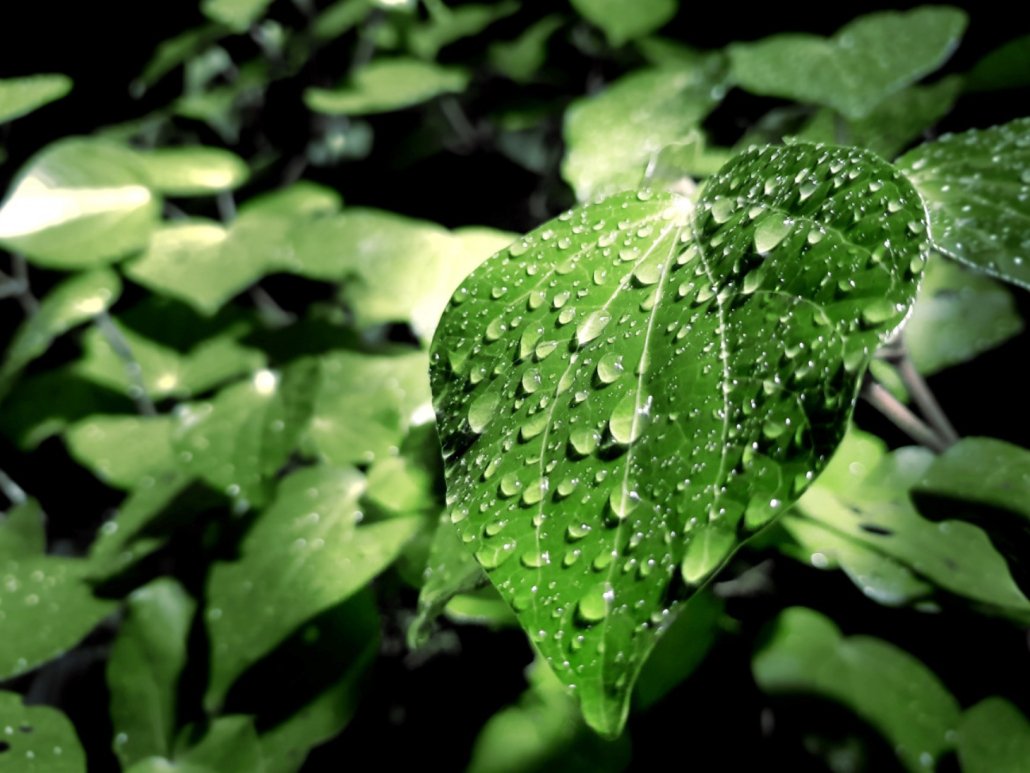 PxHere CC0 Public Domain Free for personal and commercial use No attribution required
 It takes only five days for a drop of water stored in a cultivated plant to complete its outward journey to the atmosphere, a study explains. Land use alters the speed of the process
by Matteo Cavallito
The time it takes for water to flow through plants and be returned to the atmosphere is among the fastest found in the global hydrologic cycle. It ranges from just five days in agricultural soils to 18 days in evergreen needleleaf forests. This is revealed in a new study by the Schmid College of Science and Technology at Chapman University in Orange, California. This research has provided the first accurate estimates of the speed of a phenomenon that has yet to be fully investigated.
“The time it takes for water to transit from the ground back to the atmosphere affects weather, climate, biogeochemistry and ecosystem function,” the research notes. “The transit time of water through vegetation, defined as the age of water transpiring from vegetation since time of entry, is a particularly understudied aspect of the terrestrial hydrologic cycle.”
Estimates from satellite data
The investigation, the results of which were published in the journal Nature Water, was based on data from NASA‘s Soil Moisture Active Passive Mission (SMAP) satellite mission. SMAP, in particular, provides high-resolution estimates of water in the soil. Assuming they were interfering with soil moisture measurements, the researchers explain, U.S. Space Agency scientists had begun estimating the impact of plants to correct their readings.
Such corrections, according to their Chapman colleagues, would be of crucial importance, containing, in fact, key information for understanding the water cycle.
The California scholars therefore combined estimates of plant water storage with estimates of evaporation rates to determine the transit time of water through vegetation. In doing so, they obtained five years of monthly estimates at a spatial resolution of 9 km2.
From less than a day to 1,600 years
The researchers, the study notes, thus found “that mean transit times of water through aboveground vegetation vary from ~5 days in croplands to ~18 days in evergreen needleleaf forests, with a global median of 8.1 days.” In detail, “In herbaceous-dominated land-cover types with comparatively low water storage and high seasonal water use, such as grasslands, the water stored in biomass may be frequently transiting in less than one day.”
The estimates, in short, “contribute to resolving the role of vegetation in the terrestrial hydrologic cycle; plants store little water compared to other pools, and the time it takes to return that water to the atmosphere is among the fastest components of the hydrologic cycle.”
Particularly fast in croplands, grasslands and savannas, the transit of water through lakes, by contrast, is completed in 17 years. For glaciers it is up to 1,600 years.
Land use change accelerates the water cycle
As the study reminds, terrestrial vegetation stores about 786 km³ of freshwater, or only 0.002% of its total amount on Earth. But however infinitesimal, this share and its cycle can provide relevant information about the impact of other factors. These include climate change and human activities on the soil. “Plants are the forgotten part of the global water cycle,” explained Andrew Felton, now a professor at Montana State University and co-author of the research. Moreover, he adds:
“The results suggest that the transit time of water through plants is likely to be very sensitive to events such as deforestation, drought and wildfire, which will fundamentally change the time it takes for water to flow through the water cycle.”
According to colleague Gregory Goldsmith, professor of biological sciences at Chapman University, moreover, “Croplands around the world tend to have very similar and very fast transit times.” This finding, he explains, “indicates that land use change may be homogenizing the global water cycle and contributing to its intensification by more rapidly recycling water back to the atmosphere where it can turn into heavy rain events.”
 Melissa McMasters Attribution 2.0 Generic CC BY 2.0 Deed
  Angal insect Attribution-ShareAlike 4.0 International CC BY-SA 4.0 Deed
  ECHO
ECHO 


