Nature-based solutions are the key to preventing wildfires in Europe
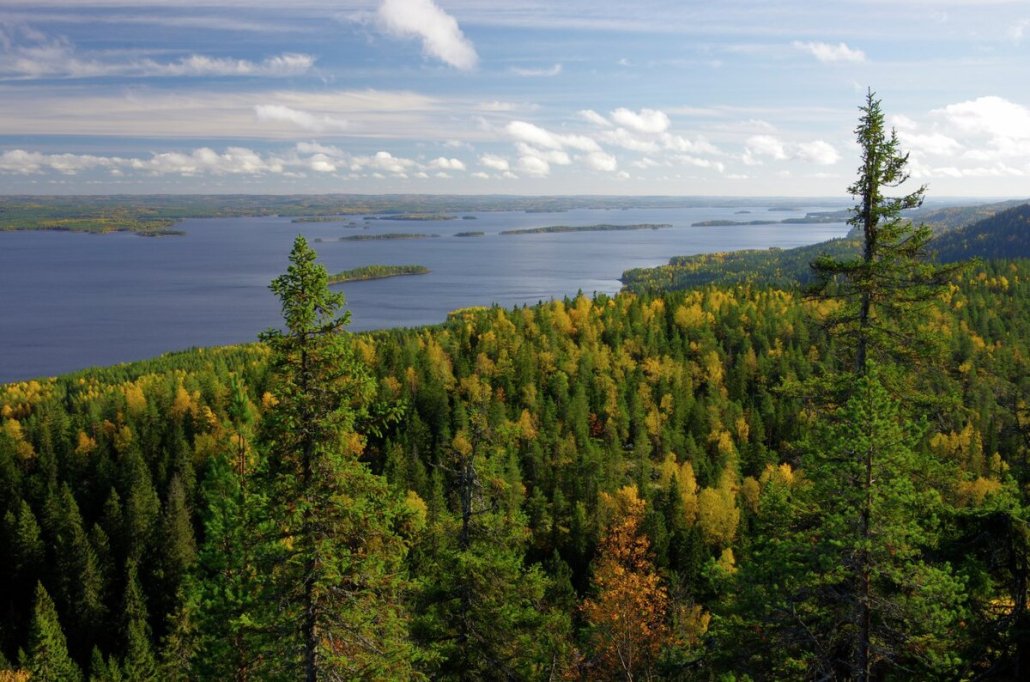 Pentti Rautio Attribution-ShareAlike 3.0 Unported CC BY-SA 3.0 Deed
 “Nature-based solutions reduce the growing risk of wildfires and make forests more resilient to climate change,” says European Environment Agency. Agroforestry, land moisture restoration and soil regeneration are the three recommended strategies
by Matteo Cavallito
Driven by climate and other factors, forest wildfires are becoming increasingly frequent and destructive in Europe. Until now, the response to the problem has focused mainly on emergency measures and fire suppression, leaving little room for prevention and recovery initiatives, which can also play a crucial role. This is especially true when they are based on ‘nature-based’ solutions such as restoring affected soils, promoting fire-resistant vegetation, and creating green barriers and buffer strips. This is according to a document released by the European Environment Agency (EEA), which mentions several case studies across the continent.
In Europe, fires affect almost 3,800 km² every year
The phenomenon, the authors explain, is worrying. In Europe, “Between 2000 and 2024, an average of 3,770km² of land was subject to fires annually,” the report states. “Climate change, urban expansion and land abandonment in rural areas are increasing the occurrence of fire-prone conditions. The interface between wildland and urban environments, where the risk of wildfires is especially high, is estimated to cover 7.4% of the land surface.”
Among the regions that are historically most affected by wildfires is the Mediterranean area, which, due to the general rise in temperatures, is facing a longer and more intense fire season.
At the same time, areas that were once less affected, such as those in northwestern Europe, are experiencing more frequent and severe fires. In short, the phenomenon is affecting almost everywhere, threatening forest ecosystems that, as the analysis points out, provide essential services. These include, for example, timber production, carbon storage, and climate mitigation. So how can the problem be addressed?
Nature-based solutions
Under the EU Strategy on Adaptation to Climate Change and the Forest Strategy for 2030, the report states, nature-based solutions can play a key role. Properly designed forestry, for example, reduces fire risks by managing combustible material loads through grazing, agroforestry, deadwood management, and controlled use of fire.
In post-fire management, on the other hand, various strategies can be used to help restore soil and microbial abundance, control erosion, and diversify the landscape.
“Nature-based solutions like adaptive forestry, green corridors, agroforestry, rewetting and rewilding can play key roles in transitioning from fire suppression to fire management,” the study explains. They “can also increase the resilience of forests to other climate change threats, including pest outbreaks.”
Effective solutions from Italy to Finland
According to the authors, several case studies conducted in Europe confirm the efficacy of these strategies. Around Lake Occhito, located in Italy along the border between Puglia and Molise, a specific management plan involving controlled use of fire has reduced the risk of fires and the spread of plant pathogens, while increasing biodiversity.
Positive results have also been achieved in the province of Soria in the autonomous community of Castile and León in northern Spain (forestry, pasture management, natural and assisted regeneration), in the Deurnsche Peel area in the southern Netherlands (green infrastructure, buffer strips and ecological corridors, and more).
Equally valuable experiences have been reported in North Rhine-Westphalia, Germany (reforestation with varied native species, natural and assisted regeneration) and in Karelia, eastern Finland (reforestation, adaptive forestry, dead biomassmanagement). In general, the authors conclude, nature-based are effective when designed according to local risks, as well as to different governance and socio-economic contexts.
 Photo: Pexels free to use CC0
  SOUL
SOUL Vincent Sasseville/Nunataryuk Attribution-NonCommercial-ShareAlike 2.0 Generic CC BY-NC-SA 2.0 Deed https://www.flickr.com/photos/gridarendal/49555909433