Drought, the Mediterranean in the hotspot in the world is small
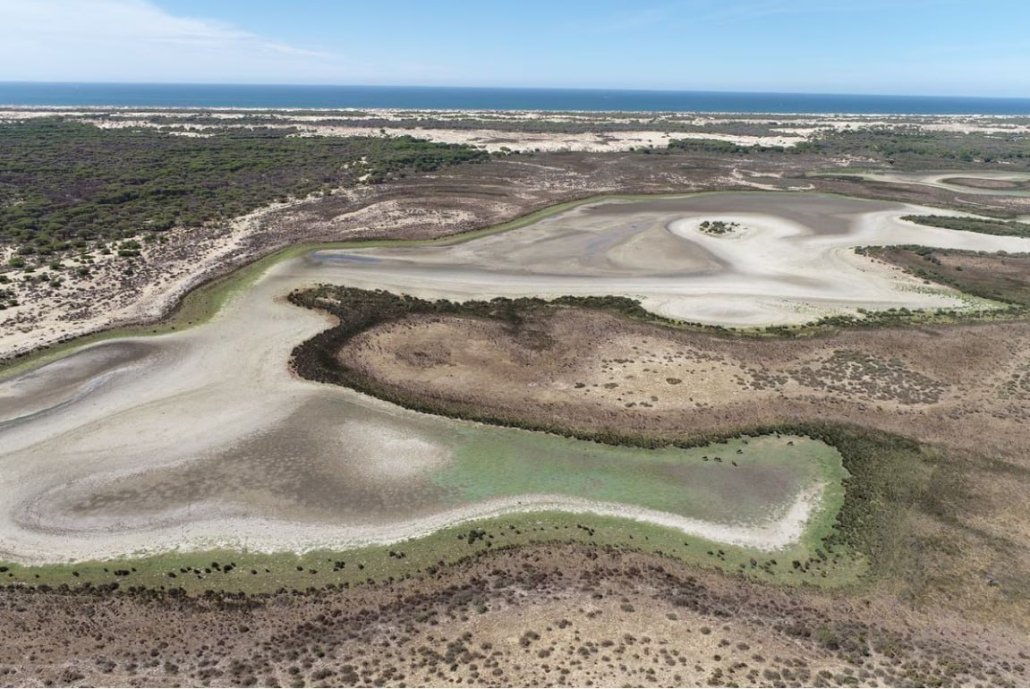
A new UNCCD report has identified the environmental, social, and economic impacts of drought in the most affected areas in 2023-2024, including Spain, Morocco, and Turkey. “A global catastrophe spanning millions of square kilometers and affecting millions of people.”
by Emanuele Isonio
Perhaps the most difficult connection to understand for those living in the rich world who still consider themselves relatively safe from the perverse effects of climate change is the one between increasing drought and the doubling of forced child marriages. Yet it is one of the concrete examples explicitly cited in the UNCCD (United Nations Convention on Desertification) report on the economic, social, and environmental impacts of drought. It occurs in areas of Ethiopia where water shortages are most severe. Although child marriages are illegal, for many families they are often the only way to earn a dowry that can be converted into income, while also easing the burden of providing food and basic necessities for one of their children.
But this seemingly extreme case helps us understand how the consequences of increasing drought are far more profound than we think. And “no country, no matter how rich and endowed with natural resources, can afford to be complacent” about the phenomenon, emphasizes Mark Svoboda, director of the National Drought Mitigation Center (NDMC) at the University of Nebraska-Lincoln, who co-edited the publication with the UNCCD.
Drought Impacts
The report aims to identify the world’s regions most severely affected by drought in 2023-2024, explore the impacts experienced in these areas, investigate the underlying vulnerabilities of affected populations, and examine the climate factors that contributed to the severity of the drought’s effects.
“Understanding which areas and populations have been most affected, and why, is essential to guide future mitigation strategies, improve resilience planning, and support equitable policy responses,” the report states. It aims to help “improve drought monitoring, planning, and response capabilities, while also providing concrete insights for researchers, policymakers, and humanitarian organizations working to address the consequences of extreme climate events.”
A Record Two-Year Period
According to the National Oceanic and Atmospheric Administration (NOAA), 2023 and 2024 were the two hottest years on record globally. July 22, 2024, in particular, set the record for the hottest day on Earth. High temperatures and a lack of precipitation have had widespread consequences: water shortages, food shortages, damage to agricultural activities, and electricity rationing.
“This is not simply another drought,” Svoboda continues. “This is a global catastrophe spanning millions of square kilometers and affecting millions of people, among the worst I have ever seen.”
Some areas of the world have been particularly affected. Based on over 250 studies, scientific sources, and press reports, the report has identified several global hotspots across different continents. Among them is the Mediterranean basin, and specifically, Spain, Morocco, and Turkey.
The Impact on the Mediterranean Basin
“The difficulties faced by Spain, Morocco, Turkey, and many others in securing water, food, and energy amid persistent drought offer a glimpse of the future of water in uncontrolled global warming,” observes Svoboda.
Data reported in the UNCCD document for the three Mediterranean countries are obviously worrying. For example, due to drought, Morocco‘s sheep population has declined by 38% in 10 years. The North African country recorded a 57% water deficit in January 2024. In Turkey, 88% of the national territory is at risk of desertification. In Spain, only 25% of municipalities with more than 20,000 inhabitants have a drought management plan, yet drought is already affecting 60% of the country’s agricultural land.
On the other hand, confirming that the problem is not limited to a few countries, the report highlights that, according to the latest map of the Combined Drought Indicator, 26.9% of the entire European Union territory is under alert conditions and 10% under alarm.
The El Niño Factor
The global drought between 2023 and 2024, the report’s authors note, was influenced by El Niño, one of two major climate phenomena that, along with La Niña, impact global weather and climate. A peak in global warming occurred in 2023. El Niño typically causes drought conditions in southern Africa, southern and southeast Asia, northern South America, Central America, and Australia. La Niña, on the other hand, tends to cause drought conditions in eastern Africa, western Asia, southern South America, and southern North America.
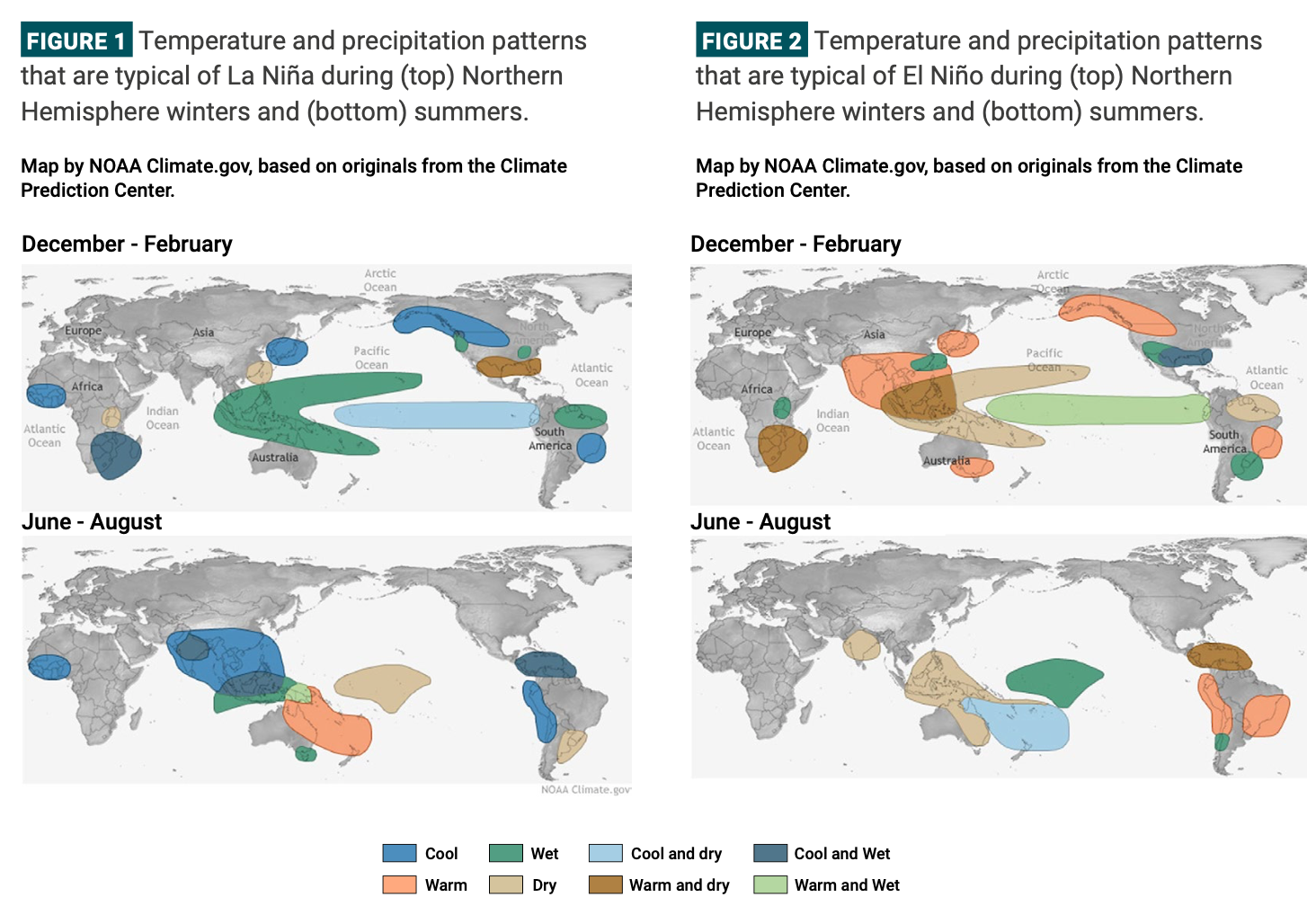
The images show the combined effect of El Niño and La Niña during Northern Hemisphere winters and summers. PHOTO: UNCCD, Drought Hotspots Around the World 2023-2025.
“El Niño has triggered drought conditions in agricultural lands, ecosystems, and urban areas in 2023-2024, exacerbating the effects in regions already affected by heat, population pressure, and fragile infrastructure,” explains Kelly Helm Smith, co-author of the report, deputy director of the NDMC, and a drought impact researcher.
Drought impacts disproportionately affect vulnerable populations, including women, children, older adults, people with chronic diseases, subsistence farmers, and agropastoralists, Smith said. Health risks include cholera outbreaks, acute malnutrition, dehydration, and exposure to contaminated water. People are also frequently forced to abandon their homes and communities in search of work or minimally acceptable living conditions.
Actions Needed
“Future suffering and devastation could be reduced by acting now,” Smith said. “Drought is not just a meteorological event: it can be a social, economic, and environmental emergency. The question is not whether it will happen again, but whether we are better prepared next time.”
The UNCCD document therefore emphasizes the need to invest in water-efficient infrastructure and nature-based solutions, equitably distributing resources to people affected by drought, and implementing policy changes related to water use and human rights. Equally crucial is acting promptly to reduce the effects of future droughts by committing to improving access to food, water, education, healthcare, and economic opportunities, especially for the most vulnerable. Strengthening support for the Sustainable Development Goals would help reduce the effects of future droughts.
“The nations of the world,” Smith concludes, “have the resources and knowledge to prevent much suffering. Do we have the will?”
 Melissa McMasters Attribution 2.0 Generic CC BY 2.0 Deed
  Angal insect Attribution-ShareAlike 4.0 International CC BY-SA 4.0 Deed
  ECHO
ECHO