Desertification, India will have its own “Green Wall” to fight it
 TeshTesh via Wikimedia Commons.
1,400 kilometers long and 5 kilometers wide, the Green Wall will cross 4 states of India along the Aravalli mountain range. The territory has long been subject to increasing desertification that damages agricultural activities and ecosystems
by Emanuele Isonio
India will also have its own “Green Wall”. A 1,400 km long and 5 km wide belt designed with one goal: to combat soil degradation, slow desertification and conserve biodiversity. The project is called “Aravalli Green Wall” and will develop along the mountain range of the same name, which crosses 29 districts in the states of Haryana, Rajasthan, Gujarat and Delhi.
The first tree of the ambitious environmental initiative was planted by Indian Prime Minister Narendra Modi on the occasion of World Environment Day, on June 5. “Our aim,” Modi explained in a post on X, “is to redevelop the areas connected to this mountain range. We will work with the respective local governments and focus on things like improving water systems, containing dust storms, arresting the eastward expansion of the Thar Desert. In the Aravalli range and beyond, in addition to traditional plantation methods, we will encourage new techniques, especially in urban and semi-urban areas where space is limited.”
A portal to monitor plantings
The Aravalli Green Wall is part of the National Action Plan to Combat Desertification (NAPCD) developed by the government of New Delhi. The planting of new trees will be geolocalized and progressively monitored through the Meri LiFE portal, a platform created by the Indian government in collaboration with UNICEF to stimulate the ecological skills of young people and stimulate actions aimed at saving energy, reducing consumption, developing sustainable food systems and initiatives with low and high environmental impact.
According to the intentions of the institutions involved, the project will serve to combat air pollution in the territories involved, helping India to achieve its climate goals through the creation of an additional carbon sink of at least 2.5 billion tons of CO2 equivalent, restoring 26 million hectares of degraded land by 2030.
42% of the land is degraded
The Green Wall buffer zone will cover 6.45 million hectares of land that currently shows signs of degradation for 42% of its extension, equal to 2.7 million hectares, concentrated largely in the state of Rajasthan.
The Aravalli mountain range has been a natural barrier against desertification for millennia, preventing the expansion of the Thar Desert and protecting large cities such as Delhi, Jaipur and Gurugram. It is also the source of important rivers such as the Chambal, Sabarmati and Luni. Its forests, grasslands and wetlands are home to endangered plant and animal species. However, deforestation, mining, livestock grazing and the rapid urbanisation associated with India’s economic development, often in an entirely uncontrolled manner and without rigorous environmental regulations, are exacerbating desertification, damaging aquifers, drying up lakes and reducing the mountain range’s capacity to support wildlife.
The experience of the African Green Great Wall
The project developed by India takes up the idea behind the “Great Green Wall”, launched 15 years ago in Africa: in that case, the great wall of trees and vegetation made up of native and resistant tree species, should cut across the entire continent, crossing the Sahel and Sahara states. An imposing work: 7,600 kilometers long and 15 kilometers wide, to stop growing desertification, care for degraded ecosystems and combat the climate and food crisis.
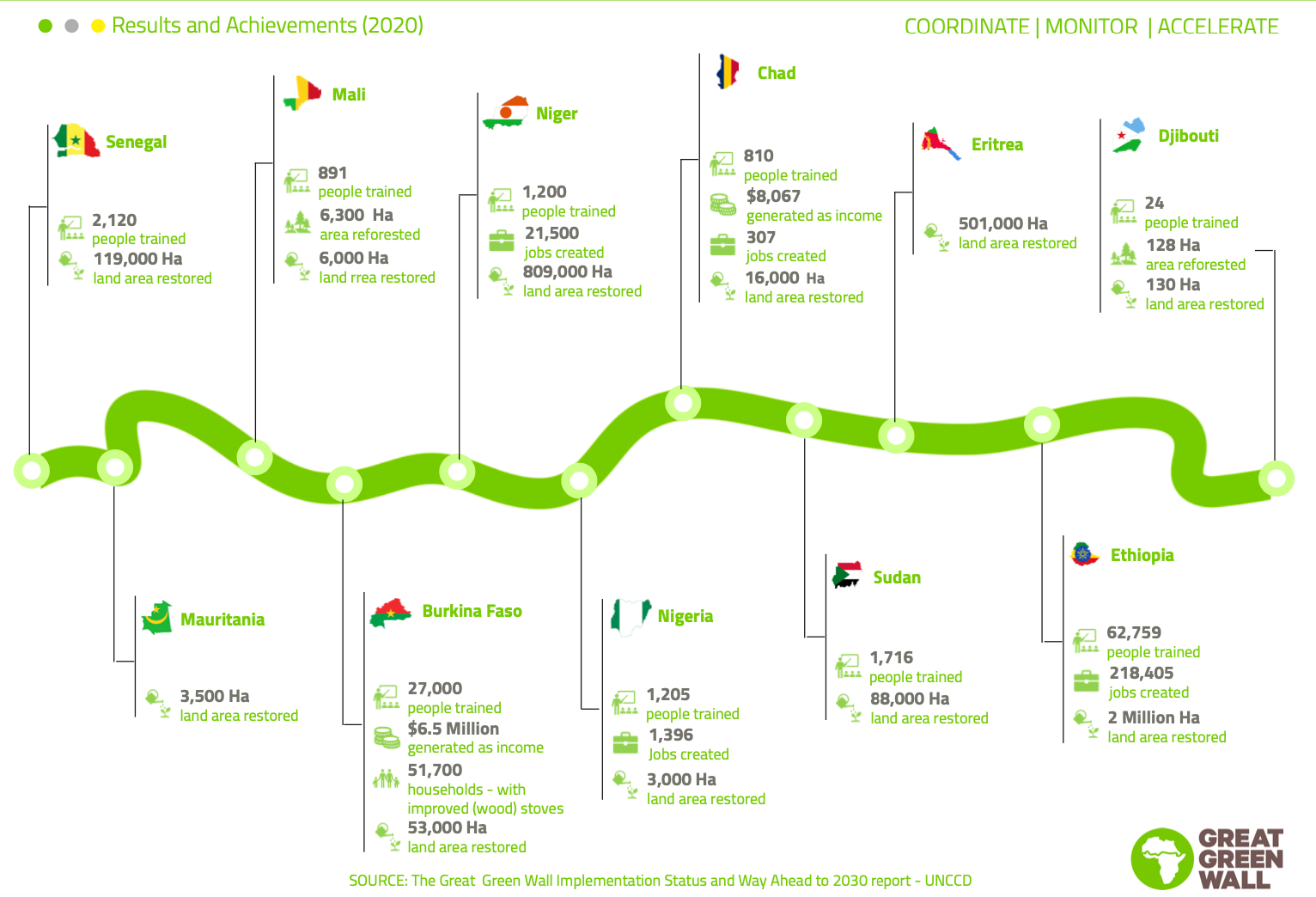
Lo stato dei risultati ottenuti fino al 2020 negli 11 Stati africani interessati dal programma della Grande Muraglia Verde. FONTE: Great Green Wall Initiative
The African project is now 15 years old: the Community of Sahel and Sahara States approved it in 2005, but work officially began two years later. Over time, the initial idea of a large line of trees that would extend from East to West along the southern part of the African desert, the Great Green Wall, has evolved into a mosaic of interventions, in order to respond more precisely to the needs of local communities, who have gradually become active protagonists of the project.
However, in the African case, due to the Coronavirus pandemic and the various conflicts involving some of the 11 founding countries of the initiative, work is proceeding slowly: last year, a report by the UNCCD, the UN agency dedicated to the fight against desertification, estimated that currently only 4% of the intervention area has been restored.
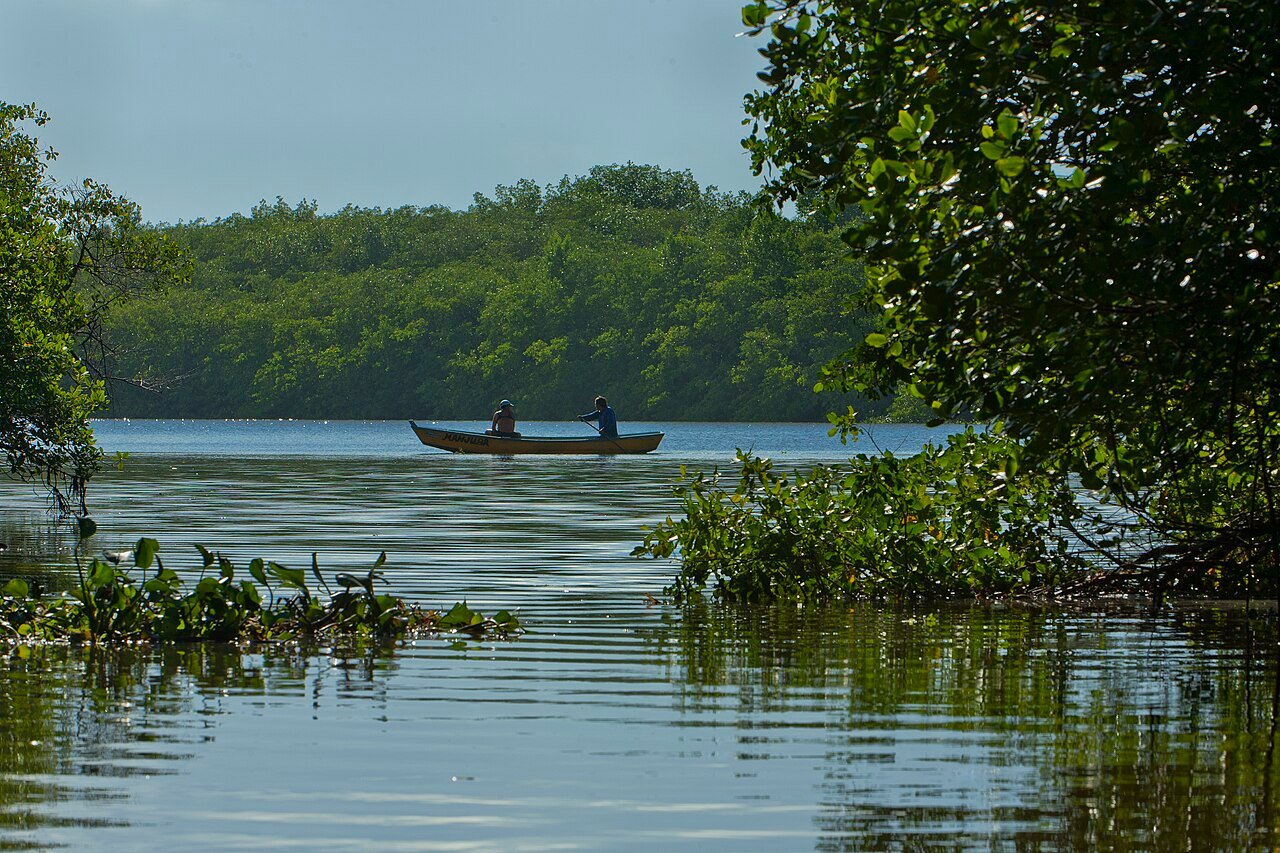 Jonathan Wilkins Attribution-ShareAlike 3.0 Unported CC BY-SA 3.0 Deed
 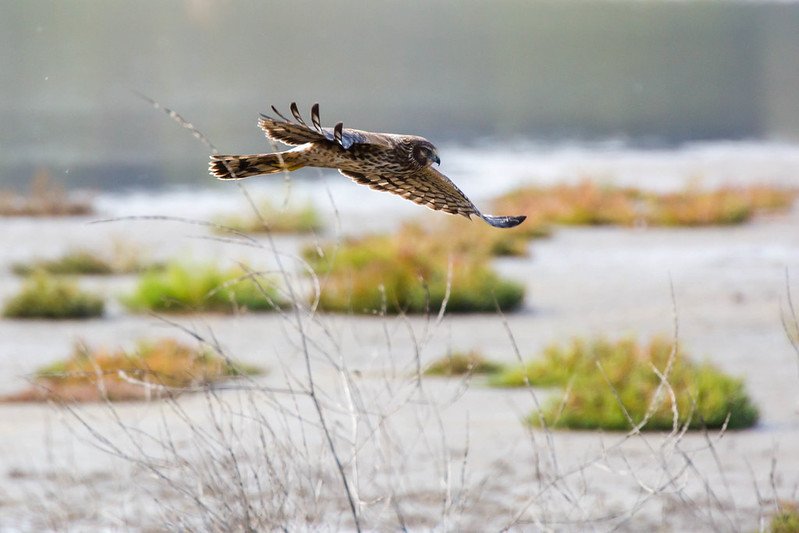 Melissa McMasters Attribution 2.0 Generic CC BY 2.0 Deed
 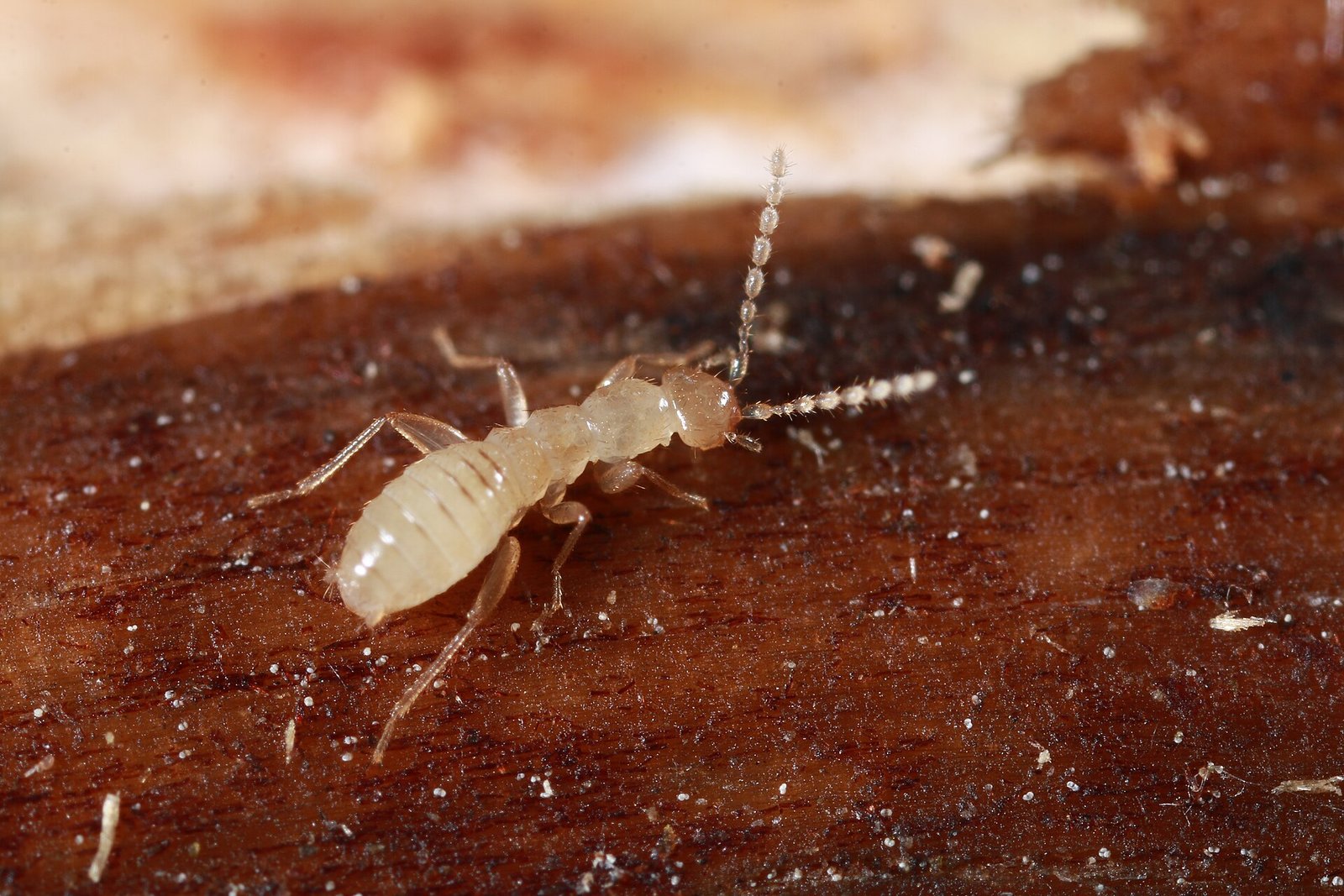 Angal insect Attribution-ShareAlike 4.0 International CC BY-SA 4.0 Deed