In California, the most devastating wildfires are the new normal
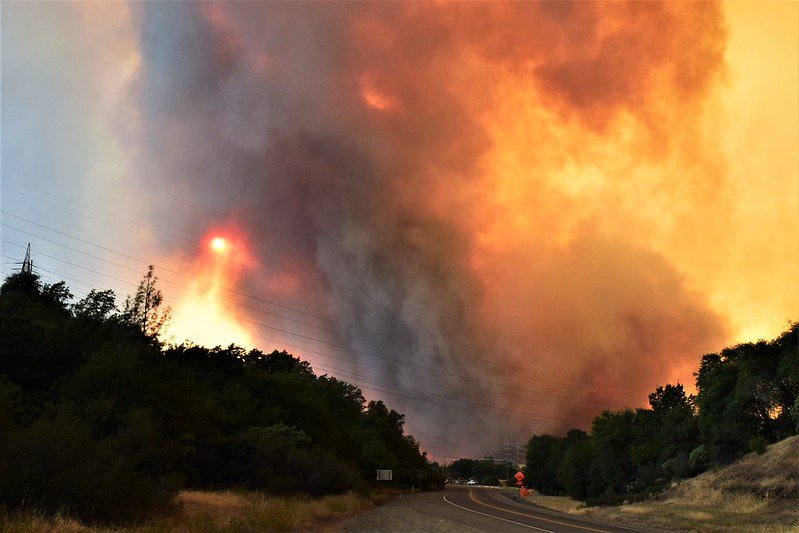 Eric Coulter, Public Domain Mark 1.0 Universal
A study shows how climate change and forest management have reshaped the dominant pattern of wildfires. Since 2012, high-intensity wildfires have become the most common, with increasingly severe environmental and economic consequences
By Matteo Cavallito
Wildfires devastating forests across the southwestern United States have become increasingly destructive over the past half century. Whereas fire was once a natural part of the ecological cycle, helping to renew ecosystems, today the opposite is true: high-intensity wildfires that wipe out entire sections of forest and prevent them from regenerating have become the dominant type.
This is the conclusion of a recent study conducted by researchers at the University of California, Los Angeles (UCLA). According to the researchers, the shift in wildfire intensity – driven in part by rising temperatures and increasing aridity – is set to have significant consequences extending well beyond the environmental sphere.
For the past 15 years, the most destructive wildfires have also been the most widespread
For decades, wildfires affecting California’s forests were predominantly low- to moderate-intensity. Although they burned part of the vegetation, they cleared undergrowth and dry fuel without threatening the survival of larger trees, helping to keep ecosystems in balance. Today, however, the situation has changed dramatically. “Fire has historically been ecologically restorative for California’s forests, but recent increases in the amount of stand-replacing wildfire threaten both forest health and the terrestrial carbon sink”, explains the study published in PNAS.
In recent years, however, “historically dominant low-severity fire was increasingly replaced by high-severity stand-replacing fire, which became the most common type beginning in 2012″.
In what has now become the prevailing scenario, wildfires spread across increasingly vast areas and reach temperatures high enough to completely destroy forest cover. The problem goes far beyond the loss of trees, affecting the functioning of entire forest ecosystems by undermining biodiversity, carbon sequestration, water cycle regulation, and the many essential ecosystem services they provide.
Forty years of fires under the researchers’ lens
The scientists’ conclusions are based on an analysis of satellite data covering 4,391 forest fires that occurred between 1985 and 2024. In particular, the authors assessed the severity of individual events by measuring damage to trees and soils. The analysis found that the amount of forest burned each year has increased roughly tenfold, according to a statement from UCLA, while the area affected by the most destructive wildfires has expanded thirtyfold.
The findings also show that this transformation “was strongest in high-biomass forests, implicating heavy fuel loads due to fire exclusion as an amplifier of tree mortality”.
The latest figures are particularly striking. According to UCLA bioclimatologist and study co-author Park Williams, 2020 was the year in which the western United States experienced the largest area of forest burned in modern history. The following year was not far behind, ranking as the second-worst year on record. Data from CalFire, the California Department of Forestry and Fire Protection, also show that the past decade accounted for eight of the ten largest wildfires recorded in the state over the past century.
Better forest management requires tackling climate change
Against this backdrop, the authors stress the need to expand forest management efforts through vegetation thinning, undergrowth removal, and greater use of prescribed burns, which reduce available fuel before large uncontrolled wildfires can develop. But that alone will not be enough. Making the situation even more critical is climate change: higher temperatures and an increasingly dry atmosphere raise the vapor pressure deficit, drying out vegetation and making wildfires more intense and harder to contain.
In short, while direct intervention measures are essential, they will not be sufficient unless the underlying climatic drivers of the problem are addressed as well.
Without such action, the risks are clear. The shift described by the research marks a turning point for California’s forest ecosystems. “This regime shift indicates that forested areas are increasingly burning at severity levels they are unlikely to survive”, the study notes, warning that under these conditions vast areas could permanently transition into grasslands or shrublands. The consequences would extend to economic sectors such as timber production, tourism, and water resource management, while also compounding the environmental impacts, including increased air pollution and a higher risk of flooding in the aftermath of wildfires.
 Photo: Thomas Bjørkan CC BY-SA 3.0
 Re Soil Foundation