Bulrush waste could help remove dyes from wastewater
 Oded Gilad, CC BY-SA 4.0
Researchers at Doshisha University in Japan have developed a new product that puts plant waste to use and removes dyes from water. A new opportunity for the circular bioeconomy
by Matteo Cavallito
Turning plant waste into a reusable material that captures pollutants in water. That is what scientists at Doshisha University in Kyoto, Japan, set out to achieve. They used bulrush biomass to produce activated carbon enhanced with zero-valent copper particles, a metallic form of the element. According to a study published in the Journal of Environmental Chemical Engineering, the material was able to remove three synthetic dyes, remaining effective even after repeated regeneration cycles.
The research explores circular approaches to producing bioproducts “while valorizing agricultural waste, seamlessly aligning eco-friendly waste disposal with the development of high-performance environmental remediation tools”.
Persistent dyes pose a challenge for water treatment
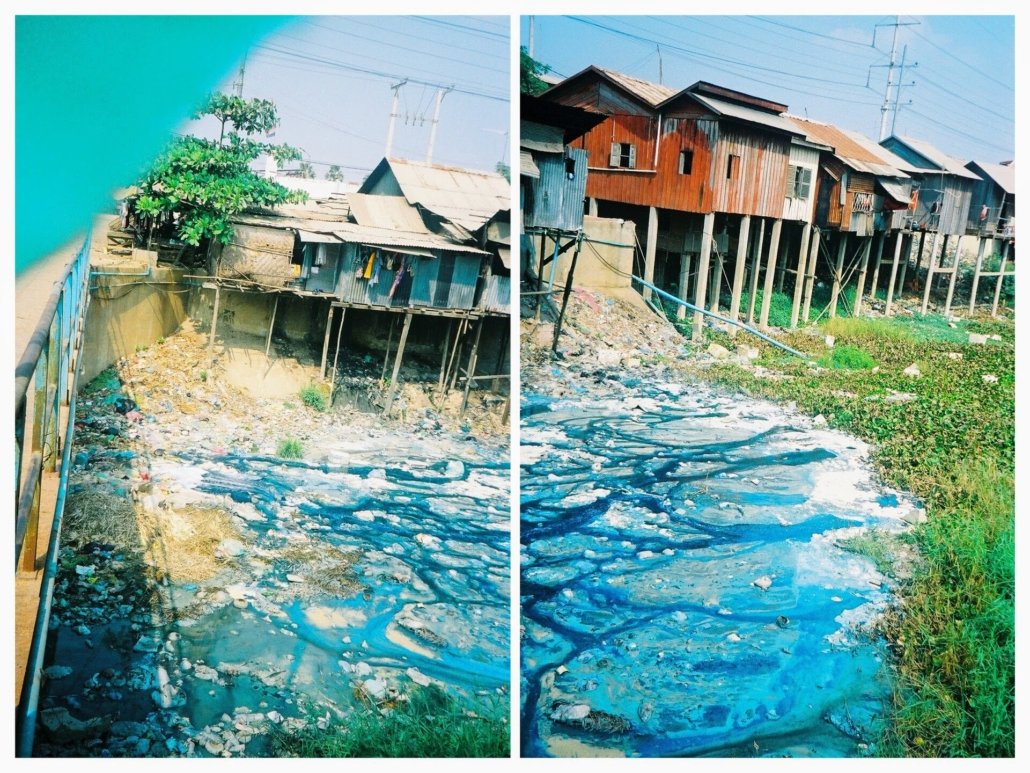
The textile, paper, leather and food industries can generate wastewater containing synthetic dyes. Their removal is challenging because of the chemical stability of many of these substances, which “can prolong colour contamination, reduce light penetration in receiving waters, and expose aquatic organisms to potentially toxic compounds”. Some dyes and their degradation products, moreover, “have also been associated with adverse human-health effects following prolonged exposure to contaminated water”.
Available treatments have advantages and limitations: oxidation can generate secondary products that require further treatment, while membranes pose challenges involving fouling, concentrate management, energy consumption and maintenance.
One possible treatment technique is adsorption, a process in which contaminants are retained on the surface of certain materials. One such material is activated carbon, but its production costs are high. This has prompted the search for alternative materials derived from agricultural and plant residues.
A plant-derived material enhanced with copper
The team heated bulrush waste together with two compounds, copper nitrate and potassium hydroxide, producing the material in a single step. Gases released by the biomass during the process helped form metallic copper particles, while potassium hydroxide promoted pore formation in the carbon. Analyses showed that the particles were evenly distributed throughout the structure, which had a large surface area capable of retaining contaminants. Researchers then tested the material on three synthetic dyes: methylene blue, methyl orange and sunset yellow.
Despite their different electrical charges, all three were captured more effectively by the copper-enhanced carbon than by the unmodified material.
The estimated maximum adsorption capacities were approximately 62 milligrams per gram for methylene blue, 56 for methyl orange and 36 for sunset yellow. The capture process involves several mechanisms, including electrostatic attraction, interactions with the carbon matrix and bonding at metallic sites.
Reuse and circularity: the next steps
The ability to regenerate the material is another significant finding. Using a solution containing potassium hydroxide and acetone, the researchers carried out six consecutive cycles, “preserving dye removal efficiencies above 90.6% for Methylene Blue and 88.0% for Methyl Orange”. The study therefore points to a promising route for producing functional materials from biological waste, combining biomass valorisation with water treatment.
“Our study findings present the opportunity to advance a circular economy: valorizing invasive, zero-cost bullrush weed biomass into a functional carbon framework through an ecofriendly, single-step co-pyrolysis route”, says Michiaki Matsumoto, a professor and co-author of the study. So far, however, the material has only been tested in the laboratory. Its use in industrial facilities and its ability to treat water containing complex mixtures of contaminants have yet to be evaluated.
 Photo: Thomas Bjørkan CC BY-SA 3.0
 Re Soil Foundation