Efficient use of nitrogen is needed to protect environment and health, says FAO
 Sasin Tipchai CC0 1.0 Universal CC0 1.0 Deed
 Nitrogen, the UN agency remarks, is an essential element but also a contaminant. Its intake to the soil is likely to quadruple by the end of the 21st century. The report highlights the key role of the circular bioeconomy
by Matteo Cavallito
The spread of nitrogen-based fertilizers since the 20th century has contributed significantly to improving agricultural production and enhancing global food security. The improper use of nitrogen compounds, however, can severely damage air, water and soil quality leading to biodiversity loss and exacerbating climate change. Therefore, sustainable use of products based on this element is also needed through the adoption of appropriate circular bioeconomy principles. This is suggested by a new report of the Food and Agriculture Organization of the United Nations.
On global soils 150 million tons of nitrogen each year
“Nitrogen is an essential component of food constituents, particularly amino acids and proteins required for the growth of plants, animals, and humans,” writes FAO. By converting unreactive nitrogen found in abundance in the atmosphere, it is possible to produce useful substances such as ammonia, a basis for many commonly used fertilizers today.
“Humans currently add approximately 150 teragrams (or 150 million tons, ed.) of reactive nitrogen to the Earth’s land surface each year through agriculture and industry,” the FAO further notes. “This amount is more than double the pre-industrial rate.”
According to some estimates, the report continues, climate change could increase the need for its use in the soil by raising the total annual input to as much as 600 million tons by the end of the 21st century with clear consequences in terms of increased dispersion into the environment. To date, livestock farming accounts for about one-third of total N emissions from human activity.
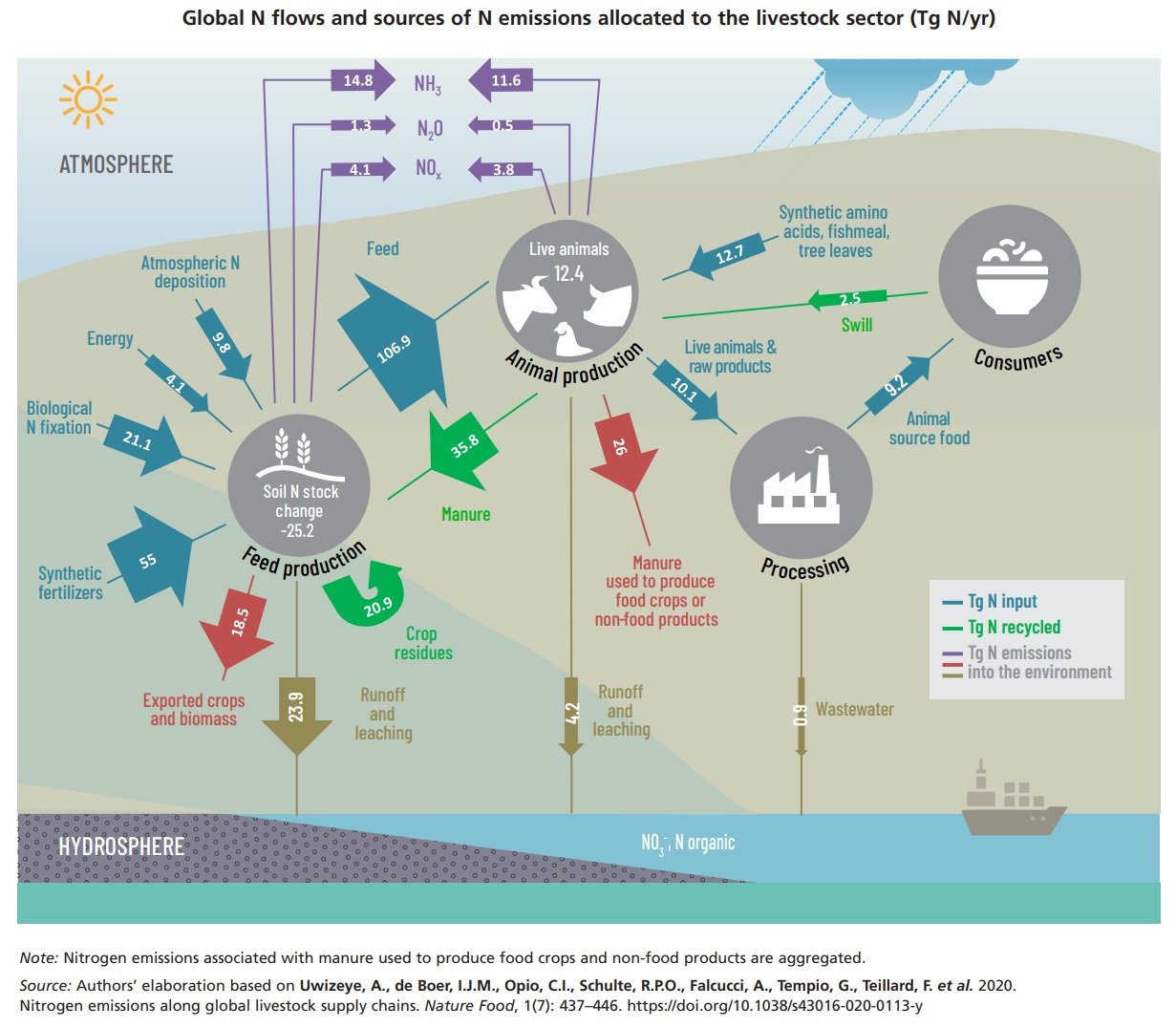
Major sources of nitrogen emissions worldwide (million tons). Source: FAO. 2025. Sustainable nitrogen management in agrifood systems. Rome. https://doi.org/10.4060/cd3388en Attribution 4.0 International CC BY 4.0 Legal Code
A complex relationship between costs and benefits
Nitrogen pollution is particularly severe in North America, Western Europe and some Asian countries, where fertilizers have been used intensively and often improperly for decades. In some low- and middle-income nations, FAO again reminds us, limited access to fertilizers leads to depletion of the element by reducing soil nutrients and causing soil degradation.
In short, in general, judicious use of nitrogen in agriculture helps prevent many problems while increasing crop yields. Conversely, overuse contributes to global warming, deterioration of air and water quality, and depletion of stratospheric ozone by increasing risks to human health. Consequently, “sustainable management that focuses on minimizing external inputs and losses and maximizing recycling is more urgent than ever”.
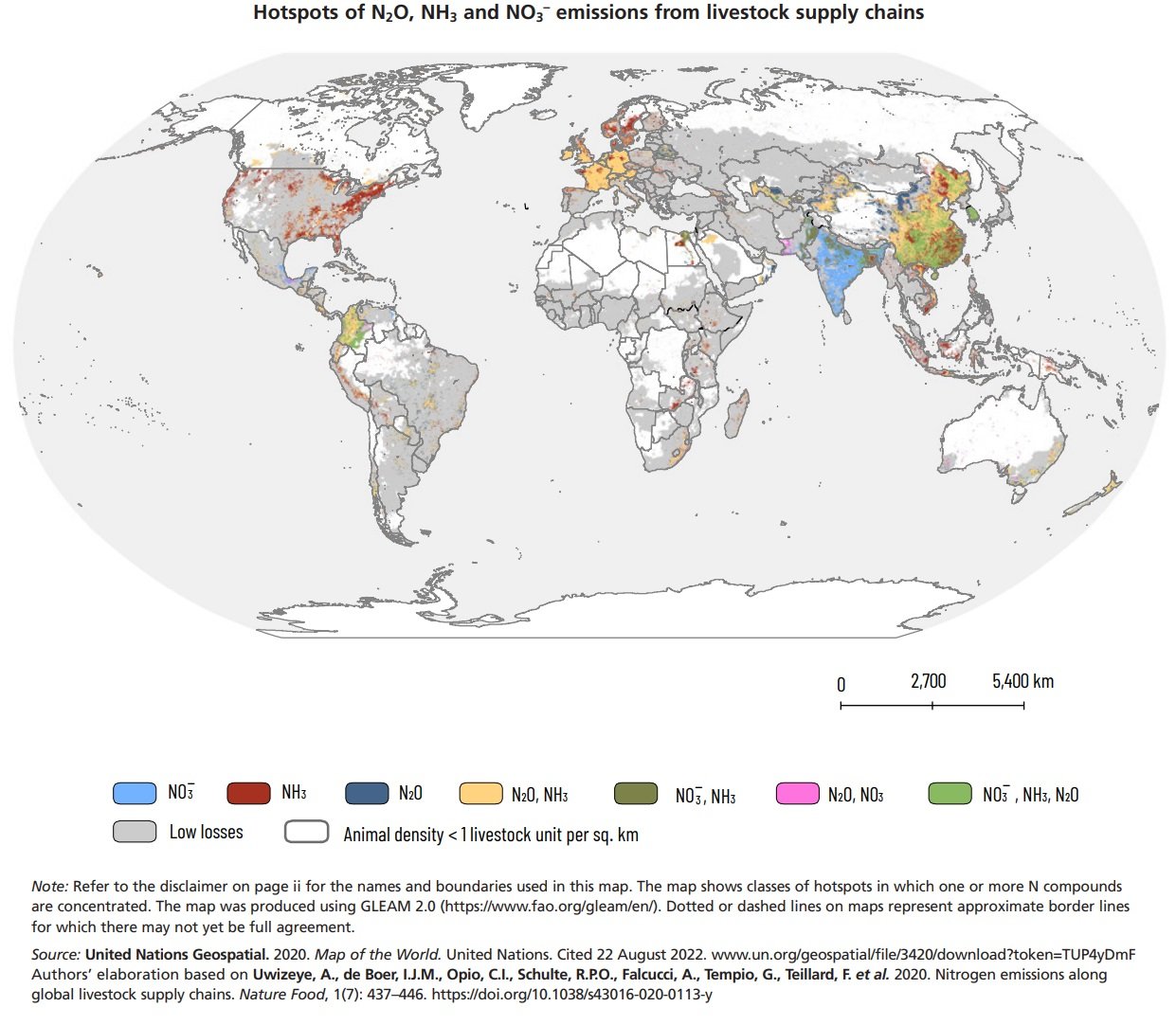
Most N emissions occur in South Asia (35 percent) and East Asia (28 percent). Source: FAO. 2025. Sustainable nitrogen management in agrifood systems. Rome. https://doi.org/10.4060/cd3388en Attribution 4.0 International CC BY 4.0 Legal Code
FAO’s recommendations
Many recommendations are included in the report. The fertilizer industry, the FAO explains, should first and foremost reduce greenhouse gas emissions in the production of nitrogen products by limiting their losses along the production and distribution chain. Governments, on the other hand, are asked, among other things, to promote biological nitrogen fixation through best agricultural practices, incentivize the use of organic fertilizers.
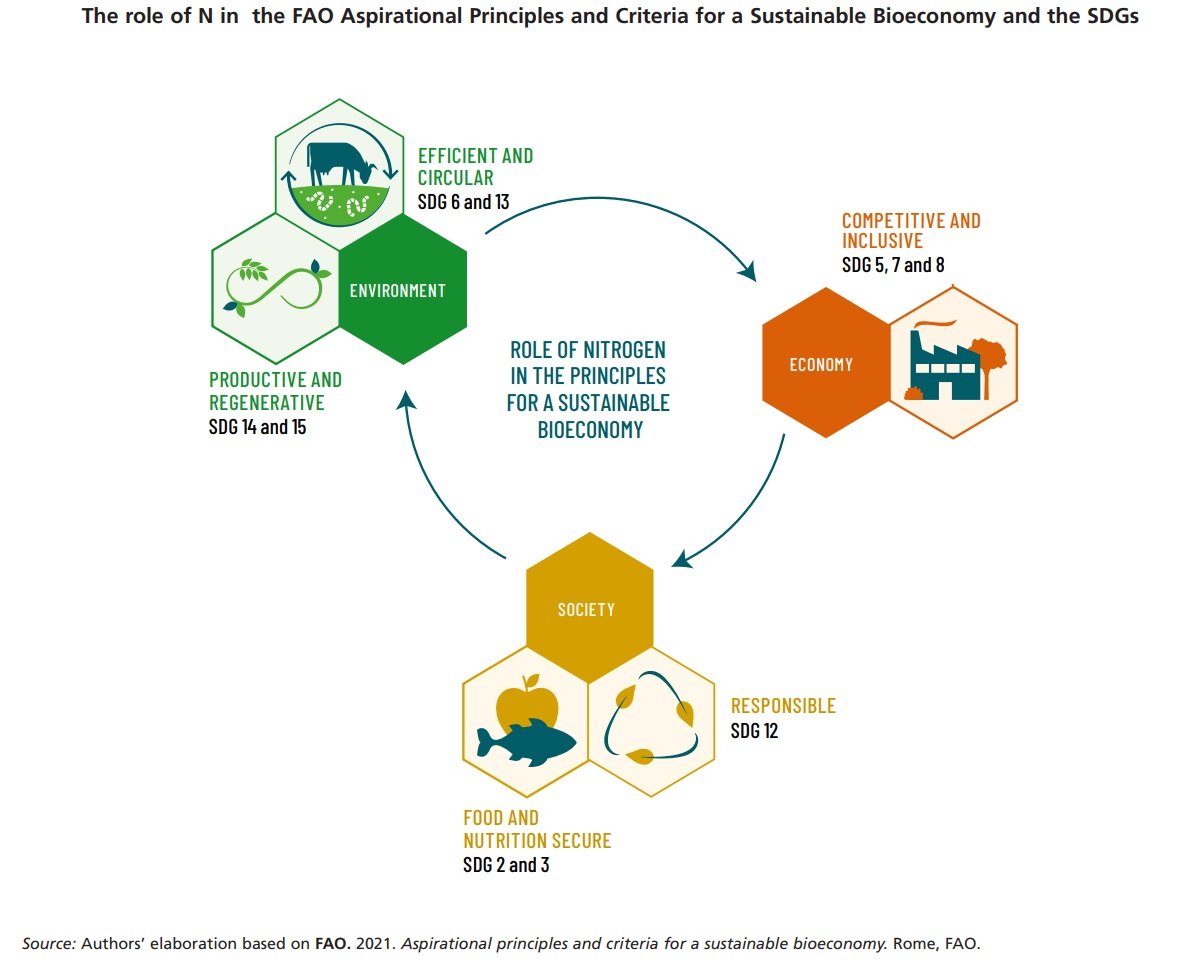
Circular management has several benefits for food security, the economy and society by contributing to the achievement of many of the United Nations Sustainable Development Goals (SDGs). Source: FAO. 2025. Sustainable nitrogen management in agrifood systems. Rome. https://doi.org/10.4060/cd3388en Attribution 4.0 International CC BY 4.0 Legal Code
The role of the circular bioeconomy
Promoting circularity in agricultural processes, the report notes, “increases efficiency in using and regenerating biological resources.” Crop residues, for example, “can be left on the soil to enhance soil structure and nutrient content and/or used for feed or as a substrate to grow food such as mushrooms and/or in pulp and paper, construction, chemicals, energy, or textile sectors.”
Overall, circular nitrogen management has several benefits for food security as well as the economy and society, contributing to the achievement of many of the Sustainable Development Goals.
“Sustainable nitrogen management is crucial for achieving the Sustainable Development Goals by 2030, particularly those related to hunger, health, clean water, sustainable production and consumption, climate action, and preserving life on land and underwater,” the authors conclude. “Improving nitrogen use efficiency across the agri-food chain and reducing nitrogen loss can help increase food production in low- and middle-income countries by allowing more nitrogen resources to achieve their intended purpose, improve health by reducing harmful emissions, and protect water bodies from pollution.”
 Thpelin Attribution-ShareAlike 3.0 Unported CC BY-SA 3.0 Deed
 Jonathan Wilkins Attribution-ShareAlike 3.0 Unported CC BY-SA 3.0 Deed