Bacteria help predict soil acidity in grasslands
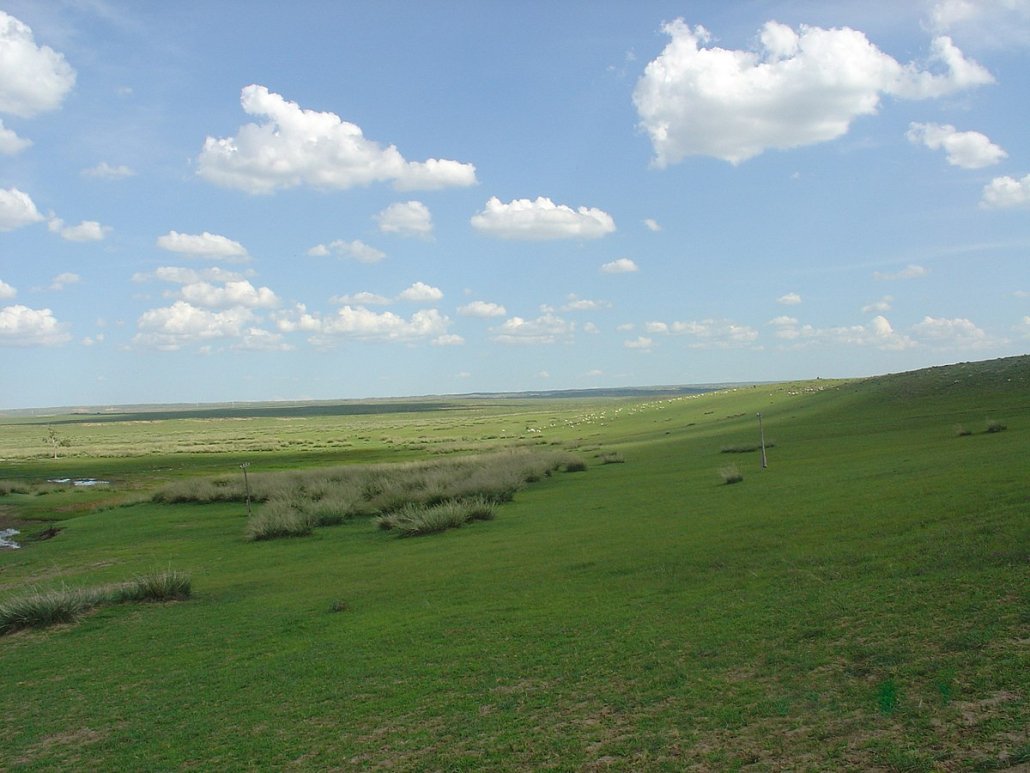 Shizhao Attribution-ShareAlike 3.0 Unported CC BY-SA 3.0 Deed
 A new Chinese model based on bacterial analysis allows to estimate changes in grasslands. By 2100, soil acidity will decrease especially in North-East Asia, Africa and Oceania
by Matteo Cavallito
Analysis of bacteria and their responses to external factors could be used to predict changes in grassland soil pH as a result of climate change. This is supported by a study published in the journal One Earth. The research was carried out by a group of scientists led by Deng Ye, a professor at the Research Centre for Eco-Environmental Sciences of the Chinese Academy of Sciences.
‘This study shows that bacterial responses can serve as bioindicators of soil pH changes, providing valuable insights for future climate adaptation strategies“, Deng said in a statement from the Academy. “The model could be expanded to other ecosystems.”
A correlation between bacteria and acidity
The level of soil acidity, the authors argue, is a critical factor in supporting the growth and continued life of various terrestrial species. In the climate change scenario, however, its variations are difficult to predict. “The soil pH generally maintains a relatively stable state in response to external disturbances due to its buffering capacity (e.g., excess ions can be adsorbed by minerals or organic compounds),” the study explains.
Bacteria and soil microbes in general “are highly correlated with soil pH and quickly respond to climate warming, bridging climates and soil systems,” the authors continue. “Thus, they are good bioindicators of soil pH changes.”
Soil microbiota, in other words, are sensitive to climate change and, by influencing acidity, are key drivers of biogeochemical processes. However, the researchers explain, current terrestrial models often ignore microbial communities due to their complexity and high diversity.
More than 1,200 sites worldwide investigated
By collaborating with 12 other research groups from 6 countries, the authors were able to collect sufficient data on the global grassland soil microbiota. Then they succeeded in developing a predictive model based on bacteria and called CoBacFM or Core-bacteria-forecast model. In this way, they were able to examine the soil microbiota itself under different climatic conditions – present and future – of the global grasslands.
These habitats, the researchers recall, cover more than 40 per cent of the Earth surface and represent the largest ecosystem on earth.
By examining three different future scenarios, the authors created a model capable of linking changes in ecosystems to variations in climatic conditions and soil functioning characteristics including soil pH. The researchers analysed specific rRNA gene sequencing datasets from 3,703 samples taken from 1,251 grassland sites around the world in tropical, temperate and tundra regions.
Soil acidity will decrease in about 2/3 of the grasslands
In summary, by the end of the century, “this CoBacFM model estimated that soil pH will increase in 63.8%–67.0% of grassland regions, especially in northeastern Asia, Africa, and Oceania grasslands,” the study says. “Moreover, 10.1%–12.4% of grassland regions will experience a decrease in soil pH (which means that soil will become more acid, ed.), including in central North America, southern Africa, and eastern Asia”.
Furthermore, “Approximately one-third of regions will become more alkaline (which means more basic or less acid, ed.) by 5.6%, and the area of alkaline soils expand in all future scenarios.”
These results were further confirmed by the results of 14 experiments simulating soil temperature conditions. “Our model,” the scientists explain, , “forecasted the potential variabilities of soil pH under future climate changes, and identified hotspot regions could be considered in future decision-making strategies and policies for mitigating future climate warming.”
 Melissa McMasters Attribution 2.0 Generic CC BY 2.0 Deed
  Angal insect Attribution-ShareAlike 4.0 International CC BY-SA 4.0 Deed
  ECHO
ECHO