The price of climate change is getting higher for Africa
 Viktor Pinčuk Attribution-ShareAlike 4.0 International CC BY-SA 4.0 Deed
 Climate change impacts Africa’s agriculture and food security. High costs and insufficient investment remain the biggest problems, latest report by the UN Development Programme has found
by Matteo Cavallito
“Africa accounts for less than 4 percent of global carbon emissions, but it highly exposed to its impacts,” said experts from the United Nations Development Programme (UNDP) in the latest issue of their Sustainable Development Report released this summer.
A key concept, supported by clear numbers, which finds new confirmation these days from the World Meteorological Organisation (WMO) whose most recent annual report has just been published. “Africa bears an increasingly heavy burden from climate change and disproportionately high costs for essential climate adaptation,” the report explains emphasising, moreover, the strong impact of global warming on agriculture and food security.
An increasingly hot continent
With temperatures exceeding the 1991-2020 average by 0.61° C and even more the 1961-1990 period (+1.23° C), 2023 was one of the three hottest years for Africa since the beginning of the 20th century. The continent, the report explains, has warmed at a slightly faster rate than the global average, increasing by 0.3 degrees per decade over the past three decades.
Last year, the most significant temperature anomalies were recorded in the north-west, especially in the coastal areas of Mauritania, Algeria and Morocco, which, like several other countries, including Mali, Tanzania and Uganda, recorded the hottest year in its history. Finally, extreme heat waves hit the northern regions: 49 °C were recorded on the hottest day in Tunis, 50.4 °C in the Moroccan city of Agadir, in the south-west of the country.
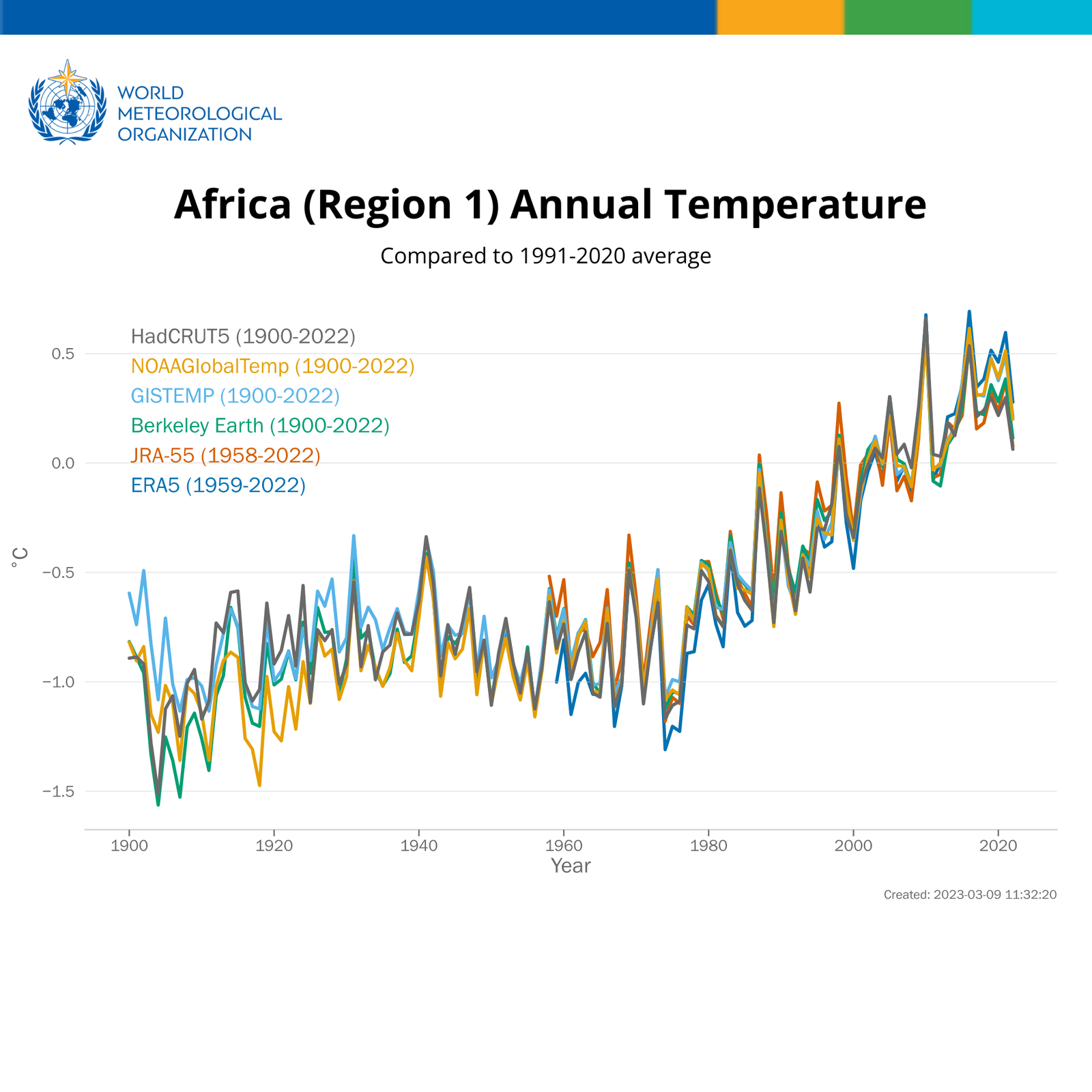
Temperature difference in °C for Africa between 1900 and 2023 compared to the average temperature recorded over the climatological period 1991-2020. Source: WMO based on data from Berkeley Earth, ERA5, GISTEMP, HadCRUT5, JRA-55, NOAAGlobalTemp. Press Release, settembre 2024.
The impact of extreme events is growing in Africa
The result, of course, has been a high number of extreme events. Floods severely affected Libya causing almost 5,000 deaths and did not spare a number of countries. Including Kenya, Somalia and Ethiopia with over 350 deaths and 2.4 million displaced during the rainy season between April and June. Floods also affected Mozambique, Rwanda, the Democratic Republic of Congo, South Sudan and many other countries, including Niger, Benin, Ghana and Nigeria.
Drought hit the Horn of Africa, which was already hard hit by the same phenomenon last year. As well as Morocco, Algeria, Tunisia, Nigeria, Cameroon, Ethiopia, Madagascar, Angola, Zimbabwe and the Democratic Republic of Congo. Zambia, which faced its worst water shortage in 40 years. The event affected eight out of ten provinces in the country, impacting a total of six million people.
Visible effects on agriculture
Weather events, of course, have impacted on agriculture and food security. Last year, for example, North Africa’s cereal production was 33 million tonnes, about 10 percent less than the five-year average. At the same time, erratic rainfall affected the same cereal crops in Sudan and South Sudan, Uganda, Eritrea, Ethiopia and Kenya.
In this scenario, the report explains, mitigation actions are needed. Which, however, involve considerable expenditure. “Climate-resilient development in Africa requires investments in hydrometeorological infrastructure and early warning systems to prepare for escalating high-impact hazardous events,” the authors explain. In Sub-Saharan Africa only, they add, “adaptation costs are estimated at US$ 30–50 billion (2–3% of regional gross domestic product (GDP)) each year over the next decade.”
Investment is one-tenth of what is needed
According to the report, without adequate responses, up to 118 million extremely poor people (those living on less than USD 1.90 a day) will be exposed to droughts, floods and extreme heat by 2030. Creating additional costs for poverty reduction while hindering growth. A situation, in short, that recalls the paradox of a continent affected by climate change brought about by anthropogenic activities that occur almost exclusively elsewhere.
In 2022, wrote the United Nations Development Programme, “More than 110 million (in Africa, ed.) were directly affected by climate, weather, and water-related hazards resulting in an estimated $8.5 billion in economic damages.”
This is why more needs to be done. ‘Little progress,’ in fact, has been made ‘has been made from 2015 to 2022 in adopting and implementing policies to reduce disaster risks”. Today “only 29 of 54 African countries have established national and local disaster risk reduction strategies”. Financial investments in climate mitigation support, moreover, are still concentrated in a few countries and remain largely insufficient. At present, in fact, “annual climate finance flows to Africa from domestic and foreign sources accounted for only $29.5 billion or 11 percent of the total need.”
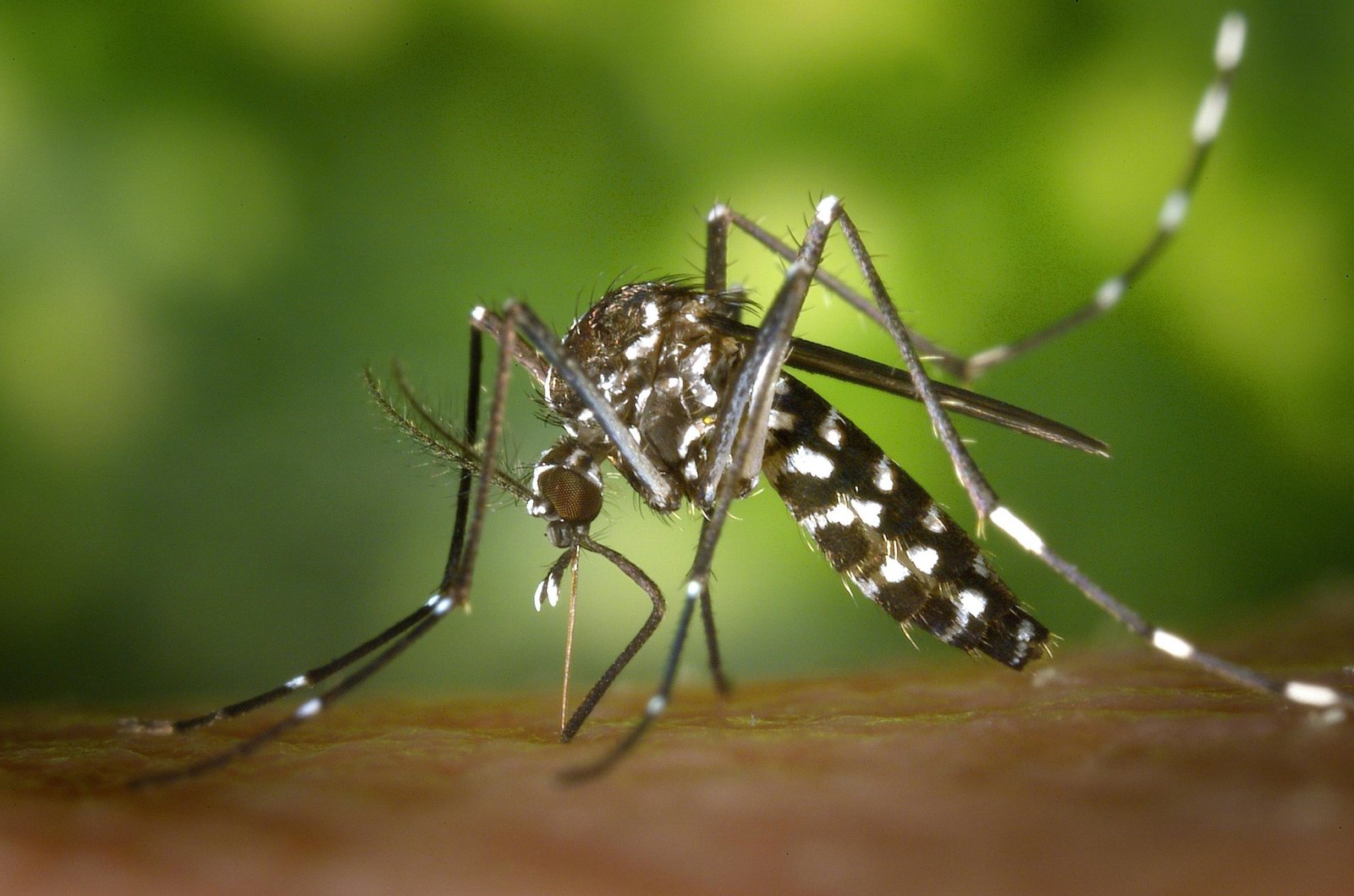 Photo: Pexels free to use CC0
  SOUL
SOUL Vincent Sasseville/Nunataryuk Attribution-NonCommercial-ShareAlike 2.0 Generic CC BY-NC-SA 2.0 Deed https://www.flickr.com/photos/gridarendal/49555909433