New database reveals the climate cost of degradation in tropical forests
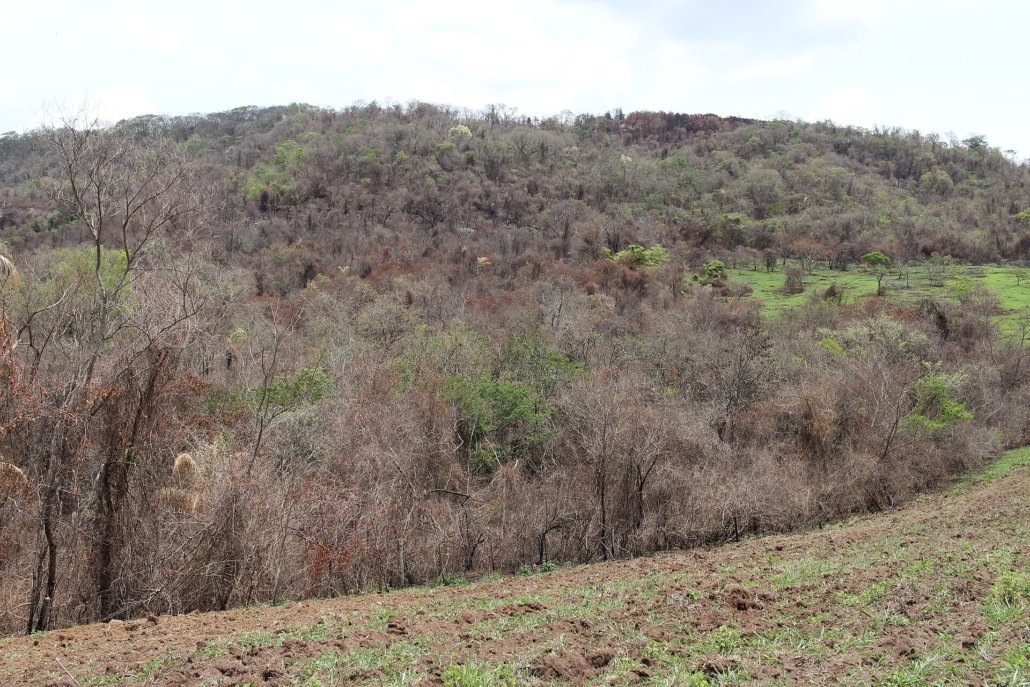 Thyrome, CC BY 4.0.
Researchers have synthesized nearly four decades of data, producing one of the most comprehensive assessments ever compiled of forest carbon dynamics following disturbances and during subsequent regeneration
by Matteo Cavallito
Forest conservation and post-disturbance regeneration are both regarded as key strategies for climate change mitigation. So far, however, scientific research and environmental policies have focused primarily on the effects of deforestation. By contrast, studies on forest degradation—caused by wildfires, selective logging, habitat fragmentation, drought and other disturbances—have long been hampered by the difficulty of measuring the phenomenon, even though scientists know it can severely impair forests’ ability to store carbon.
A new study by the GFZ Helmholtz Centre for Geosciences in Potsdam, Germany, has now filled this gap. The institute led an international consortium comprising dozens of researchers who compiled and harmonized the results of 146 studies carried out since 1988 across tropical forests in the Americas, Africa and Asia. The result is a pantropical database that, according to the authors, represents one of the most comprehensive assessments ever produced of forest carbon dynamics following disturbances and during subsequent regeneration.
An unprecedented database
“Our compiled database and associated meta-analysis improve accuracy and completeness for carbon inventory reporting and modeling”, explains the study published in Science Advances. “Substantial Aboveground carbon losses and gains from distinct degradation and recovery processes are now better characterized, serving as an evidence base for policies to halt degradation and foster recovery for climate mitigation”. Tropical forests, the researchers note, contain around 70% of the world’s living biomass and account for roughly one-third of the planet’s terrestrial carbon sink.
When forests are cleared or damaged, this balance is disrupted: carbon is released into the atmosphere and ecosystems lose part of their ability to absorb new emissions. But what are the consequences of “mere” forest degradation?
One of the largest analyses ever conducted on the subject shows that forest degradation also leads to substantial carbon losses. At the same time, it highlights the importance of preserving the structural integrity of the forest, as doing so allows forests to recover much more quickly than areas that have been completely cleared.
Degradation causes major carbon losses, but forests can recover
The quantitative analysis shows that aboveground carbon losses can be substantial even when a forest is not completely destroyed. According to a press release from the Helmholtz Centre, wildfires result in an average 49% loss of the carbon stored in vegetation, selective logging accounts for 34%, while forest fragmentation along forest edges causes 31% losses. The researchers also found that as the intensity and frequency of disturbances increase, the amount of carbon lost rises significantly.
Perhaps the study’s most striking finding, however, concerns the recovery potential of these ecosystems. “After 20 years of regeneration, aboveground carbon stock was higher in recovering degraded forests (41 to 117%) compared to secondary regrowth forests after complete deforestation (1 to 74%), indicating greater regeneration potential when forest structure is preserved”, the study continues. In other words, leaving part of the ecosystem intact helps preserve soil structure, seed sources, ecological connectivity and all the elements that make a much more effective recovery of forest biomass possible.
More reliable data for greenhouse gas accounting
The implications of the study extend well beyond academic research. The new database and meta-analysis, in fact, can serve “as an evidence base for policies to halt degradation and foster recovery for climate mitigation”. They also provide practical tools to improve carbon cycle models, national greenhouse gas accounting and reporting under the United Nations Framework Convention on Climate Change (UNFCCC).
More reliable emission factors make it possible to better quantify the contribution of forest degradation to global emissions while also recognizing the role of natural forest regeneration in climate mitigation.
This is especially important at a time when governments are being called upon to design increasingly effective climate policies based on robust scientific evidence. “Although continuous improvements in methodologies will enhance data precision, delaying action under the pretext of data uncertainty is no longer justifiable”, the study concludes. The evidence now available shows that preventing forest degradation and promoting the recovery of damaged ecosystems are both within reach.
 Photo: Thomas Bjørkan CC BY-SA 3.0
 Re Soil Foundation