From Genoa to New York: why depaving is reshaping the future of the cities
 Daderot CC0 1.0 Universal CC0 1.0 Deed
 The announcement by the Ligurian capital has brought to the forefront of the debate a practice already tested in many of the world’s major cities: removing asphalt and concrete to make urban areas more resilient to climate change
by Matteo Cavallito
The latest move comes from Genoa. Through a measure announced in May, the Ligurian capital became the first city in Italy to formally incorporate depaving into its Municipal Urban Plan (PUC). The decision introduces tax incentives for private property owners who choose to allocate development charges to soil desealing projects, while also taking responsibility for maintaining the newly created green spaces for the following ten years.
The first project will focus on the Cornigliano district, where asphalt will be removed from the site once occupied by the city’s former gasworks. At the same time, the Municipality of Genoa has joined the “Biofear” project, promoted by CNR-IRSA in Verbania together with the Universities of Trento, Foro Italico and Naples Parthenope. The initiative aims to increase the presence of green spaces in school courtyards and playgrounds through similar interventions.
The Genoa approach: urban greenery as resilient infrastructure
These initiatives represent the latest steps in a process that began several months ago. In March, the municipality approved a resolution recognizing soil and urban greenery as ecosystem infrastructures essential for countering the effects of climate change and urban heat islands. By treating these resources not as merely decorative or residual elements but as genuine environmental infrastructures capable of influencing citizens’ health, well-being and safety, the measure established zero land take as a guiding principle for urban, building and territorial policies.
In this way, depaving became an operational tool for reducing soil sealing and promoting the regeneration of urban spaces.
This principle has long been incorporated into the strategic planning of many major cities around the world, where soil desealing is regarded as one of the most effective tools for strengthening urban climate resilience. It is a response to decades of urbanization that have transformed vast portions of land into surfaces sealed by asphalt and concrete, compromising many of the soil’s ecological functions.

Worldwide, soil sealing affects 17 hectares of land every minute. Image: FAO, 2016 http://www.fao.org/3/a-i6470e.pdf
Concrete consumes 17 hectares every 60 seconds
As early as the previous decade, the FAO had raised the alarm about so-called soil sealing, the process by which land is covered and impermeabilized. At the time, it was advancing globally at an astonishing rate: 17 hectares per minute, equivalent to almost 10 square kilometres every hour. This phenomenon, which deprives soil of much of its ability to store carbon, produce biomass, filter water and support biodiversity, has never truly stopped. Quite the opposite.
According to the latest estimates from the European Environment Agency, the sealed surface area across Europe increased from approximately 107,278 to 112,418 km² between 2006 and 2021, representing a rise of 4.8%.
The largest increases have been recorded in countries experiencing strong urban expansion, such as Turkey, France, Germany and Poland, while Italy continues to consume land at a slower pace (+3.2%) than the European average. However, the country still bears the legacy of decades of extensive asphalt expansion. As of 2021, the latest year for which complete data are available, Italy’s sealed surface area exceeded 13,100 square kilometres (up from around 12,700 in 2006), accounting for 4.4% of the national territory. By comparison, the European average stands at 2.7%.
Paris leads the urban forest movement
From Genoa to other urban and metropolitan areas, depaving initiatives are becoming increasingly important for the recovery of existing soil resources. Among the most advanced European examples is Paris, a city that has made urban reforestation one of the cornerstones of its climate strategy. The plan launched by the city administration calls for the planting of 170,000 new trees by the end of 2026. The goal is to transform squares, streets and public spaces into a network of green infrastructure capable of mitigating extreme temperatures and improving the urban microclimate.
Projects such as the one implemented in Place du Colonel Fabien, a major hub of the French capital located between the 10th and 19th arrondissements, provide a tangible example of this vision.
Paved areas are being redesigned with trees, planting beds and permeable surfaces that help cool the urban environment while enhancing biodiversity. The first phase of the programme, involving more than 15,000 trees, is expected to absorb over 11,000 tonnes of CO₂ over the trees’ lifetime. This figure is set to rise as the project reaches completion. Paris’s strategy reflects a broader trend. According to the FAO, Europe’s urban forests have grown significantly over the last forty years and are becoming an increasingly important resource on a continent where roughly 84% of the population is expected to live in cities by mid-century.
Copenhagen, New York and São Paulo: cities as laboratories of best practice
Alongside Paris, numerous international examples showcase different approaches to soil desealing. Copenhagen, for instance, is regarded as one of the most advanced models of a “sponge city.” Through its Climate Adaptation Plan and Cloudburst Management Plan, the Danish capital has progressively replaced impermeable surfaces with parks, gardens, bioswales, vegetated ditches and permeable pavements. Green infrastructure is used as a hydraulic system capable of absorbing, retaining and reusing rainwater, thereby reducing flood risks during extreme weather events.
In New York, by contrast, the focus is on repurposing existing infrastructure. The most famous example is the High Line, the historic elevated railway transformed into a linear park that combines spontaneous vegetation, permeable engineered soils and public spaces.
In the Brazilian metropolis of São Paulo, meanwhile, attention is focused on the regeneration of large former industrial areas. The redevelopment of the Jurubatuba district has transformed a heavily sealed landscape into a greener and more residential environment, demonstrating how desealing can also serve as a tool for social and economic regeneration. Despite their different contexts, these projects share several core principles: reducing sealed surfaces, treating water as a resource and transforming existing spaces rather than consuming new land. They are built on the conviction that the city of the future cannot simply coexist with nature, but must reintegrate it as an essential component of its functioning.
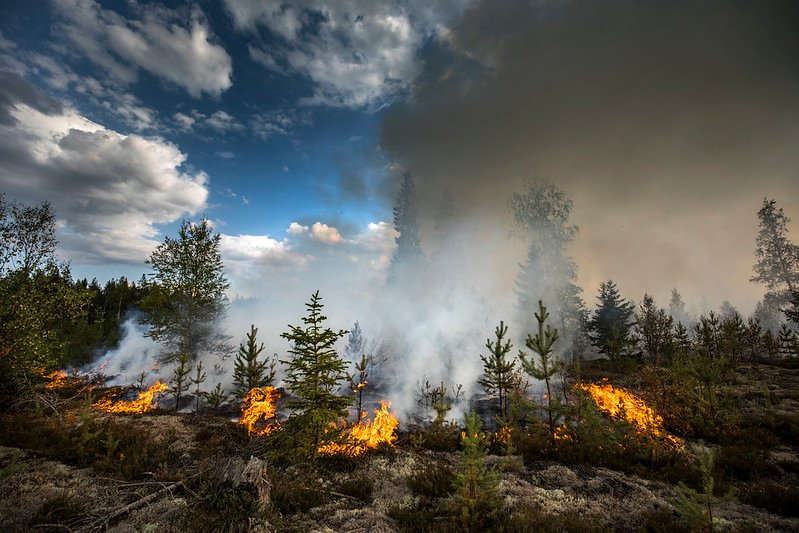 © European Union 2018 (photo by Pavel Koubek), CC BY-NC-ND 2.0
 Penn State. Attribution-NonCommercial-NoDerivatives 4.0 International, CC BY-NC-ND 4.0 Deed.
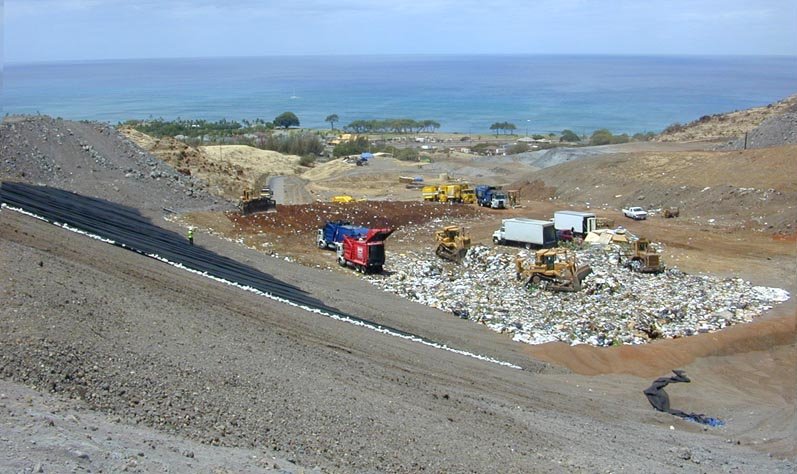 Eric Guinther, CC BY-SA 3.0