Beyond the Amazon: a forgotten carbon reserve in Brazil’s wetlands
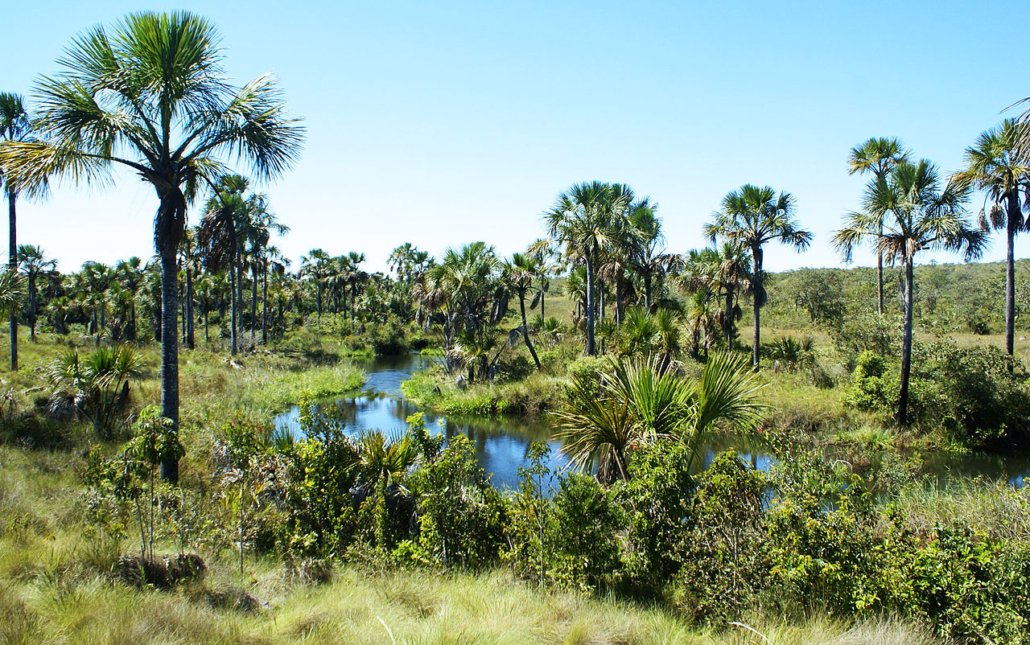 Thpelin Attribution-ShareAlike 3.0 Unported CC BY-SA 3.0 Deed
 In the Brazilian savanna, wetlands store enormous amounts of carbon, but they are threatened by climate change and agricultural expansion. Moreover, conservation policies, which focus almost exclusively on forests, tend to ignore them
by Matteo Cavallito
When we think of carbon sequestration in South America, our minds naturally turn to the Amazon rainforest and its key role in global climate mitigation. Far less attention, however, is typically paid to another ecosystem of crucial importance whose role is still widely underestimated: tropical peatlands. Highlighting their significance in this regard is a recent study published in the journal New Phytologist, which shows that one of the largest reserves of organic carbon is found today in an often-overlooked tropical savanna: the Cerrado.
Measurements taken during the study, which involved the Cary Institute of Ecosystem Studies in Millbrook (NY), in the United States, and the Universidade Estadual de Campinas, in Brazil, revealed an average carbon concentration per hectare far higher than that found in the biomass of the world’s largest tropical forest.
Rainfall and waterways have facilitated carbon sequestration
The Cerrado is South America’s second-largest biome and covers 26% of Brazil, according to the Cary Institute. This savanna, the most biodiverse on the planet, is also home to the headwaters of about two-thirds of the country’s major rivers, whose presence helps saturate with water peat soils where carbon from partially decomposed plants and other organic matter is concentrated.
The wet conditions create an oxygen deficit that slows decomposition, allowing these wetlands to store large amounts of carbon for thousands of years.
Despite this, unlike boreal peatlands, these tropical ecosystems are often underestimated. “In rainforests, high and stable rainfall supports peat accumulation in tropical climates,” the study explains. “However, groundwater-fed peatlands in seasonally dry tropical ecosystems remain poorly understood, despite their potential importance in global carbon dynamics.” The study conducted in Brazil is also the first to use deep soil profiles at multiple sites to quantify carbon storage.
A carbon density six times higher than in the Amazon
To measure carbon, researchers extracted soil cores up to four meters deep in various areas, including palm groves (veredas) and open grasslands (campos úmidos) in the Cerrado. Remote sensing data combined with machine learning techniques suggest that these wetlands may cover 16.7 million hectares (167,000 km²), an area far larger than previous estimates. This area represents about 8% of the Cerrado and 2% of Brazil. Further analyses are still underway to refine these estimates.
The veredas, in particular, “contained exceptionally high carbon stocks: 1,200 tons per hectare.” This figure is about six times higher than the average value in the Amazon rainforest.
Radiocarbon analyses conducted at the Max Planck Institute in Germany have made it possible to determine how long carbon has been accumulating in these environments. The average age of the organic material is nearly 11,200 years, but some portions exceed 20 millennia. Stability, however, is the main problem. Spectroscopic analyses, in fact, “indicated low carbon stability compared to other tropical peatlands, and c. 70% of annual CO2 and methane (CH4) emissions occurred during the dry season.” In short, these reserves appear highly vulnerable.
An ecosystem at risk
Once lost, researchers note, this carbon cannot be replenished through ecosystem regeneration, as is the case with forests. Furthermore, this type of ecosystem tends to be overlooked by conservation strategies, which typically focus on forested areas, starting with the Amazon. Furthermore, agricultural expansion leads to the drying up of peatlands, which accelerates the decomposition of organic carbon in the soil. Climate change, wildfires, and intensifying droughts complete the picture.
“In Brazil, while international attention focuses on the Amazon, agribusiness-driven expansion continues to target the Cerrado, placing its biodiversity, water resources, and carbon stocks at serious risk,” the study concludes. For this reason, “recognizing and protecting these peat-forming wetlands is imperative, not only to strengthen national carbon accounting and meet global climate targets via nature-based solutions, but also to secure water availability, safeguard biodiversity, and ensure the resilience of Brazil’s most threatened biome.”
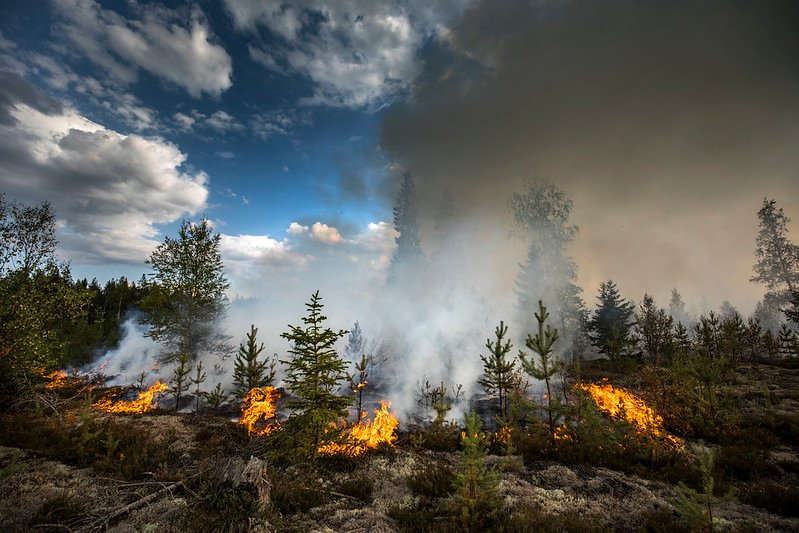 © European Union 2018 (photo by Pavel Koubek), CC BY-NC-ND 2.0
 Penn State. Attribution-NonCommercial-NoDerivatives 4.0 International, CC BY-NC-ND 4.0 Deed.
 Eric Guinther, CC BY-SA 3.0