Natural forests beat artificial regeneration in carbon sequestration
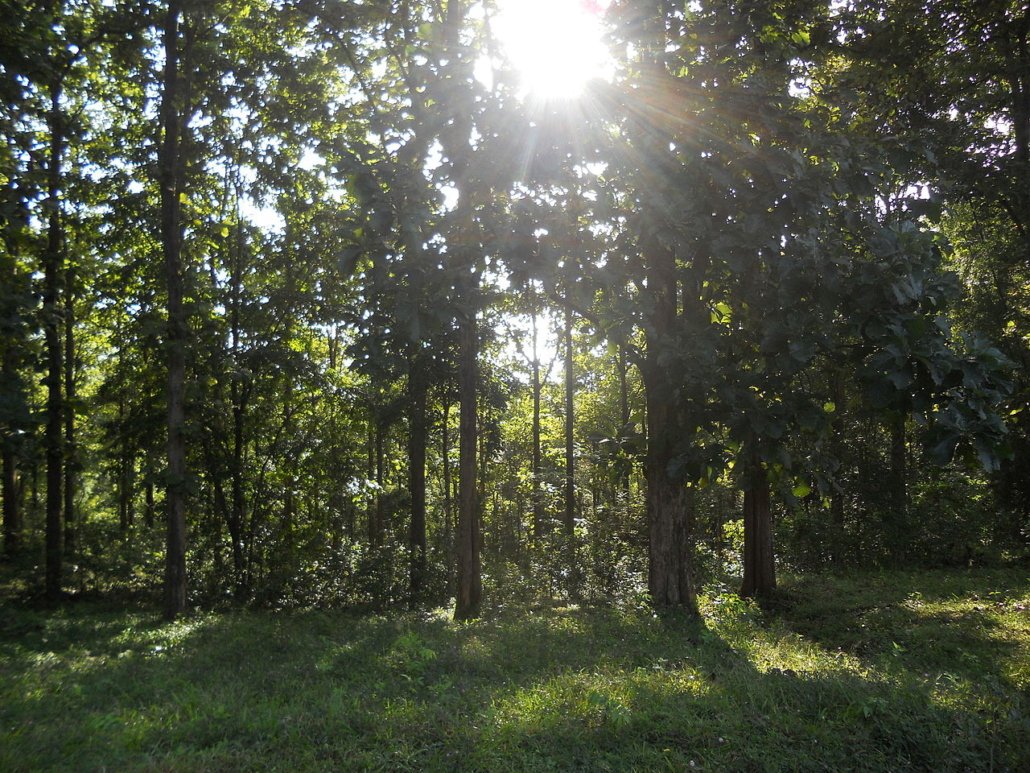 Photo: Parambikulam Tiger Conservation Foundation Attribution-ShareAlike 4.0 International CC BY-SA 4.0 Deed
 In intact forests, soil carbon levels are significantly higher than in areas being restored by tree planting, where higher soil acidity reduces sequestration capacity
by Matteo Cavallito
Forests are known to be an extraordinary sink of organic carbon, which is why their restoration has always been an important climate mitigation strategy. However, the carbon sequestration capacity of forest soil looks highly variable, with significantly higher values in intact areas compared to those artificially restored by planting new trees. This is supported by an international research conducted in Kerala, in southwestern India. The study, which involved local researchers from the Kerala Forest Research Institute (KFRI), the Forest Research Institute (FRI), and Cochin University of Science and Technology (CUSAT) together with their US colleagues from Purdue University, was published in the journal PLoS One.
Higher carbon concentrations in natural forests
During the research, the authors explain, random stratified sampling was used in five ecological zones in the area. Here, scientists collected soil samples from four distinct layers up to a depth of 1 meter. By analyzing their carbon content, acidity, and structure, the researchers reconstructed a three-dimensional map of carbon sequestration patterns.
When a diverse natural forest is cleared to make way for a single-species plantation, such as teak, they explain, the complex biological processes that regulate carbon capture are typically compromised.
The result, the study points out, is that “natural forests maintain substantially higher average SOC concentrations (16.61 g/kg) than plantation forests (11.82 g/kg).” Furthermore, in intact areas, more than 70% of the carbon is stored in the top 30 centimeters of soil.
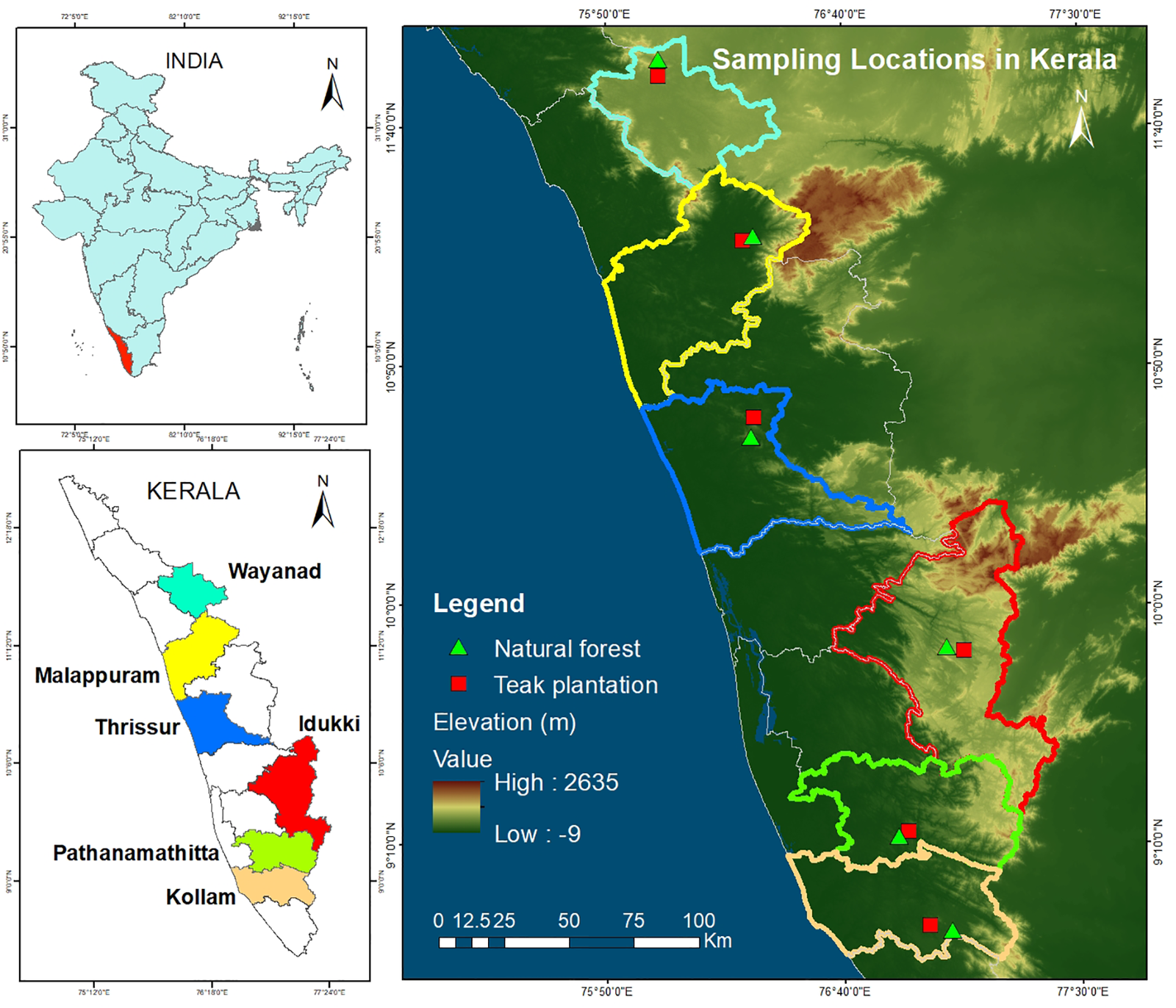
The survey was conducted in five ecological zones of Kerala, in southern India. Source: Jaya P, Rui Y, Navya M, Sandeep S (2026) Soil organic carbon dynamics: Influences of land-use change in natural and plantation forests of the Western Ghats, India. PLoS One 21(2): e0342399. https://doi. org/10.1371/journal.pone.0342399. DEM based on Shuttle Radar Topography Mission (SRTM) 1 Arc-Second Global courtesy of the U.S. Geological Survey (https://doi.org/10.5066/F7PR7TFT) (https://earthexplorer.usgs.gov)
Soil acidity is a key factor
Several factors contribute to this gap in favor of natural areas. These include the lower pH of plantation soils, which tend to become more acidic over time due to the way teak trees shed their leaves and soil management practices. This increased acidity makes it more difficult for the soil to retain the element.
“Correlation analysis showed a significant negative relationship between soil organic carbon (SOC) and soil pH in natural forests, whereas plantation soils exhibited a positive relationship,” the study says. “Forest soils also showed a positive correlation between SOC and clay content and a weak negative correlation with sand content.”
Longer growth cycles needed
One more really interesting aspect is a big exception the study has found. An older teak plantation that had been left alone for over 50 years, in fact, had high carbon levels. This suggests that better management and longer growth cycles for plantations could help close the gap in storage capacity.
In any case, the study highlights the limitations of reforestation practices, which are less effective in tackling climate change than natural forest protection.
“Land use change from natural forest to plantation reduces soil organic carbon stocks, alters soil health, and diminishes the resilience of tropical soils to environmental change,” the study concludes. For this reason, “maintaining and restoring natural forests—both globally and in biodiversity hotspots is essential for maximizing soil carbon sequestration, supporting soil fertility, and achieving climate mitigation targets.”
 © European Union 2018 (photo by Pavel Koubek), CC BY-NC-ND 2.0
 Penn State. Attribution-NonCommercial-NoDerivatives 4.0 International, CC BY-NC-ND 4.0 Deed.
 Eric Guinther, CC BY-SA 3.0