Plants use engineering to beat soil compaction
 Mark Stebnicki pexels
 An international study reveals the engineering mechanisms that allow roots to penetrate compacted soil. A plant hormone plays a key role. The findings open up new opportunities for crop breeding
by Matteo Cavallito
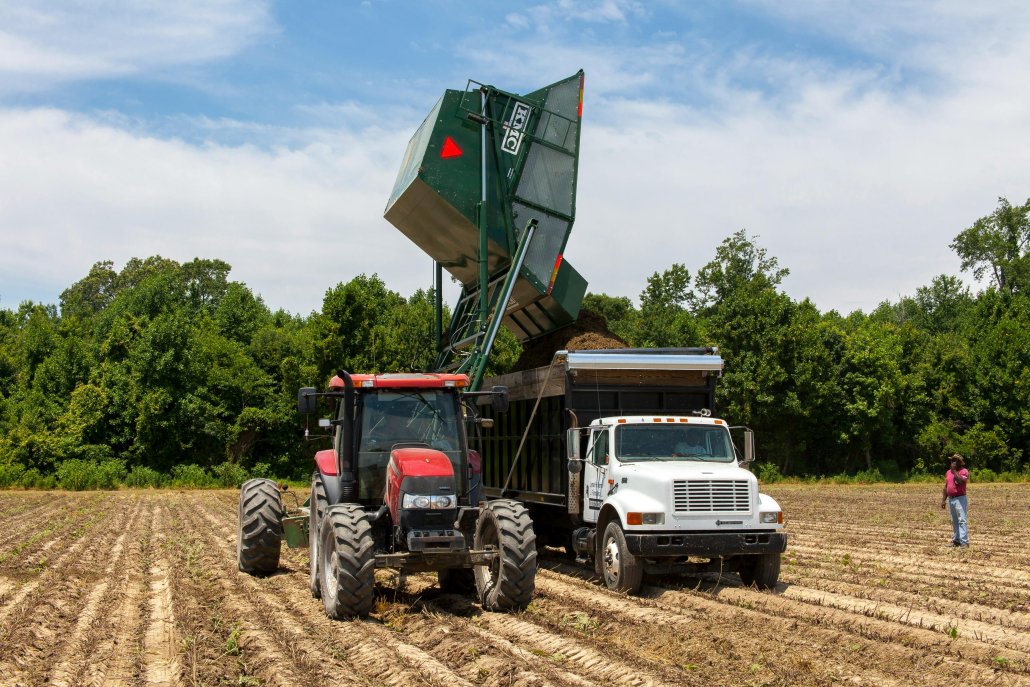
Plants use engineering principles to penetrate compacted soil. This is described in a study conducted by the universities of Copenhagen, Shanghai (Jiao Tong), and Nottingham, which has important implications for crop development in response to a global issue. The widespread use of increasingly heavy agricultural machinery, in fact, is exacerbating the problem by making it more difficult for plant species to extend their roots. A phenomenon, the authors note, made even worse by climate change-related drought.
This is how plants solve the problem
“The reliance of modern agriculture on mechanization is causing soil degradation and compaction, which affect root growth and crop yield,” says the study published in the journal Nature. “Plant roots expand radially when encountering compacted soil conditions, leading to shorter and thicker roots. Radial root swelling is mainly due to expansion of cortex cell layers that can cause soil fissures that aid soil penetration.” This adaptive response is determined by the retention of a hormone called ethylene, which accumulates around the root as a result of soil hardening, which reduces the diffusion of gases in the soil.
“Despite this mechanistic insight,” the study continues, “how ethylene controls cell wall remodelling to enable root radial expansion remains unclear.” At least until now.
Researchers have discovered the details of a real engineering process triggered by ethylene. Ethylene initiates a chain reaction that activates a gene called OsARF1, located in the root cortex, which in turn reduces cellulose production. This makes the cell walls thinner and more flexible, allowing the cells to swell and the root to expand. At the same time, it makes the outer layer of the root thicker and stronger. All this helps the roots to penetrate deep into even compact soil.
The mechanism can be amplified
And there’s more. The mechanism, the authors explain in a statement, can be amplified by directly intervening on the plant’s protein composition. “Our results show that by increasing the levels of a specific protein – a transcription factor – the root becomes better able to penetrate compact soil,” said Jiao Zhang, a researcher at Shanghai Jiao Tong University and lead author of the study.
“With this new knowledge, we can begin redesigning root architecture to cope more effectively with compacted soils. This opens new avenues in crop breeding,” he said further.
The experiments have so far only been conducted on rice, but the authors argue that the mechanism would be applicable to all plant species in general. “Our results could help develop crops that are better equipped to grow in soils compacted by agricultural machinery or climate-related drought. This will be crucial for future sustainable agriculture,” said Wanqi Liang, a professor at Jiao Tong and co-author.
Compaction affects one-fifth of agricultural land
The work also opens up new opportunities in the area of plant selection. Scientists have also identified many other transcription factors that regulate cellulose production, thereby modifying plant structure. By intervening on these factors, they explain, it would be possible to design plants with different shapes, adapting certain crops to compacted soils. These are important implications, considering the scale of the problem.
In 2022, a study published in the journal Proceedings of the National Academy of Sciences (PNAS), involving the University of Uppsala (Sweden) and the Swiss Federal Institute of Technology in Zurich, highlighted how in just over 60 years, the weight of combine harvesters has increased almost tenfold, from 4 to around 36 tons.
The increase in the tonnage of the machinery would permanently compact the soil to a depth of about 20 centimeters below the tilled surface, limiting access to water and nutrients by plant roots, damaging crops and soil organisms, and limiting water absorption. According to the research, the risk of compaction would affect one-fifth of global cultivated area. The phenomenon affects especially regions with a high level of mechanization, such as Europe, North America, South America, and Australia.
 © European Union 2018 (photo by Pavel Koubek), CC BY-NC-ND 2.0
 Penn State. Attribution-NonCommercial-NoDerivatives 4.0 International, CC BY-NC-ND 4.0 Deed.
 Eric Guinther, CC BY-SA 3.0