Soil microbes tell the story of oil contamination
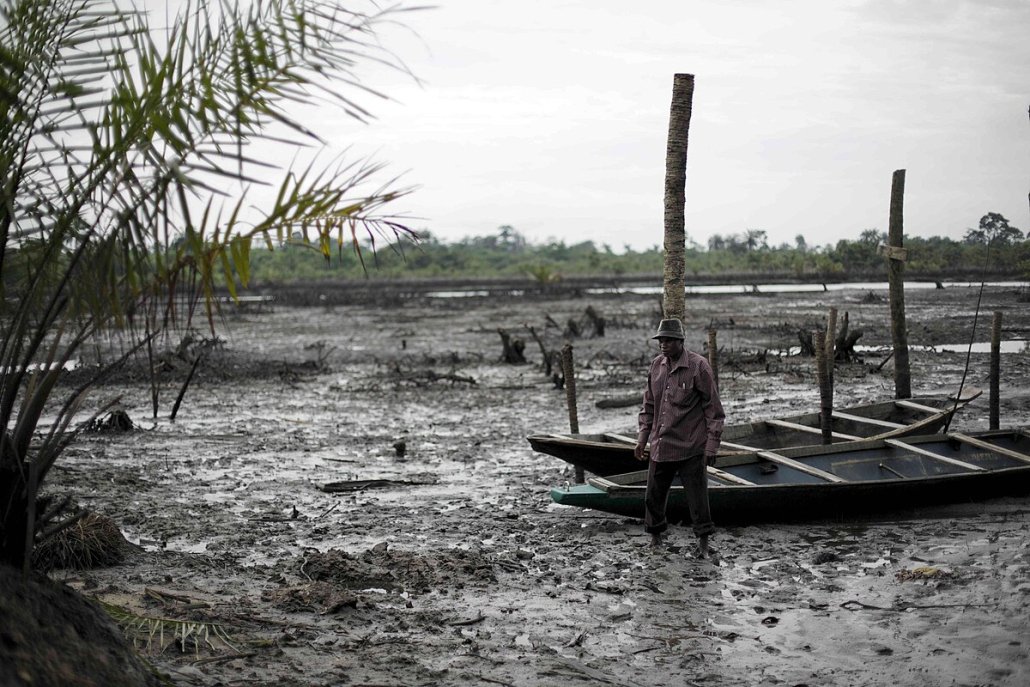 Photo: Luka Tomac/Friends of the Earth International Attribution-ShareAlike 2.0 Generic CC BY-SA 2.0 Deed
An international study has revealed how microbes can act as markers to distinguish between recent and ancient oil pollution. This overcomes the limitations of traditional chemical analysis
by Matteo Cavallito
The remediation of oil-contaminated soil requires extensive preliminary analysis. In order to perform a field intervention, in other words, it is primarily required to assess the condition of the soil and estimate the time elapsed since the spill in to develop the most effective remediation strategies. Today, this activity could benefit from surprising new allies: microbes.
This is suggested by a group of researchers from the United Kingdom and Nigeria who, in a study published in the journal Letters in Applied Microbiology, described an innovative molecular diagnostic tool that exploits the relationships between functional genes to assess the state and apparent age of crude oil contamination in soil.
A new assessment of oil contamination
“Petrochemical spills present a global environmental challenge, necessitating effective monitoring and remediation,” the research states. The problem, however, is that the investigation methods currently in use are still based primarily on chemical analysis, which measures pollutant levels but fails to explain how microbial communities—the main natural agents of biodegradation—react over time.
For this reason, scientists have chosen to develop a different molecular approach “using binary functional gene ratios to assess contamination levels and timelines in petrochemical-contaminated soils.”
The researchers, says Aliyu Ibrahim Dabai, professor at Queen’s University Belfast and co-author of the study, have therefore demonstrated “microbial gene abundance patterns, mainly the ratio of aerobic to anaerobic hydrocarbon-degrading genes, can serve as reliable biomarkers for the severity and timeline of petrochemical pollution.”
The study in Nigeria
Hydrocarbon contamination due to spills is a global environmental crisis, with some areas being particularly affected. These include the Niger Delta, where decades of uncontrolled extraction, according to the authors, have seriously compromised the soil. Here, scientists collected 90 soil samples from contaminated sites in Bayelsa and Rivers states, distinguishing between recent and older pollution.
“Soils from petrochemical-contaminated sites were collected and hydrocarbon quantification was performed using gas chromatography–mass spectrometry and two-dimensional gas chromatography with flame ionization detection, against specific standards,” the study explains.
The researchers then measured three key genes called PAH-RHDα, bamA, and 16s. The first is involved in aerobic degradation, while the second is a marker of the degradation of aromatic hydrocarbons. Finally, the third gene is used to estimate the proportion of the microbial population carrying functional genes relative to the total. The results immediately appeared significant.
The analytical ability was “unexpectedly precise”
“Our core discovery was that the ratio of PAH-RHDα to bamA genes correlates both with pollutant concentration and the inferred age of contamination,” explains Dabai. In newly contaminated soils, high levels of RHDα genes and detectable traces of kerosene were found. At older sites, kerosene was absent, but anaerobic bamA markers persisted.
In summary, the lead author concludes, “The ability to distinguish old from new pollution through microbial markers – something that can be missed with chemical tests alone – was unexpectedly precise”.
The results, the research emphasizes, have profound implications for environmental monitoring and remediation planning. This is especially true in contexts where oil pollution is widespread but often poorly documented. Scientists say that new studies could extend the approach in the future to a wider range of hydrocarbons, such as diesel and bitumen, and to different types of soil in both tropical and temperate zones.
 Sam Beebe, CC BY 2.0
 Photo: Thomas Bjørkan CC BY-SA 3.0
 Re Soil Foundation