Artificial vision allows to reduce the use of herbicides
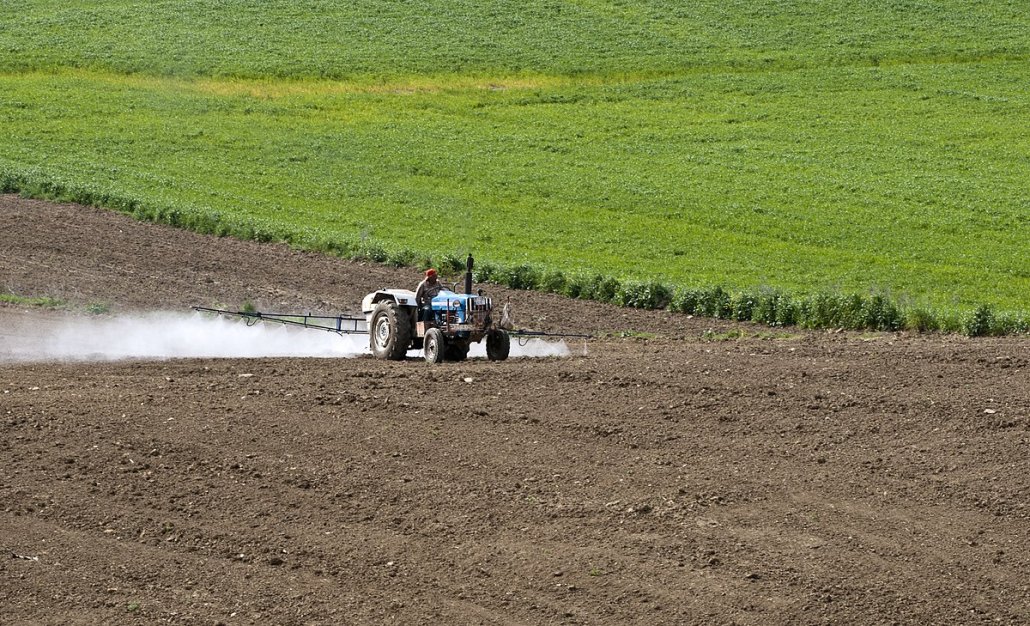 Zeynel Cebeci Attribution-ShareAlike 4.0 International CC BY-SA 4.0 Deed
 Thanks to a sensing system, some farm machinery offers the opportunity to use less herbicides by detecting weeds and distributing treatments in a targeted manner
by Matteo Cavallito
Through artificial vision technology, agricultural machinery can help farmers cut herbicides application on the land, thus limiting costs and environmental impact. This is the conclusion of a University of Arkansas study published in Weed Technology, a journal of the Weed Science Society of America (WSSA). The analysis evaluated the effectiveness of a sensing system mounted on an agricultural machine and designed to provide widespread distribution of the product as an alternative to massive dispersal. The research showed significant savings in product application, explained Tristen Avent, researcher and lead author of the paper, in a statement.
The threat of weeds
“Producers face economic and environmental pressure to reduce herbicide use, and the increasing occurrence of herbicide-resistant weeds threatens the options for successful chemical control,” the study states. At the same time, however, farmers are faced with the problem of weeds that are known to “compete with crops for resources, reducing yield and harvest efficiency.” Among these, the authors again remind us, is the so-called Amaranthus palmeri, a species widespread in North America that strongly impacts productivity.
Highlighting this, in particular, is the case of soybeans, which, in fields affected by this pest, experience yield declines of up to about 32 percent.
In this context, herbicides offer important support but not without negative externalities, on the environmental front and beyond. “In the United States, from 2017 to 2022, the total cost of production for row-crop farms increased by 26.6%, and chemicals accounted for an average of 7.7% of the total cost,” the study explains. Therefore, “With the increasing cost of production, producers are seeking technologies to reduce costs and improve profitability.”
Targeted spraying is a possible solution
The study focused on See & Spray technology mounted on agricultural machinery from John Deere, one of the largest U.S. companies in the industry. The system, the investigation explains, “provide the opportunity to reduce herbicide use by detecting weeds and target-spraying herbicides simultaneously.” Authors conducted the experiments over a two-year period at two different location: Keiser, Arkansas, and Greenville, Mississippi. Following the targeted applications over soybean fields they compared the amounts of herbicide residues with traditional spraying dispersions.
“Treatments utilized consistent herbicides and rates with a preemergence (PRE) application followed by an early postemergence (EPOST) dicamba application followed by a mid-postemergence (MPOST) glufosinate application,” the study explains. Several systems were evaluated including the sprinkler application method, a mixed system of traditional and targeted post-emergence applications, and targeted applications of all herbicides alone.
Use of herbicides can be reduced by nearly two-thirds
In summary, “”On average, targeted sprays saved a range of 28.4% to 62.4% on postemergence herbicides”, spiega la ricerca. “On the basis of these results, with specific machine settings, targeted application programs could reduce the amount of herbicide applied while providing weed control comparable to that of traditional broadcast applications.”
Moreover, “Our research also showed that the targeted applications from machine-vision technology can be utilized to provide some soybean health benefits and improve environmental stewardship,” the authors explain.
Finally, the scientists noted how “nozzle angle can influence potential herbicide savings, with narrower nozzle angles spraying less area.”

 Jonathan Wilkins Attribution-ShareAlike 3.0 Unported CC BY-SA 3.0 Deed
  Melissa McMasters Attribution 2.0 Generic CC BY 2.0 Deed