Artificial intelligence predicts climate impact on European soil
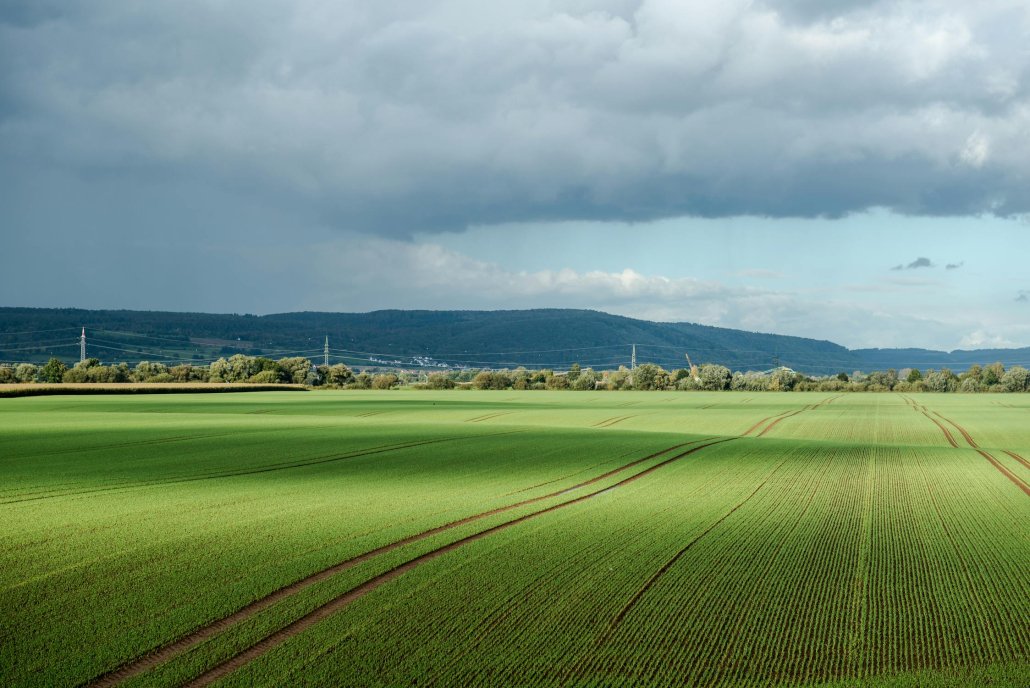 Wolfgang Weiser Pexels free to use
Soil Data Cube is presented as the most advanced European soil monitoring model ever. From 2026 it will help scientists and farmers check the health of soils affected by climate change
by Matteo Cavallito
Imagine more than two decades of field research, imagine hundreds of thousands of soil information collected on more than 20 million plots. Imagine, ultimately, a mass of data weighing 30 terabytes, and add, of course, the contribution of artificial intelligence. The result? Soil Health Data Cube, the most comprehensive and innovative map of European soil health ever created.
Artificial intelligence meets two decades of data
Launched as part of the EU-funded AI 4 Soil Health project, this multidimensional digital tool, still under development, is built from observations conducted on continental soils in the 21st century. Finally, it aims to be integrated into the EU Soil Observatory promoted by the Commission’s Joint Research Centre.
The Data Cube will include many resources including, the promoters explain, “EU-wide seasonal crop-type maps, primary soil properties, land degradation indices and terrain parameters.”
But also “climatic time-series images (rainfall, soil moisture, surface temperature) and projected crop models.” These elements, moreover, will be brought together and used to run “a machine learning models to detect and examine relationships between the field-estimated and soil health indices.”
Predicting the impact of climate on soil
The practical implications, the developers assure, are many. Indeed, the Soil Health Data Cube should enable scientists, farmers, policy makers and land managers to monitor soil health by taking into account key factors such as pH, carbon content and biological parameters. But also simulate future climate scenarios by predicting their impact. And, consequently developing new solutions and appropriate land management practices.
Such as regenerative agriculture, agroforestry and carbon farming, among others.
“This powerful tool will help policy makers, farmers and land managers better manage our soils for biodiversity, carbon storage and productive farmland,” OpenGeoHub Foundation director Tomislav Hengl, one of the scientists involved in the AI 4 Soil project, told the website Agriland. “Using AI tools and open-source data we have created a prototype digital-earth-twin which will enable users to analyse and test land management practices to deliver better outcomes and environmental benefits.”
The tool will be operational in 2026
Considered by scientists involved in the project as “the most sophisticated soil health modelling framework”, the Data Cube is going to be converted into a mobile app available to farmers. Also according to Agriland, the app could be available within the next year. Developers, meanwhile, will continue to enrich the map with new data and additional images. Thus improving the accuracy and predictive ability of the model.
“With the EU’s Soil Health Monitoring Law under consideration, this innovation gives us an incredibly useful way of identifying regions where soil health is at risk, highlighting areas that need urgent restoration,” Mogens Humlekrog Greve, a researcher at Aarhus University and project manager of AI 4 Soil Health, told the website. The continuous monitoring provided by the tool, he added, will thus enable the promotion of better land management practices throughout Europe.
 Melissa McMasters Attribution 2.0 Generic CC BY 2.0 Deed
  Angal insect Attribution-ShareAlike 4.0 International CC BY-SA 4.0 Deed
  ECHO
ECHO