Many dangerous contaminants in urban green spaces, according to hedgehogs
 Charlie Marshall Attribution 2.0 Generic CC BY 2.0 Deed
 Analyzing the remains of hedgehogs, researchers at Lund University found a significant presence of contaminants such as phthalates and polychlorinated biphenyls (PBCs) as well as heavy metals and pesticides
by Matteo Cavallito
Urban green spaces have a surprising variety of contaminants. This is highlighted by some unusual as well as overlooked victims: hedgehogs. That’s according to researchers at Lund University in Sweden, who, in a study, examined the remains of these animals and found traces of hazardous substances such as lead, pesticides, brominated fire retardants, plastic additives, polychlorinated biphenyls (PCBs) and heavy metals.
“Urban environments are exposed to a substantial range of anthropic pressures, including chemical exposure,” explains the research published in the journal Environmental Pollution. “While trace metals and legacy pollutants have been well documented, the extent of wildlife exposure to emerging contaminants has received little attention, in terrestrial mammals.”
Hedgehogs offer an environmental fingerprint
The research set out to identify the risk factors for animals and humans constituted by pollutant compounds. Choosing, on this occasion, to observe a species judged to be particularly useful in describing the scenario as a whole. “Because hedgehogs travel long distances – in and out of parks and gardens every night – and eat insects and other invertebrates, they are particularly exposed to high concentrations of environmental pollutants,” the study explains.
According to Maria Hansson, Lund toxicologist and lead author of the research, quoted in a statement, the hedgehogs’ analysis specifically provides “a kind of environmental fingerprint of what is in an area’s ecosystem.”
This information, she adds, is “very difficult to access, but the hedgehogs have enabled us to gain a unique insight into what kind of urban environmental pollution we have directly around us.” As far as is known, the study further points out, the Swedish researchers are the first to have documented the exposure of these animals to pollutants.
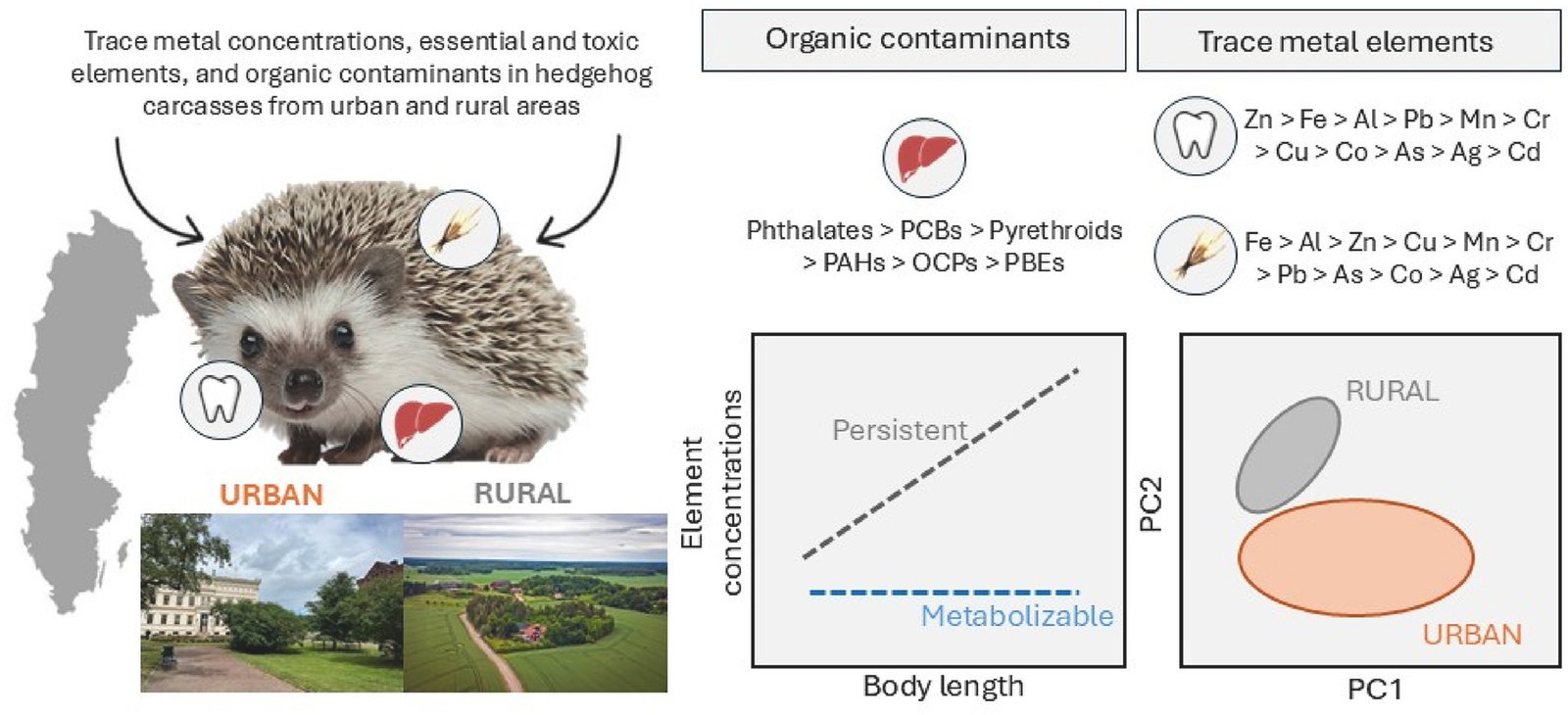
The remains collected in 2021 and 2022 were used to characterize the level, tissue distribution, and composition of substances in the samples. Image: Noëlie Molbert, Fabrice Alliot, Aurélie Goutte, Maria C. Hansson, “The dead can talk: Investigating trace element and organic pollutant exposure in mammalian roadkill under contrasting habitats”, Environmental Pollution, Volume 367, 2025, 125648, ISSN 0269-7491, https://doi.org/10.1016/j.envpol.2025.125648 Attribution 4.0 International CC BY 4.0 Deed
Phthalates and PBCs are the most prevalent pollutants
Collecting the remains of hedgehogs detected between 2021 and 2022 in Lund and surrounding areas, the researchers analyzed the tissues measuring the presence of 11 elements and 48 organic environmental pollutants. “What surprised us was that there were so many different environmental pollutants in the animals, such as PCBs and several different phthalates, and that there were very high concentrations of certain heavy metals, especially lead,” Hansson explains.
In particular, notes the study, “Phthalate diesters and PCBs were the most prevalent compounds in liver samples, with mean concentrations (±SD) of 1090 ± 681 and 284 ± 231 ng g−1 of dry weight, respectively.”
Phthalates, the authors recall, are used in the production of materials such as plastics and in rubber while PCBs are toxic substances whose use in manufacturing was banned back in the 1970s.
The results are a warning sign for humans as well
The study showed how urban environments contain a large amount of substances that are both environmentally and health problematic. Hazardous pollutants that, the scientists again remind us, come from a variety of sources such as construction materials, plastics, pesticides, air pollution, garbage, tire residues and contaminated soil. Therefore, the survey adds, more environmental monitoring of soil and organisms in urban green areas becomes necessary.
But that is not all. In general, little is still known about how different animal species are affected by environmentally hazardous substances, and the study of wildlife is considered complex. However, the information gathered on hedgehogs is still a cause for concern. “As hedgehogs are mammals just like us, it is worrying to find substances that we know are endocrine disruptors, carcinogenic or interfere with human reproduction,” Hansson concludes.
 Melissa McMasters Attribution 2.0 Generic CC BY 2.0 Deed
 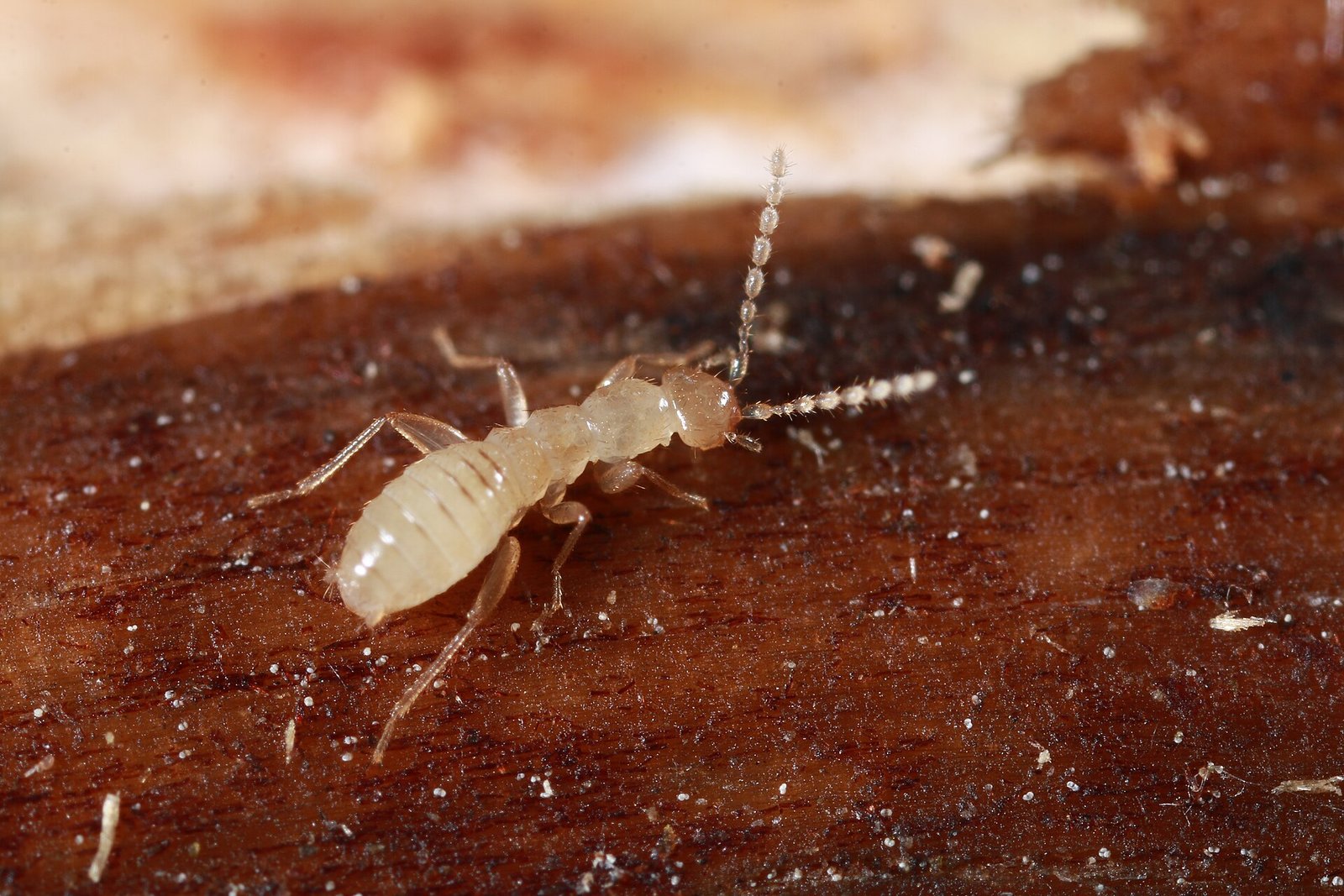 Angal insect Attribution-ShareAlike 4.0 International CC BY-SA 4.0 Deed
  ECHO
ECHO