Microplastics and agricultural soils: a winter school in Rome
 Evelyn Simak Attribution-ShareAlike 2.0 Generic CC BY-SA 2.0 Deed
 You can register until November 16 for the winter school organized in Rome by Università Cattolica — a two-day event (November 20–21) focused on understanding the impact of microplastics and exploring ways to address the issue
by Matteo Cavallito
Providing an integrated, science-based understanding of the phenomenon of microplastics and nanoplastics in agricultural systems and their impact on the environment, food safety, and health. This is the goal of the two-day course “Sustainable Agrifood Systems and Plastic Pollution: A One Health Vision” scheduled for November 20-21 at the Carpegna Palace Hotel in Rome.
Targeted at doctoral students and young researchers, the initiative—organized by Università Cattolica del Sacro Cuore —aims to provide the tools “to critically appraise evidence, quantify risks, and design monitoring and mitigation strategies across agrifood chains.” Registration is open until November 16.
A focus on microplastics, soil and health
“This winter school was partly conceived as an expression of Agrifoodplast, the international conference on microplastics in agri-food systems launched in 2023, whose third edition will soon be announced,” explains Edoardo Puglisi, Full Professor of Agricultural Microbiology at the Catholic University and scientific director of the course. By tackling key topics such as plastic pollution, soil and crop contamination, food safety risks, interactions with soil microbiota and invertebrates, and much more, the initiative — see the full program here — offers participants the chance to engage directly with leading international experts while building skills in data interpretation, exposure analysis, and risk assessment.
“The idea,” says professor Puglisi, who is also coordinator of a research group in agricultural and environmental microbiology, “is to bring together the world’s leading experts in research on microplastics in the environment to illustrate to participants the state of the art in research in terms of impact on soil, influence on ecosystem functions, sustainability of use, and even toxicological and ecotoxicological implications from a One Health perspective (the integrated approach which, according to the WHO definition, identifies the balance between human, animal and ecosystem health, ed.).”
An impressive lineup of experts
The course offers a program centered on advanced concepts and policy perspectives, supported by case studies that connect terrestrial and marine environments, explore the global policy landscape surrounding plastic use in agriculture, and examine the wider impacts of this phenomenon. The initiative also encourages direct interaction with leading international experts, helping participants develop skills in interpretation, exposure analysis, and risk assessment.
The roster of speakers is truly remarkable and includes professor Richard Thompson from the University of Plymouth, who first coined the term microplastics 21 years ago, paving the way for an new field of research.
Also notable is the presence of leading figures currently coordinating some of the earliest European projects addressing plastics in soils and agriculture — Luca Nizzetto, a researcher at NIVA (the Norwegian Institute for Water Research), and Violette Geissen, professor at Wageningen University in the Netherlands — as well as Lev Nevertin, head of the FAO’s environmental team.
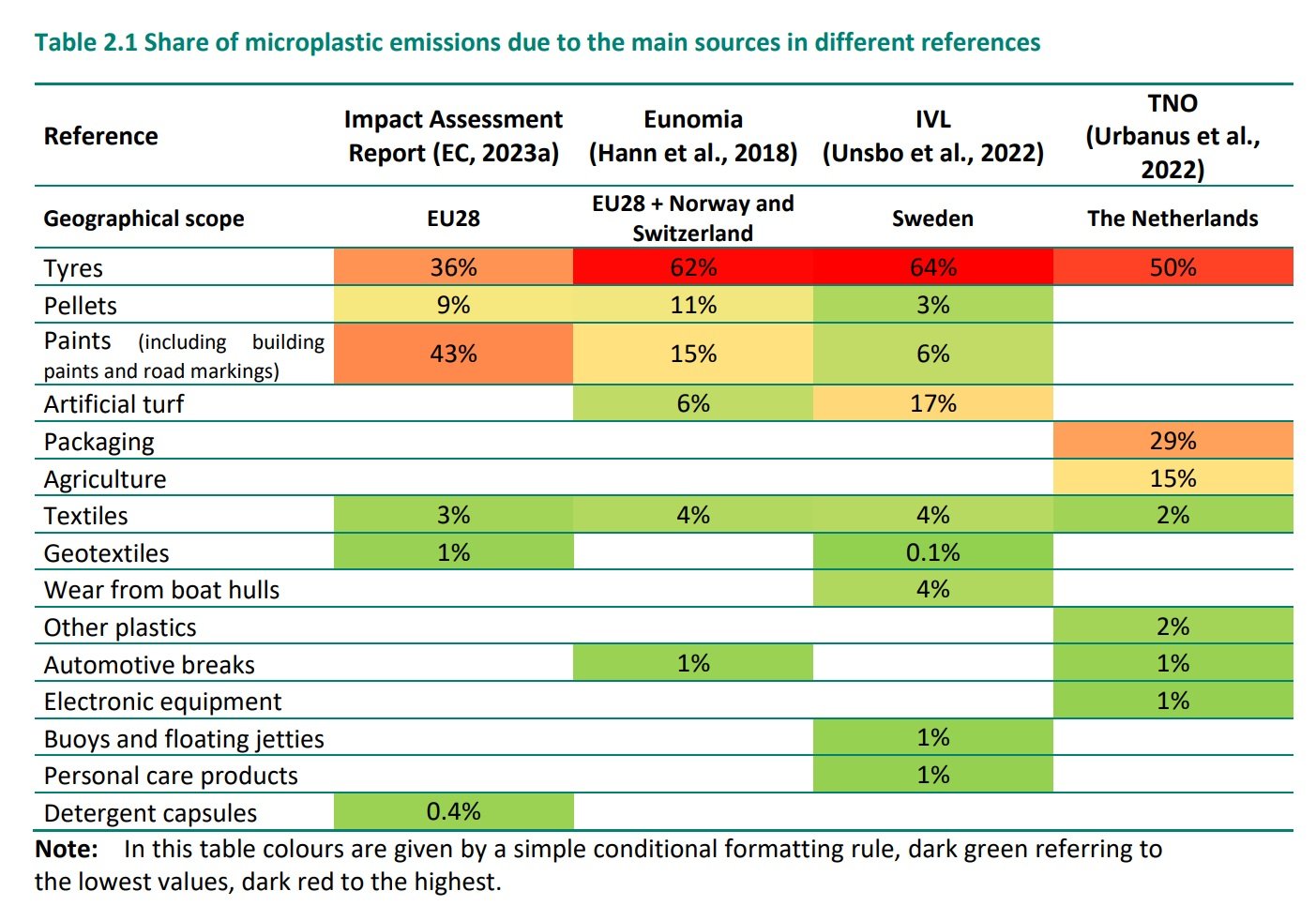
Tires, pellets, packaging, paints, artificial turf, and agricultural materials are the main sources of microplastic pollution in Europe. Source: Boucard, P., Denize, C. & Aydin, M. (2024). Microplastic releases in the European Union (Eionet Report – ETC HE 2024/15). European Topic Centre on Human Health and the Environment, 2024 Attribution 4.0 International CC BY 4.0 Deed
EU targets at risk over contamination
In recent years, contamination levels have risen sharply across Europe. According to the latest report from the European Environment Information and Observation Network (Eionet) of the EU Environment Agency, which examined various sources such as tire wear, plastic pellets, and paints, the spread of microplastics increased by an estimated 7.5–8.6% between 2016 and 2022. Figures like these, the authors warn, make it “unlikely” that the EU will meet its goal of cutting microplastic releases into the environment by 30% by the end of this decade.
It’s a serious problem — but also, as Professor Puglisi points out, “a complex issue on which researchers have reached a solid consensus on both the evidence and the urgent need for action.” Many of the winter school’s speakers, morever, are members of the Scientists’ Coalition for an Effective Plastics Treaty.
“Research offers new solutions”
The Coalition, professor Puglisi says, was formed in 2022 to contribute to the achievement of an international treaty to stop plastic pollution with the support of the UN Environment Assembly (UNEA). Negotiations on this goal are still ongoing. The last official meeting promoted by the United Nations in Geneva last August ended without agreement on at least two fundamental issues: the reduction in plastic production and the need to regulate the use of additives.
Nevertheless, the role of scientists remains considerable. “I do believe that research can provide not only evidence but also solutions: on the one hand, to reduce production while taking economic and industrial needs into account, and on the other, to develop materials with an increasingly lower impact with a view to reducing and managing risk”, he says.
 Photo: Pexels free to use CC0
  SOUL
SOUL Vincent Sasseville/Nunataryuk Attribution-NonCommercial-ShareAlike 2.0 Generic CC BY-NC-SA 2.0 Deed https://www.flickr.com/photos/gridarendal/49555909433