How global warming affects soil respiration
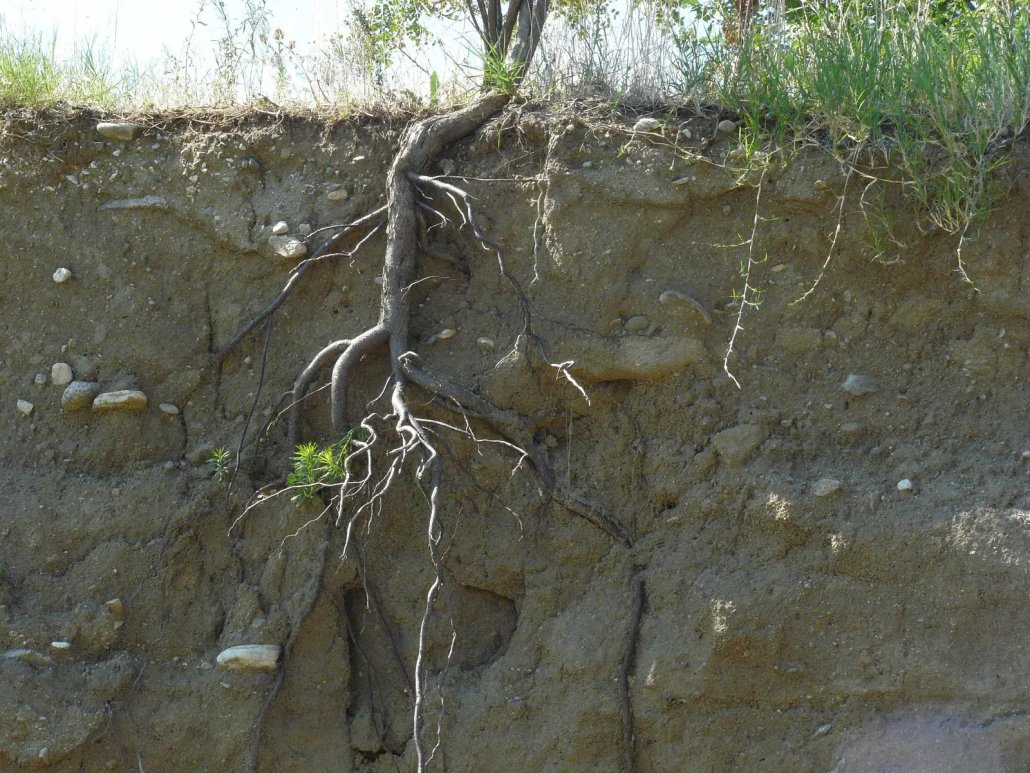 Konstantinos Kourtidis Creative Commons Attribution-NonCommercial-ShareAlike 3.0 Unported (CC BY-NC-SA 3.0)
 A Chinese study makes a new contribution to the issue of soil respiration in the climate change context. Emissions are higher in deciduous forests where the heterotrophic respiration is less prevalent
by Matteo Cavallito
The emission of CO2 from the soil through respiration is a crucial component of the carbon cycle. Understanding how respiration changes in the context of global warming is therefore crucial to making predictions about it. Now, a recent study by researchers at the Xishuangbanna Tropical Botanical Garden in Mengla, south-central China, has made a contribution in this regard.
The research, explains a statement from the Chinese Academy of Sciences, aims to highlight, through an experiment, “the effects of warming on soil respiration in different ecosystems and the sensitivity of soil respiration to soil temperature and soil moisture content in different ecosystems.”
Two different kind of respiration
Soil releases carbon dioxide in two ways: through heterotrophic respiration and through autotrophic respiration. In the first case (Soil heterotrophic respiration – Rh), we refer to the emission that occurs as a result of the decomposition of organic matter by microbes. In the second case (Soil autotrophic respiration – Ra), the reference is to the activity exerted by roots and microorganisms active in the portion of the soil that hosts them (the so-called rhizosphere) such as bacteria and mycorrhizal fungi.
The contribution of these two actions to the overall respiration of the earth’s ecosystem ranges between 50 and 75 per cent, estimates say. This phenomenon “plays an indispensable role in biogeochemical models.”
The experiment
During the experiment, the researchers used automated soil efflux chambers. Basically, this is a system used for estimating CO2 dispersion per unit area of soil and per unit time by placing a chamber on the ground and quantifying the amount of carbon dioxide entering it. The research, conducted in the Lijiang and Ailao mountains in China by heating portions of the soil, allowed the effects of temperature and humidity on the phenomenon to be assessed.
The results, says the research published in the Journal of Soil Science and Plant Nutrition, “reveal that soil respiration was higher in subtropical evergreen broadleaf forest than in subalpine coniferous forest, and the ratio of heterotrophic respiration to soil respiration was significantly higher in coniferous forest than in broadleaf forest.”
Crucial in this respect is “the combination of lower temperatures, recalcitrant organic matter, and slower litter decomposition in subalpine coniferous forests”. Lo studio ha quindi confermato “that soil eterotophic and autotrophic respiration had positive correlation with soil temperature and soil moisture for two ecosystems.”
Soil emissions are rising
In recent years, several scientists have focused on the problem of soil respiration and the effects of climate change on it. Last year, for example, a study by the Institute of Environmental Engineering in Zurich, published in the journal Nature Communications, hypothesised a significant increase in microbial CO2 emissions caused by global warming while simultaneously worsening climate change. Crucial, again, is the interaction of soil temperature and moisture.
“Estimates from the model show that heterotrophic respiration has been increasing since the 1980s at a rate of about 2% per decade globally,” the study states. “Using future projections of surface temperature and soil moisture, the model predicts a global increase of about 40% in heterotrophic respiration by the end of the century under the worst-case emission scenario.”
The increase in emissions varies between climate zones. In the worst case scenario, polar regions – which are characterised by ideal moisture conditions for heterotrophic respiration – will experience a 119% increase by 2100. This compares with 38% experienced by the tropics, 40% recorded by the subtropics, and 48% predicted for temperate zones.
 Melissa McMasters Attribution 2.0 Generic CC BY 2.0 Deed
  Angal insect Attribution-ShareAlike 4.0 International CC BY-SA 4.0 Deed
  ECHO
ECHO