Freeing up soil is possible. Experts share regeneration experiences trough de-sealing
Soil sealing is a global problem affecting large urban centers. But new tools, explains the FAO, can now guide sustainable planning
by Matteo Cavallito
Soil sealing, the process of permanent covering of the land, remains one of the main contemporary threats. This is highlighted, among other things, by data collected in Europe by the Copernicus monitoring system, which confirms the persistence of the phenomenon. However, some local experiences around the world show that the regeneration of sealed soils (known as de-sealing) is technically possible when accompanied by appropriate planning, institutional cooperation, and widespread public awareness. In addition to adequate scientific data support. These are the main messages that emerged at the Global Symposium on Soil Sealing and Urban Soils, an event organized in recent days by the FAO.
Almost 3% of European soil currently sealed
According to data from the European Environment Agency (EEA) (collected by the Joint Research Center through high-resolution satellite observations), the rate of sealed soil in Europe (EU + UK) is estimated at 2.82%, but in some more densely populated areas, such as the Netherlands, it reaches 4%. Over the years, Rainer Baritz, coordinator of the European National Reference Centers for Soil at the EEA, has observed some improvements, but these have been short-lived. For example, the phenomenon slowed down in the first half of the last decade, only to accelerate again subsequently.
In total, “From 2006 to 2018 total surface area of sealed EU soils increased by 3,581 km2,” Baritz noted. Updated data for the period 2018-24 is expected next year.
Soil sealing, as is well known, has several negative effects on various ecosystem services, while reducing flood prevention and heat wave mitigation, resulting in increased energy costs for cooling in urban areas. The impact on food production is no less significant: in 50 years, said Marc-André Selosse, botanist, mycologist, and professor at the National Museum of Natural History in Paris, France has lost over 31,000 km² of agricultural land to artificialization. To put this into perspective, this area is almost identical to the size of a region such as Provence-Alpes-Côte d’Azur.

From 1970 to 2020, France lost over 31,000 km² of agricultural land due to urbanization. Image: FAO, Global Symposium on Soil Sealing and Urban Soils
The new EU Directive
The new EU legislation currently being approved, the Soil Monitoring and Resilience Directive, introduces principles to mitigate the impacts of land consumption and sealing, promoting best practices such as soil use change and restoration, the choice of abandoned areas (brownfields) as sites for new construction and infrastructure projects, and the minimization of impacts on surrounding areas.
“Those principles are not prescriptive, but they call for the best effort from each country and regional level and local level to address this issue,” explains Mirco Barbero, director of the soil working group of the European Commission’s Land Use & Management Unit. “For example, those principles would be about encouraging the reuse and repurposing of already sealed soils.”
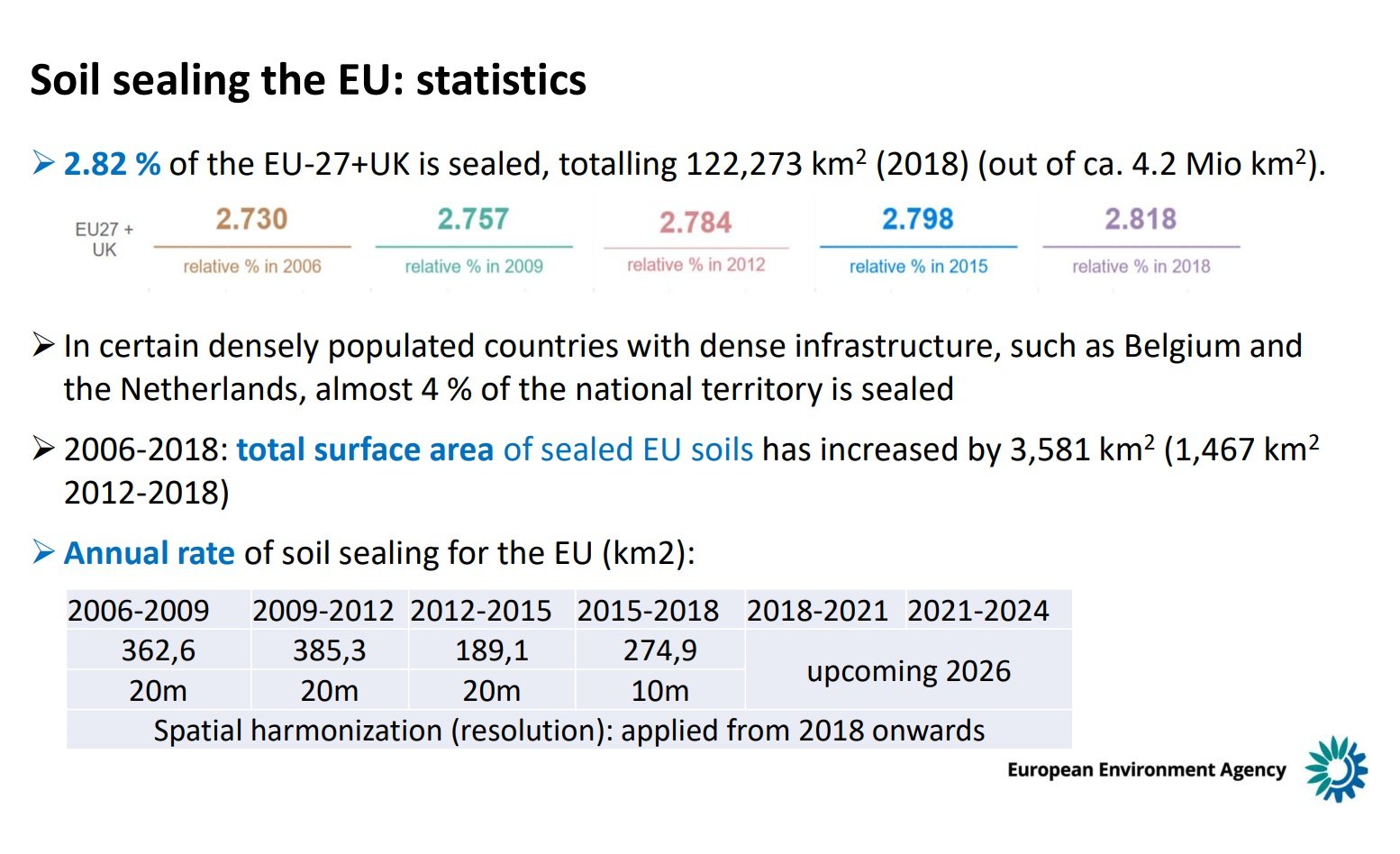
From 2006 to 2018, 3,581 km² of soil were sealed in the EU. Image: FAO, Global Symposium on Soil Sealing and Urban Soils
Four tools for a sustainable urban development
The problem is also evident on a global scale. “Between 1992 and 2015, urban areas doubled in size, consuming about 24 million hectares of agricultural land,” said Feras Ziadat, Land and Water Officer at the FAO. To address this problem, he explains, integrated planning based on scientific data is needed to reconcile urban development and food security. Key tools that can be used in this regard include (I) land suitability analysis, which is based on soil mapping to identify the most fertile and carbon-rich soils to be protected.
But also, of course, (II) integrated land-use planning, which balances the needs of agriculture, infrastructure, and biodiversity, and (III) the adoption of the principle of land degradation neutrality, according to which any loss of soil must be offset by equivalent recovery.
Furthermore, (IV) the economic assessment of ecosystem services is crucial in order to assign a value to the benefits offered by land and enable decision-makers to compare the short-term costs of development with the long-term environmental costs.

Soil sealing is a widespread phenomenon. The situation is worsening in most regions of the Planet. Image: FAO http://www.fao.org/3/a-i6470e.pdf
Best practices for de-sealing: an example from Brazil
In recent years, there have been numerous de-sealing projects, highlighting successful strategies in various contexts around the world. Among these, Ana Moeri, president of Instituto Ekos Brasil, a non-profit organization for the protection of biodiversity and sustainability, recalled the case of the residential conversion of the former industrial area of Jurubatuba, in the metropolitan region of São Paulo, Brazil, where approximately 20 million people reside and groundwater contamination remains a long-standing problem. Here, starting in 2020, a project was developed to improve groundwater quality, create decision-making tools, develop a regulatory framework, and increase water availability.
“The plan was not fully implemented,” explains Moeri, “but it generated important outcomes as new deep well monitoring projects that helped with a regional groundwater database that is being used by the local government and also a decision support tool that is also being used by the authorities.”
In short, this kind of intervention can take time. However, initiatives such as this highlight how public-private partnerships and community involvement are essential for addressing the redevelopment of sealed or degraded areas in a transparent and shared manner. This promotes collective learning, participatory governance, and lasting solutions.
In New York City the old railway turned into a garden
Urban soil restoration involves reintroducing the soil’s natural functions. This operation can be integrated into city planning processes. According to Maxine J. Levin, professor at the University of Maryland, there are four main approaches to this:
- physical de-sealing, i.e. removing or perforating impermeable surfaces;
- biological enhancement, through the inoculation of microorganisms and the use of plant species;
- the implementation of green infrastructure without completely removing existing structures;
- soil transfer as a targeted restoration tool.
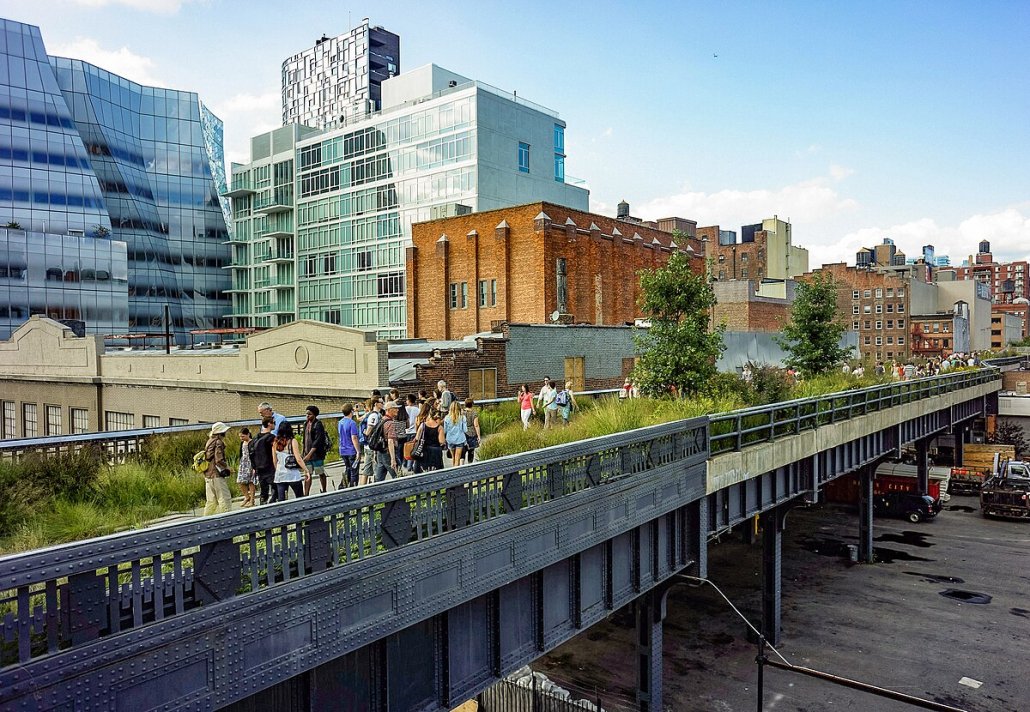
A prime example is New York’s High Line project, which involved converting the iconic abandoned elevated railway, shown in many famous films such as Woody Allen’s Manhattan (minute 2:43, ed.), into a linear park with artificial soil and natural vegetation, Levin recalls. The project, she says, was realized “on an abandoned elevated railway viaduct, a classic sealed infrastructure, and they introduced 18-inch (almost 46 cm, ed.) deep soil layers and created a living green roof along its length, so more than a mile and a half or three kilometers. “ The initiative, in other words, is an example of urban environmental recovery that can improve the quality of public spaces. By transforming the line into ”an incredible highlight of New York City,” she concluded.
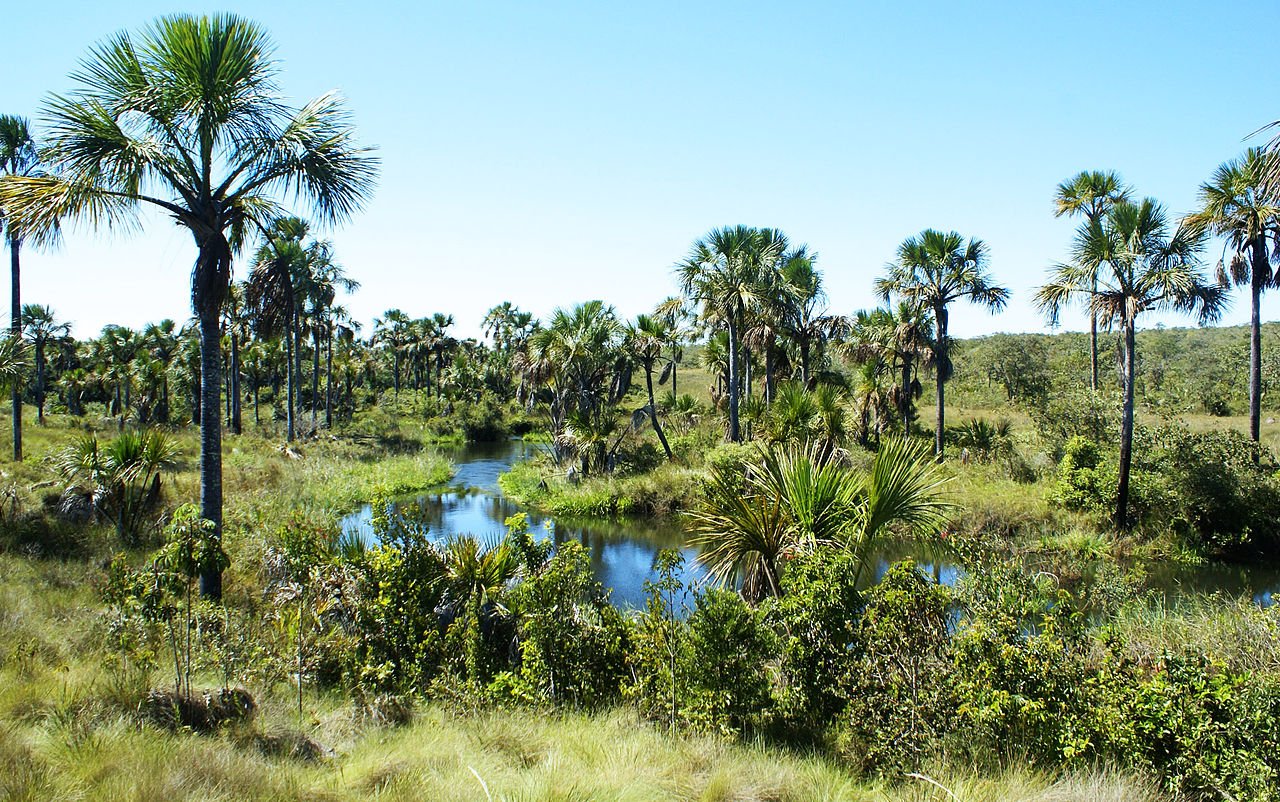 Thpelin Attribution-ShareAlike 3.0 Unported CC BY-SA 3.0 Deed
 Jonathan Wilkins Attribution-ShareAlike 3.0 Unported CC BY-SA 3.0 Deed