Climate change may decrease methane sequestration in the Amazon by 70%
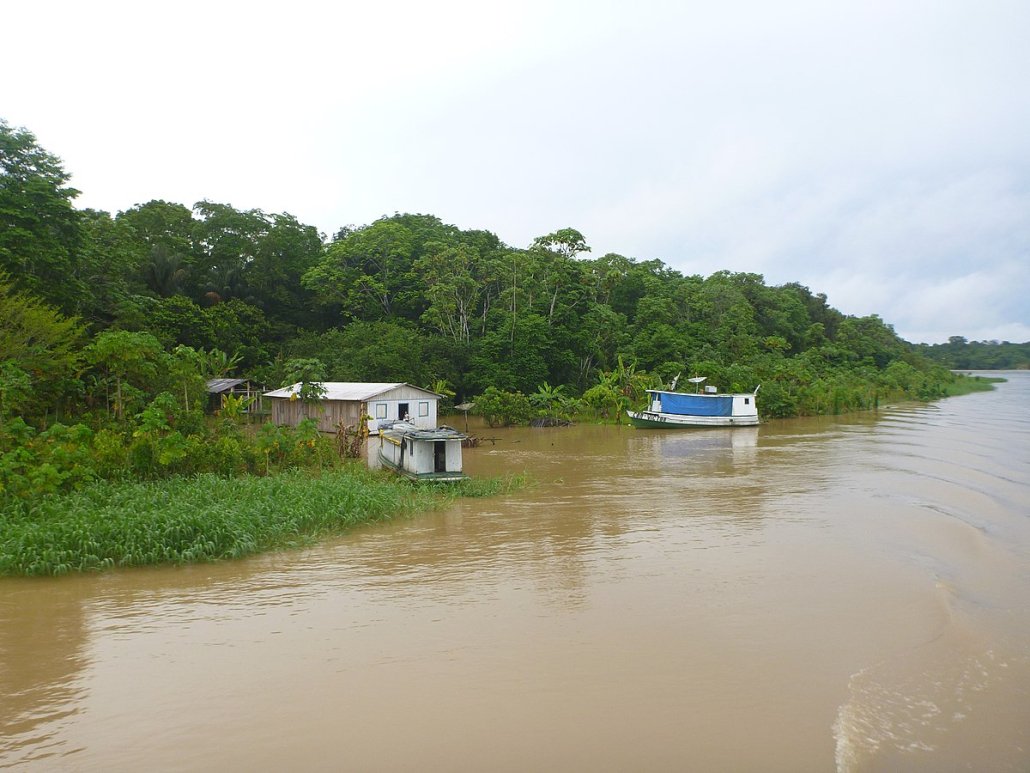 Marcelo Castro Attribution 3.0 Unported CC BY 3.0 Deed
A study reveals how methane uptake by forest soil in the Amazon decreases sharply under hot and dry conditions. While production of the same gas increases following heavy rains
by Matteo Cavallito
Rising temperatures and changing moisture levels, between excessive rainfall and drought phenomena, in the Amazon would contribute to an increase in the volume of methane-emitting microorganisms in flooded areas. A phenomenon fuelled by climate change that could significantly reduce the uptake potential of this greenhouse gas in forests. This is supported by a study conducted by researchers at the University of São Paulo (USP) in Brazil and published in the journal Environmental Microbiome.
In light of the results, ecosystem conservation policies are even more important, say the researchers cited in an article released by FAPESP, the Foundation for Research Support of the State of São Paulo, by Julia Moióli.
Floodplains are an important source of methane emissions
Methane production increases due to the decomposition activity of organic matter by microbes. ‘”Seasonal floodplains in the Amazon basin are important sources of methane (CH4), while upland forests are known for their sink capacity,” says the study, which also involved the Netherlands Institute of Ecology, Stanford Universities of Massachusetts and Oregon, in the US, and the Universidad Federal del Pará Occidental (UFOPA) in Santarém, Brazil.
At the same time, “Climate change effects, including shifts in rainfall patterns and rising temperatures, may alter the functionality of soil microbial communities, leading to uncertain changes in methane cycling dynamics.”
According to estimates, recalls FAPESP, Amazonian floodplains contribute up to 29% of global wetland methane emissions. For at least six months a year, more than 800,000 km2 of these territories, or 20% of the total forest area, are submerged under several metres of water due to constant rainfall and rising river levels.
Upland forest is sensitive to climate change
In the course of the investigation, the authors conducted an experiment by heating soil samples (from 27°C to 30°C to simulate a 3°C temperature increase) from two floodplains located at the Amazon and Tapajós rivers and a mountain forest, respectively. The researchers then observed the dynamics of the microbial communities in the space of 30 days through genetic sequencing and analysis of methane fluxes. “In the floodplains, temperature changes did not significantly affect the overall microbial composition and CH4 fluxes,”’ the study explains, but the number of methane-emitting microorganisms increased.
“By contrast, in the upland forest, the higher temperature caused a sink-to-source shift under flooding conditions and reduced CH4 sink capability under dry conditions.”
In detail, recalls FAPESP, methane consumption by the mountain forest soil decreased by 70 per cent during hot and dry conditions, while production of the same gas increased significantly during periods of heavy rainfall. This means that the mountain forest microbiome is sensitive to climate change and, as such, could experience an alteration in the balance of greenhouse gas emissions in the region in the future.
Informations may already help in planning new policies
The research shows how the microbiota and the methane cycle in the Amazon will be affected by climate change. According to the scientists, an increase in emissions is therefore conceivable, even if it is accompanied by a growth in the number of methanotrophic microorganisms that use this compound as an energy source and thus have the potential to offset the increase.
In this context, the authors now intend to conduct further field experiments and laboratory investigations with microorganisms to gain a deeper understanding of the dynamics of the methane cycle. The information gathered so far, FAPESP explains, is already useful for formulating policies to protect the Amazon ecosystem. Altering the balance of emissions in the region, in any case, is a very significant problem.
 Melissa McMasters Attribution 2.0 Generic CC BY 2.0 Deed
  Angal insect Attribution-ShareAlike 4.0 International CC BY-SA 4.0 Deed
  ECHO
ECHO