It isn’t just a matter of melting ice: here’s how climate change is reshaping Arctic aquifers
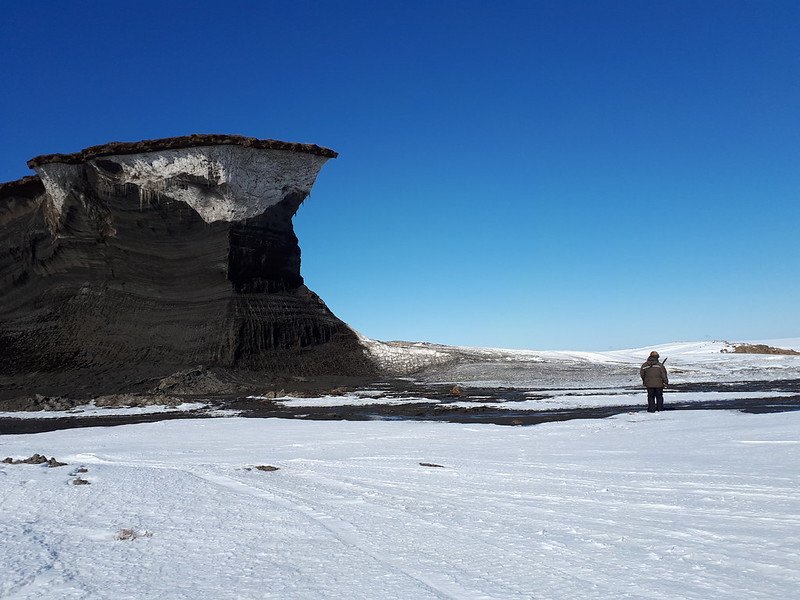 Vincent Sasseville/Nunataryuk Attribution-NonCommercial-ShareAlike 2.0 Generic CC BY-NC-SA 2.0 Deed https://www.flickr.com/photos/gridarendal/49555909433
 Beneath the surface of the Arctic permafrost, an entire hydrological system is reorganizing. A Canadian study reveals where the soil will become drier and where moisture will increase
by Matteo Cavallito
In the Arctic region, climate change is not only impacting the ice but also the dynamics of groundwater. This is the conclusion of a study by Dalhousie University in Halifax, Canada, which revealed how aquifers—the permeable layers of soil that feed rivers, lakes, and terrestrial ecosystems—are reacting to rising temperatures.
Using maps of climate, soil properties, topography, and permafrost, scientists showed that most shallow aquifers drain slowly. This helps keep groundwater close to the surface, keeping the soil and related ecosystems moist.
The Arctic is not just a block of ice
The Arctic is often imagined as a compact block of ice and permanently frozen ground, impermeable to water. However, during the summer, the upper layer of permafrost—the so-called “active layer”—thaws, allowing water to infiltrate and circulate underground. As a result, the scientists explain, the warmer the summer, the larger the unfrozen area in which groundwater can flow.
In other words, warming makes soil more permeable, changing the amount of water that can be stored and transmitted.
This process, combined with other factors, has clear consequences for overall systemic balances. “The changing Arctic climate is affecting groundwater flow and storage in supra-permafrost aquifers due to groundwater recharge changes and thaw-driven alterations to aquifer properties and connectivity,” highlights the research published in Environmental Research Letters. “Changes to shallow subsurface hydrological processes can drive extensive ecological and biogeochemical changes in addition to potential surface hydrologic regime shifts.”
Alaska and Siberia are the two opposite sides of the phenomenon
Using open source data to characterize aquifers and then applying climate models, researchers have shown how warming and changes in precipitation patterns are altering groundwater patterns. By the end of the century, these changes could lead to a lowering of aquifers and the drying up of more than 5% of the Arctic land surface.
At the same time, 11% of the region’s surface area will experience a rise in groundwater levels, resulting in increased soil moisture.
These changes could also reshape ecosystems and the carbon cycle, affecting the availability of freshwater resources. In coastal areas, rising sea levels will further increase groundwater levels, promoting the intrusion of salt water. Finally, not all areas will react in the same way: Alaska, for example, will experience wetter landscapes. Other areas, such as much of western Siberia, will have deeper groundwater and drier surface conditions in the future.
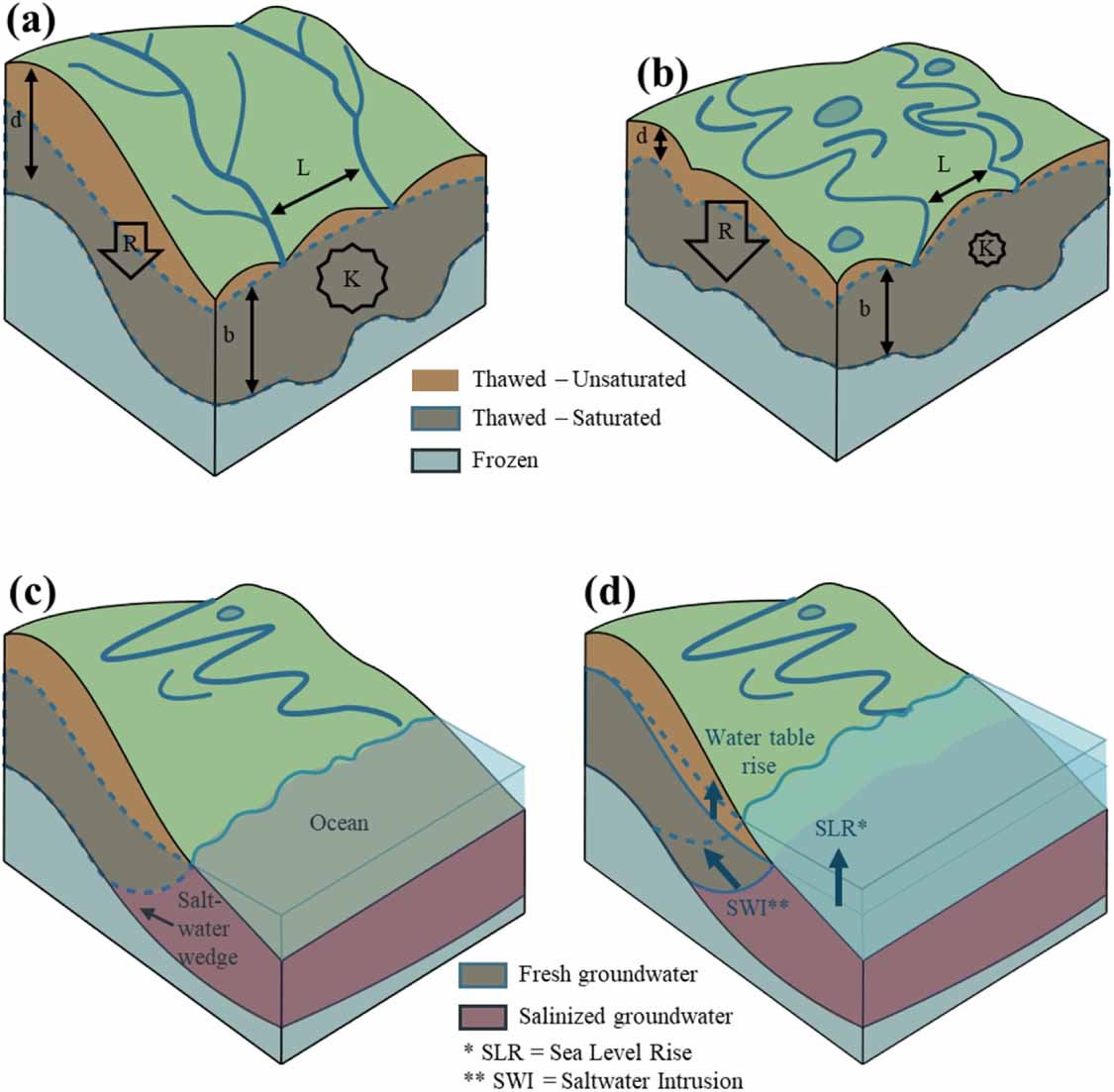
Aquifers above permafrost can experience either high (a) or low (b) permeability. Coastal conditions (c), such as groundwater rise and subsurface salinity, are influenced by sea level and permeability. Rising sea levels (d) can cause a similar movement of the water table near the coast and the intrusion of the underground salt wedge inland. Source: Bay Berry et al 2026 “Classifying pan-Arctic supra-permafrost aquifer function under present and projected conditions“, Environ. Res. Lett. 21 024017
Implications for plant and animal distribution
The implications are far-reaching. The study describes a hydrologically diverse Arctic in which groundwater will reshape the very geography of the region. Understanding where these changes will be most intense and where uncertainties remain is therefore essential for monitoring and predicting the evolution of this environment.
“Changes to northern aquifer systems matter because they control how rain and snowmelt are conveyed through Arctic landscapes and can influence soil moisture and vegetation,” said Dr. Barret Kurylyk, Associate Professor, Canada Research Chair in Coastal Water Resources at Dalhousie University who contributed to the study. “Because aquifers and groundwater flow patterns strongly influence where wetlands occur as well as river flow” he concludes, “these findings have implications for the future distribution of surface water and reliant vegetation and animal species in northern landscapes.”
 Melissa McMasters Attribution 2.0 Generic CC BY 2.0 Deed
  Angal insect Attribution-ShareAlike 4.0 International CC BY-SA 4.0 Deed
  ECHO
ECHO