More homogeneity and fires are coming for boreal forests
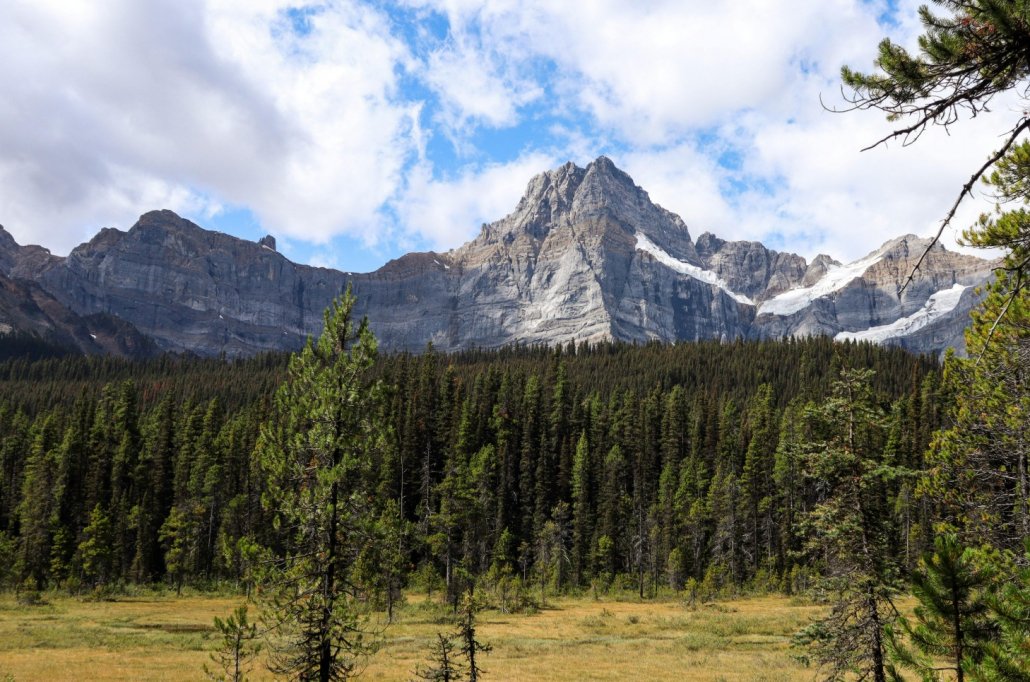 Photo: Jasper Hunter Pexels free to use
 According to a Wageningen University study, forests in the Northern Hemisphere will become increasingly similar to each other due to climate change. This will also increase the risk of forest fires
by Matteo Cavallito
Global warming is impacting boreal forests, which are set to change their appearance with important consequences including increased vulnerability to fires. The hypothesis was presented in recent research from Wageningen University in the Netherlands, which examined the dynamics occurring in these peculiar environments that characterize the vast expanses of Canada, Alaska and Siberia as well as forests located in the lower latitudes of the hemisphere. These are crucial ecosystems, of course, that provide important services starting with biodiversity conservation and carbon storage in soils and trees.
Northern forests become denser
“Forests growing at the southern boreal distribution range may not be able to maintain the current amount of trees as climate becomes drier and warmer. Therefore, they may become less dense,” Ronny Rotbarth, researcher and co-author of the study, explains in a statement. “Other forests, in the cold north, could support more trees as conditions warm up, and in fact become denser than the forests we currently find there.”
Complex simulation models are needed to study future ecosystem changes, the authors recall. This research was no exception although, in this case, the scientists used a new approach based on assessing tree cover density. Gathering available data from the past two decades, the researchers observed changes in the concentration of plants and consequently hypothesized trends up to the year 2100.
The transition is already underway
“We apply an innovative modeling approach to project that global boreal forests will undergo a fundamental transition toward an open forest state of 30 to 50% tree cover in the coming decades,” the research states. “We present evidence that such a transition is already underway.”
The results, in other words, indicate that global boreal forests could take on a more homogeneous appearance than the current one that sees the presence of both particularly dense areas, with tree cover affecting more than 60 percent of the land, and other decidedly sparse areas where the land covered by trees is between 5 and 15 percent of the total. In short: while the coverage of warmer boreal forests decreases that of cooler forests in the same hemisphere increases. And not without consequences.
https://resoilfoundation.org/en/environment/heat-drought-carbon-forest/
The impact on fires
This gradual convergence toward a single forest pattern, in particular, results in a greater propensity for wildfires. “The currently dominating sparse and dense forest types burn less frequently than the open type,” explains Milena Holmgren, one of the study’s authors. “Sparse forests typically do not provide enough fuel for fires to burn and dense forests create micro-climates which prevent forest fires.”
However, she adds, “The open type we project meets the sweet spot and could lead to more fires than we observe at present. The crucial functions of boreal forests would in this case be at risk.”
On balance, carbon release could increase
According to the research, increased fire risk would result in “potentially substantial releases of stored carbon.” According to the survey, in particular, ongoing changes in boreal forests are expected to result in an 11.4 percent increase in trees’ sequestration of the element by the end of the century. “Despite the expected net increase in aboveground biomass carbon,” the study points out, however, ”the overall future of boreal forests could well be characterized by a carbon release.” Three causes identified:
“First, the net increase of aboveground carbon will eventually level off with tree density and when forests reach their northern terrestrial limits at the Arctic Ocean.”
Second, “future forests may be shorter in height and thus store less biomass for any given tree cover density. Last, forest expansions in the cold boreal will partly be enabled by a shrinkage in permafrost extent as a result of warming.” Indeed, the thawing of permafrost would ultimately release large amounts of carbon from the soil to an extent greater than the additional uptake by surface biomass in most of the boreal biome.
 Melissa McMasters Attribution 2.0 Generic CC BY 2.0 Deed
  Angal insect Attribution-ShareAlike 4.0 International CC BY-SA 4.0 Deed
  ECHO
ECHO