SOUL project gets started, five EU countries will test new bio-based products
 SOUL
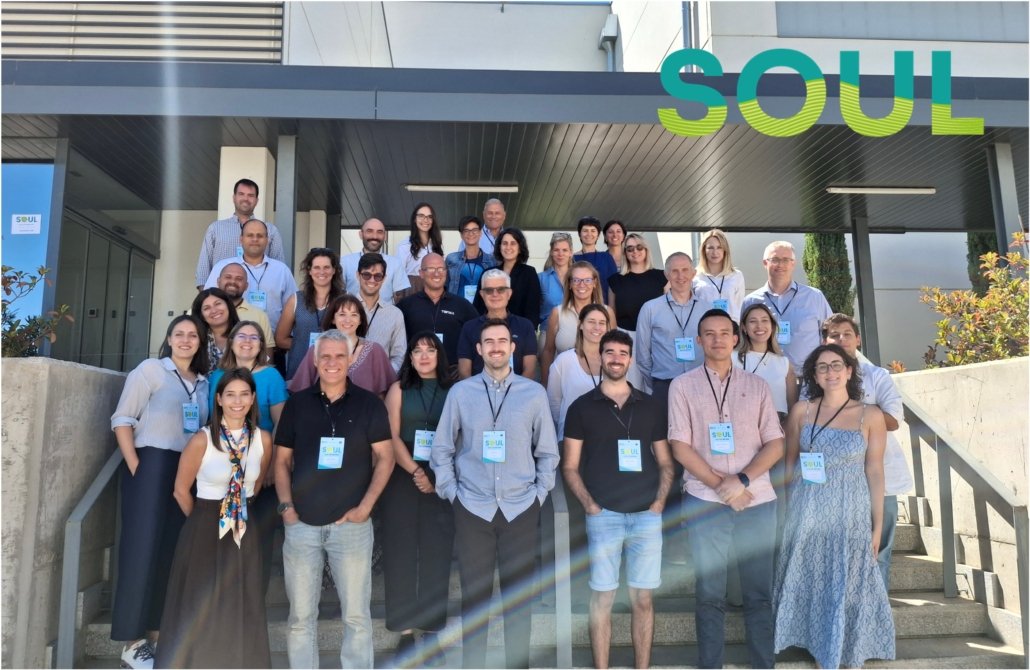
SOULThe initiative brings together 18 partners for the development and field testing of new-generation products designed to biodegrade in the soil at the end of their life cycle, thus minimizing their environmental impact
by Matteo Cavallito
Establishing a new benchmark for the development of biodegradable products for the agriculture, gardening, landscaping, fishing, leisure, and sports sectors. This is the goal of SOUL (Sustainable, biO-based and biodegradable-in-soil soLutions), a project co-funded by Horizon Europe as part of the Circular Bio-based Europe Joint Undertaking (CBE JU), the public-private partnership between the European Union and the BIC, the consortium that funds circular bio-industry projects on the continent.
Announced in February this year, the initiative brings together 18 partners from five EU countries, including Spain’s Fundación AITIIP, which coordinates the project, and Italy’s Novamont, Re Soil Foundation, and Alma Mater Studiorum University of Bologna. The program involves the development of new highly renewable products designed to biodegrade completely in the soil at the end of their life cycle, thus minimizing their environmental impact.
New solutions for the bio-based products industry
The SOUL project is structured into eight work packages covering the entire value chain, from research on biomaterials to communication, training, and stakeholder engagement activities, which are the particular focus of the Re Soil Foundation. As part of the design efforts, SOUL is committed to developing and validating 11 different solutions in the industry of bioproducts made with over 95% renewable raw materials from sustainable supply chains, including agricultural residues, by-products from the agri-food industry, and low-impact crops from marginal land.
Compatible with existing bioplastics processing technologies, these new proposals will be tested in real conditions in five European countries with different climatic profiles: Spain, Italy, Portugal, Poland, and Ireland.
The aim of the tests is to verify the actual biodegradability in soil and the compatibility of the solutions themselves with different end-of-life scenarios, including composting, reuse, and recycling. SOUL experts will then assess the safety, sustainability, and circularity of each product throughout its entire life cycle, ensuring measurable greenhouse gas savings and providing strategic recommendations for the sector. Other goals include reducing the carbon footprint and preventing the accumulation of microplastics.
The projects
Designed to meet high performance requirements in bioplastic processing while ensuring improvements in mechanical properties during use, the solutions aim to preserve soil health. The list includes, among others, ultra-thin and multi-layer mulching films also developed by Novamont and tested in Italy on tomato, almond, and olive crops.
Designed to protect plants in the early stages of growth, these sheets can be left in the soil at the end of the cycle, where they biodegrade without leaving any residue behind.
Other examples of products include controlled-release fertilizers with a bio-based spray coating that regulates the release of nutrients for about a month before degrading in the soil. But also reusable and compostable agricultural clips and twine, turf nets and protective coverings for young trees, and many more.
A circular bioeconomy model
In short, SOUL does not just propose new materials, but aims to produce a bioeconomy model that can guarantee effective performance in agriculture while also contributing to strategies for preventing and curbing soil degradation in Europe.
“The SOUL project represents a crucial step towards a truly circular bioeconomy for plastics that end up in our soils,” says Dr Carolina Peñalva, Project Coordinator. “Our goal is to create sustainable, high-performance materials that work in harmony with the environment, rather than against it. By preventing soil pollution and reducing our carbon footprint, we can protect ecosystems for future generations.”
 Jonathan Wilkins Attribution-ShareAlike 3.0 Unported CC BY-SA 3.0 Deed
  Melissa McMasters Attribution 2.0 Generic CC BY 2.0 Deed
  Angal insect Attribution-ShareAlike 4.0 International CC BY-SA 4.0 Deed