Plant roots are the key to wetland restoration
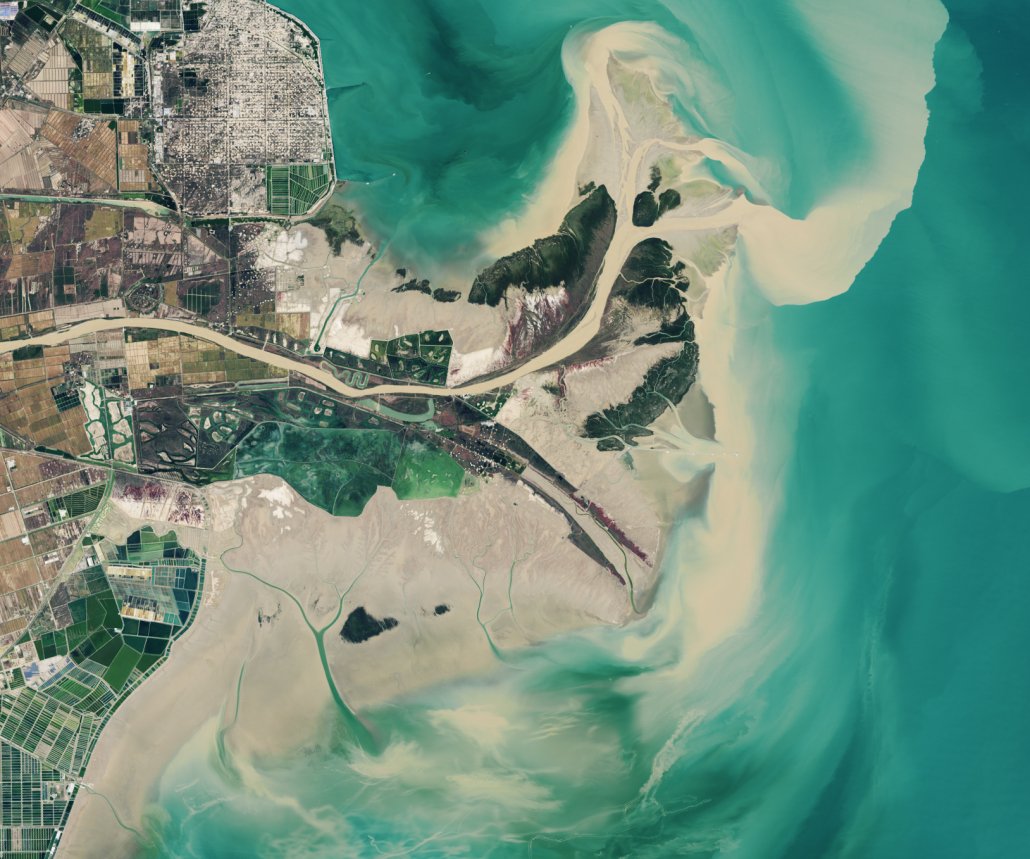 NASA Earth Observatory images by Lauren Dauphin, using Landsat data from the U.S. Geological Survey. Public domain
 In coastal areas, macropores favored by root growth increase tidal-driven water exchange by improving soil respiration
by Matteo Cavallito
Soils with more macropores formed by plant roots and crab pots facilitate water movement contributing to healthy wetland environments. This was revealed in a study published in the Journal of Plant Ecology. The research was carried out through a collaboration between the University of Western Australia and Beijing Forestry University and revealed the critical role of plants in improving water flow in soils in the Yellow River Delta, China.
Roots positively influence water movement
“Our research highlights the importance of root-induced soil pores in improving the hydrological function of wetland soils,” said Lumeng Xie, lead author of the study in a release from the Australian university. The research, she explained, specifically highlights how the vegetation-soil-hydrology system allows for interconnectedness in wetland ecosystems. In which each individual component can impact the health of the environment as a whole.
For this reason, plant growth plays an essential role in the restoration of these areas and, consequently, in the health of ecosystems that depend on healthy soil-water interactions. “Importantly, the selection of plant species for revegetation efforts can profoundly affect soil and water conditions, thereby influencing sustainable restoration practices,” she pointed out.
The water-soil system under X-ray
The authors set out to mechanistically and statistically clarify and quantify the influence of soil on vertical water flow in the Yellow River Delta. Using X-ray computed tomography and a permeability test, the researchers first highlighted “the characteristics of the hydrodynamic process in the soil without macropores.”
Then they evaluated “the effect of the soil macropore on soil hydrodynamic process by comparing the experimental results with the simulation results.”
Ultimately, they explain, “We found that increasing soil microporosity improved the convenience of water movement, which would enhance the hydrological connectivity of the region.” The results, they conclude, “will further help to reveal the eco-hydrological process at a vertical scale in soil and provide a theoretical guide for wetland conservation and restoration.”
A lesson for coastal environments
According to Xie, the findings are “crucial for guiding future conservation and restoration projects in wetland areas such as the Yellow River Delta and Western Australia’s saline or degraded wetlands.” In coastal areas in particular, the development of macropores as a result of planting interventions, for example, will increase tidal-driven water exchange by improving the intensity and duration of soil respiration. Thereby helping to maintain ecosystem function.
In addition, the research concludes, “Vegetation restoration is also helpful to improve the surface-saturated hydraulic conductivity.” Therefore, “it is necessary to input more effort into replanting in degradation areas”. By taking into consideration different species, the characteristics of their roots and their impact on the distribution of macropores in the soil.
 Melissa McMasters Attribution 2.0 Generic CC BY 2.0 Deed
  Angal insect Attribution-ShareAlike 4.0 International CC BY-SA 4.0 Deed
  ECHO
ECHO