Irrigation of rice fields impacts on metal uptake
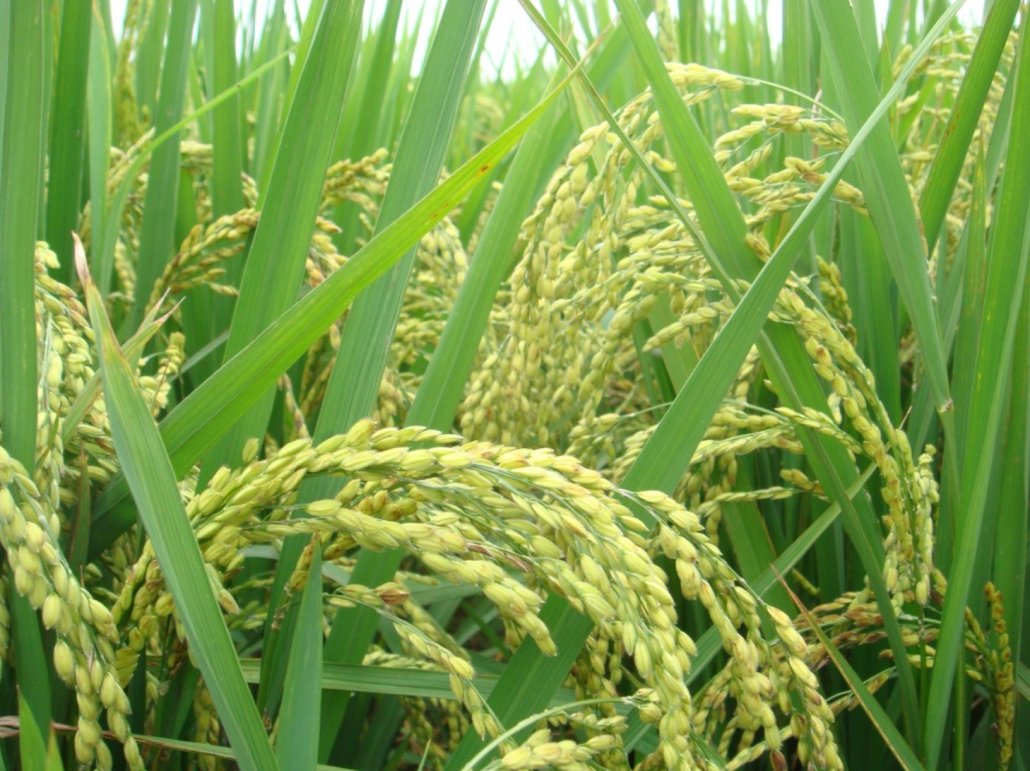 pxhere CC0 Public Domain Free for personal and commercial use No attribution required
 A University of Delaware study highlights the impact of water supply in determining the concentration of arsenic and cadmium in rice plants. But the mechanism is complex and a solution is yet to be found
by Matteo Cavallito
The management of water supply in rice fields affects the presence of heavy metals in the food. This is supported by research from the University of Delaware published in the journal Environmental Geochemistry and Health. ‘TThe drier those rice fields are, the lower the amounts of arsenic and the higher the amounts of cadmium,’ a statement explains. ‘However, the higher cadmium is lower than the existing threshold for adverse health effects.’ The investigation thus makes a new contribution to studies on the assimilation mechanisms of metals that, by entering the food cycle, have a negative impact on consumers’ health.
The water factor on rice plants
In rice crops, which are typically grown in submerged fields, the spread of potentially toxic elements and their absorption by the roots can be facilitated. Decisive, the researchers explain, is the loss of oxygen, which is normally located in the small pores of the soil and is lost very quickly being replaced by water. It is precisely the scarcity of the element that impacts on the action of soil micro-organisms which, in their respiration, begin to process iron oxides.
‘Arsenic likes to stick really tightly onto those iron oxides,’ explains Angelia Seyfferth, a soil biogeochemist at the University of Delaware and coauthor of the research. ‘When the iron oxides are used by these organisms to breathe, they go from a solid mineral to a solution phase. You essentially dissolve them, and when you dissolve them, the arsenic that’s stuck onto them goes into the water.’.At that point, she adds, the element can be easily absorbed by the roots and transported into the grain.
Impossible to reduce concentrations of both elements
To understand the uptake mechanisms, the researchers cultivated rice in 18 fields, subjecting the paddy fields to different flooding and moisture conditions. ‘In a 2 year field study,’ the research explains, ’we used 6 irrigation managements that varied in extent and frequency of inundation, and we observed strong effects of irrigation management on porewater chemistry, soil redox potentials, plant As and Cd concentrations, plant nutrient concentrations, and methane emissions.
Irrigation management controls biogeochemical cycles in rice production. Under flooded paddy conditions, arsenic becomes available to plants as a result of iron reduction, while oxidised conditions lead to increased cadmium availability to plants in acidic soils. In any case, the study notes, ‘A hazard index approach (a method for assessing the health risks from combined exposures to multiple chemicals, ed.) showed that in the tested soil with low levels of As and Cd (5.4 and 0.072 mg/kg, respectively), irrigation management could not simultaneously decrease grain As and Cd’.
In search of balance
The mechanisms are quite complex. Flooding the rice fields encourages the uptake of arsenic and soil organisms begin to emit methane into the atmosphere. At the same time, the excess water reduces the sulphate in the soil to sulphide, causing the cadmium to precipitate. By drying out the soil, on the other hand, the activity of microorganisms is curbed, resulting in a reduction of arsenic and methane.
Under those conditions, however, sulphide binds with oxygen, turning into sulphate and passing the solid phase. In this way, cadmium can escape and be absorbed by plants.
According to the authors, water management in rice fields is ‘a puzzle’. In other words, it is a question of finding the optimal water level to simultaneously minimise the presence of the two heavy metals in rice. The problem, however, has not yet been solved. The lesson for the future, however, is clear. ‘Many soil properties, such as reducible As, available Cd, soil pH, available S, and soil organic matter should be considered when attempting to optimize irrigation management when the goal is decreasing the risk of As and Cd in rice grain,’ the study further notes.
 Melissa McMasters Attribution 2.0 Generic CC BY 2.0 Deed
  Angal insect Attribution-ShareAlike 4.0 International CC BY-SA 4.0 Deed
  ECHO
ECHO