
Accumulation of nutrients threatens tropical forests
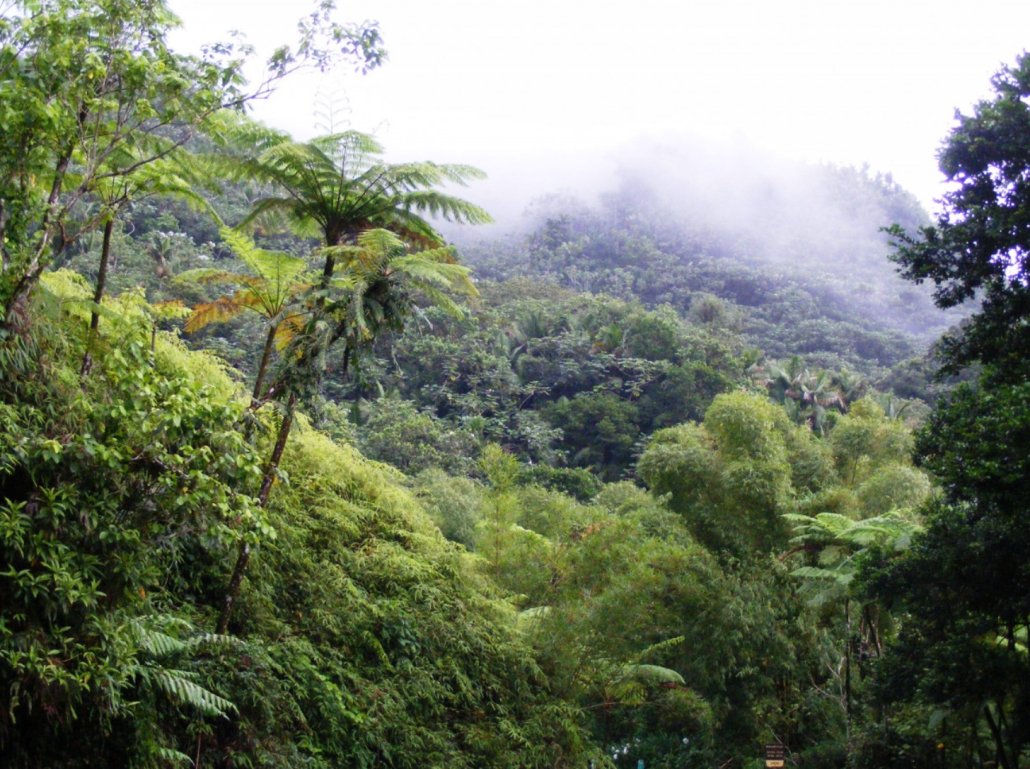 E.Morgan.Strong CC0 Public Domain Free for personal and commercial use No attribution required
According to a study, the inflow of nutrients would eventually provide a competitive advantage to some tree species resulting in a loss of biodiversity
di Matteo Cavallito
Tropical forest areas are threatened not only by deforestation but also by a lesser-known danger: nutrient overload. This is highlighted by a new study conducted by a team of researchers from the universities of Kaiserlautern-Landau and Goettingen and the Centre for Ecological Research in Budapest. The research, highlights how human activities, including agriculture and the burning of fossil fuels, are altering plant growth by impacting the composition and resilience of forests. These phenomena, the authors explain, could in turn exacerbate the effects of climate change by jeopardizing biodiversity and the services provided by the ecosystem.
Human activities and climate
Researchers recall how human activities are dramatically altering natural nutrient cycles. Agriculture and burn, they explain, would be favoring their spread even to the most remote regions. And the influx of these key elements would eventually provide a competitive advantage to some tree species by encouraging the development of forests that are increasingly homogeneous, that is, with less biodiversity.
“These changes may reduce species diversity across entire food chains and weaken forest resilience in the face of climate change”, explains Péter Batáry, researcher and co-author of the research, in a statement. “The loss of diversity also diminishes the forests’ ability to adapt to environmental stressors.”
The impact of human activities and climate change, the study says, “increased nutrient leaching and deposition, could significantly alter the productivity, structure, and function of tropical vegetation.” To better understand this phenomenon, scientists looked at multiple studies devoted to the effects of nitrogen, phosphorus and potassium impacts on soils.
Addition of nutrients increases shoot biomass
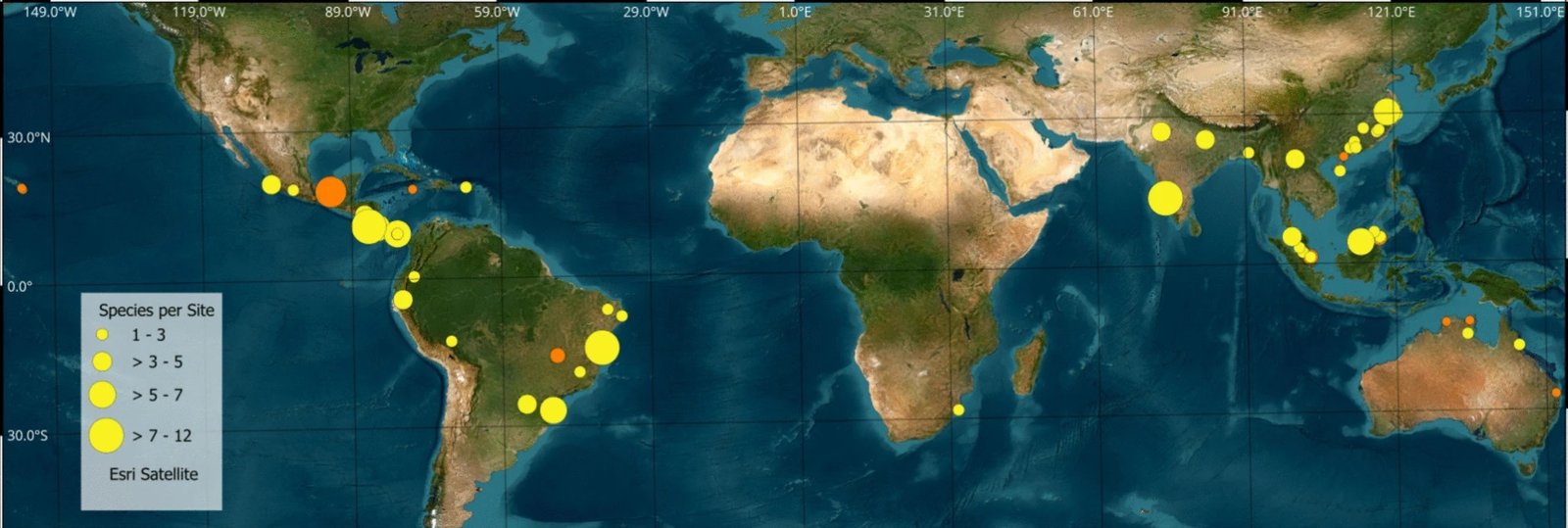
The researchers synthesized data from 59 studies conducted in different tropical regions of the world. “Overall, nutrient addition increased seedling shoot biomass by 26% and growth rates by 14%,” the study explains. Morevover, “Nutrient combinations yielded the highest growth rates (nitrogen, phosphorous and potassium NPK: 27%, nitrogen and potassium NP: 18%), and nitrogen was critical for shoot biomass (nitrogen: 38%, and NP: 48%).”
The research, among other things, shows “high variability in seedling responses to individual nutrients.”
The study also highlights the complexity of tropical forest research. The studies reviewed used a combination of methods, including greenhouse experiments, transplanting trials and in situ fertilizer applications. Despite this, however, identification of seedlings down to the species level is still very complex because of the extraordinary diversity and similarity of young tropical trees.
 Thpelin Attribution-ShareAlike 3.0 Unported CC BY-SA 3.0 Deed
 Jonathan Wilkins Attribution-ShareAlike 3.0 Unported CC BY-SA 3.0 Deed


