A public database collects information on soil fungi
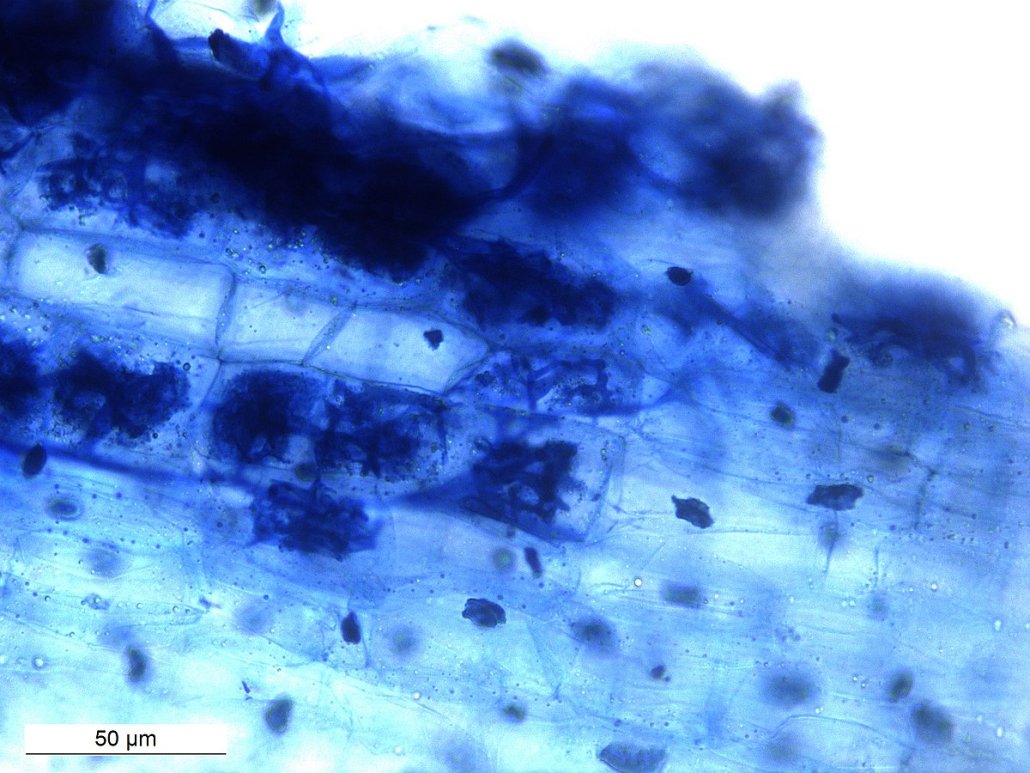 Rajarshi Rit, USIC department - University of Burdwan Attribution 4.0 International CC BY 4.0 Deed
After years of study, a group of U.S. researchers has mapped the spore traits of 344 species of arbuscular mycorrhizal fungi. Gaining relevant information to assess their distribution and resilience to stresses
by Matteo Cavallito
Subterranean mycorrhizal fungi are known to play a crucial role for plants to access soil nutrients by providing sugars in return. Although this symbiotic relationship is among the most widespread on the Planet, the link between the characteristics of fungal species and their distribution, function and resilience is still poorly understood.
However, new insights were recently provided by researchers at Dartmouth College in Hanover, New Hampshire. In a study published in the journal Scientific Data, in fact, they described a comprehensive database that lists the spore characteristics of 344 species. This collection of information, they explained in an article, is intended to help scientists study how fungi and the plants they support respond to events such as climate change and land use.
Fungi’s world is still a largely unknown
“Traits are measurable characteristics of organisms (morphological, physiological, phenological, behavioral, or cultural) that can be used to make broad inferences about the ecology and evolution of life,” the study explains. These elements, in particular, influence how organisms interact with biotic and abiotic components of the environment, with implications for the broader functioning of ecosystems. Based on this principle, linking form to function, trait-based ecology thus aims to increase our predictive understanding of ecosystem processes. And, with them, of the impact of critical factors such as land use change, climate and biodiversity loss.
Available knowledge, however, is still limited. “Despite there being between 3 and 13 million species of fungi on Earth, fungal functional ecology and trait-based mycology are in their infancy,” the research explains.
Indeed, several obstacles are weighing heavily, starting with difficulties in field observation and laboratory cultivation. These are compounded by the arduous interpretation of symbiotic relationships with the plant, the ecological and physiological complexity of fungal traits and, above all, the scarcity of data. So, how to overcome these problems?
Follow the spores
The researchers’ idea was to examine spores, or the microscopic clusters of thick-walled cells that these microorganisms use to reproduce and spread. Launched in 2019, the cataloging process involved arbuscular mycorrhizal fungi, which form relationships with a wide variety of plants, including grasses, shrubs, trees and most crops. The authors reviewed the scientific literature collecting information on size, shape, surface ornamentation, color and wall thickness.
“Fungal spores vary with respect to numerous quantifiable morphological traits; they form among the largest fungal cells and differ by size, shape, color, surface ornamentation, and complex wall structure,” the research explains.
Moreover, they “are key arbuscular mycorrhizal fungal reproductive propagules that have previously been linked to long-distance aerial dispersal and resistance to environmental stressors.” The data collected will now help researchers make ecological and evolutionary inferences by associating the spores’ characteristic traits with their functions.
A contribution to new studies
According to the researchers, the link between specific ecological functions and traits would result from evolutionary trade-offs. The melanin content of the cell wall, for example, helps protect fungi from UV light and fire, the shape of the spore affects its ability to transport in water, while ornamentation – that is, the presence or absence of creases on their surface – helps it interact with bacteria, attach to soil particles or transport by insects or animals.
The researchers also found that fungi that produce larger spores are able to thrive in warmer and wetter climates.
The findings, then, can be used to develop further research. Thereby helping to improve agricultural and ecological restoration practices through the identification of fungal species best suited to specific ecosystems. “It is our hope that researchers will utilize these data to interrogate myriad new questions regarding the evolutionary history and functional diversity of this ecologically and economically important group of fungi,” the scientists conclude.
 Melissa McMasters Attribution 2.0 Generic CC BY 2.0 Deed
  Angal insect Attribution-ShareAlike 4.0 International CC BY-SA 4.0 Deed
  ECHO
ECHO