Conservation agriculture is stronger than climate change
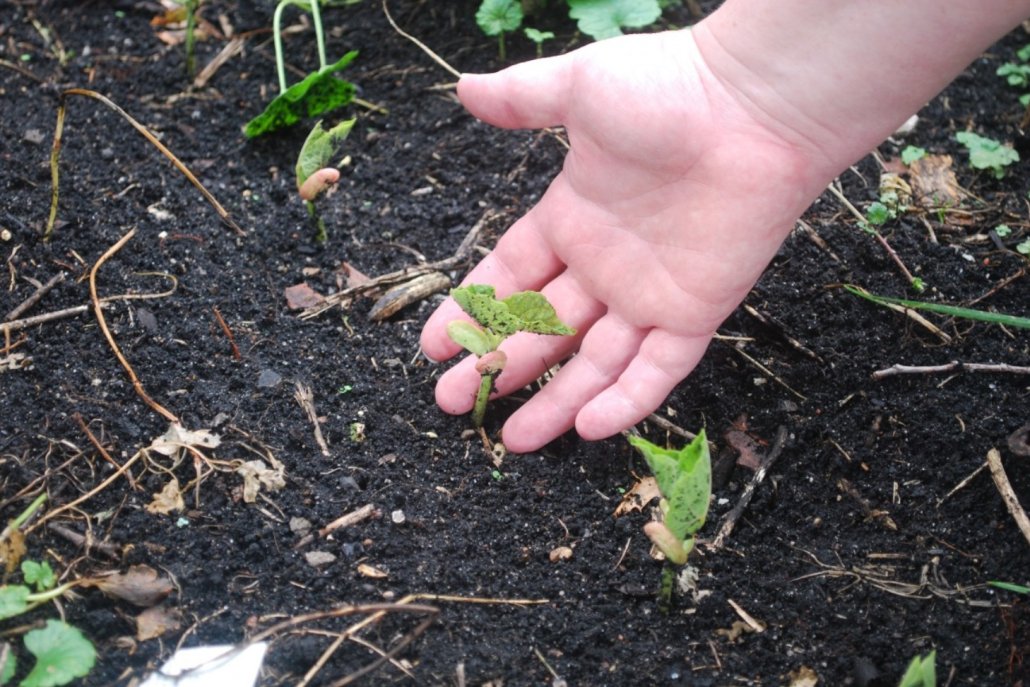
Chinese study shows how conservation agriculture improves productivity under warming conditions by increasing carbon input and stimulating microbial growth
by Matteo Cavallito
Conservation agriculture improves soil health and yields even in response to rising temperatures. This is suggested by an experiment conducted by a group of scientists including researchers from China Agricultural University and other international academic institutions. The research, published in the journal Nature Communications, analyses the effects of this cultivation method on soil properties, microbial diversity and crop productivity under warming conditions.
The investigation, the authors write, “provides insights into the potential benefits of conservation agriculture for long-term sustainable food production because improved soil health improves resilience to the effects of climate warming.”
Conservation agriculture
Climate and soil degradation are closely related concepts. The Planet’s food security, the researchers recall, is being challenged by global warming and population growth. At the same time, soil degradation associated with intensive agriculture has reduced land availability. Among the land management options to increase productivity and promote adaptation to climate change isconservation agriculture, a solution designed to protect soil health.
“Soil health is a holistic concept that integrates the biological, physical and chemical aspects of soil, demonstrating the continued capacity of soil as a vital living ecosystem,” the research explains.
Moreover, “Conservation agriculture encompasses reduced or zero/no tillage, permanent soil cover, and diverse crop rotations, and is applicable in many different farming contexts.” Environmental benefits include increased organic carbon stocks and biodiversity. According to some estimates, this form of agriculture is now adopted on 12.5% of arable land in one third of the countries on the planet.
The research
The study assessed the effects of warming on soil health and crop yields by comparing the conservation system – i.e. characterised by the use of a permanent cover of crop residues and no tillage – and the conventional system (removal of residues and annual tillage). Contribution of the soil microbiome was also under scrutiny.
The hypothesis was that, as temperatures rise, conservation agriculture improves productivity by increasing carbon input above ground (through crop residues) and below ground (at root level) and stimulating microbial growth.
Field experiment lasted eight years and was conducted in a plain in northern China. The researchers used a typical crop rotation system (wheat in winter, maize in summer) by applying two levels of heat using infrared heaters: room temperature and 2°C increase. The results proved the efficacy of conservation agriculture.
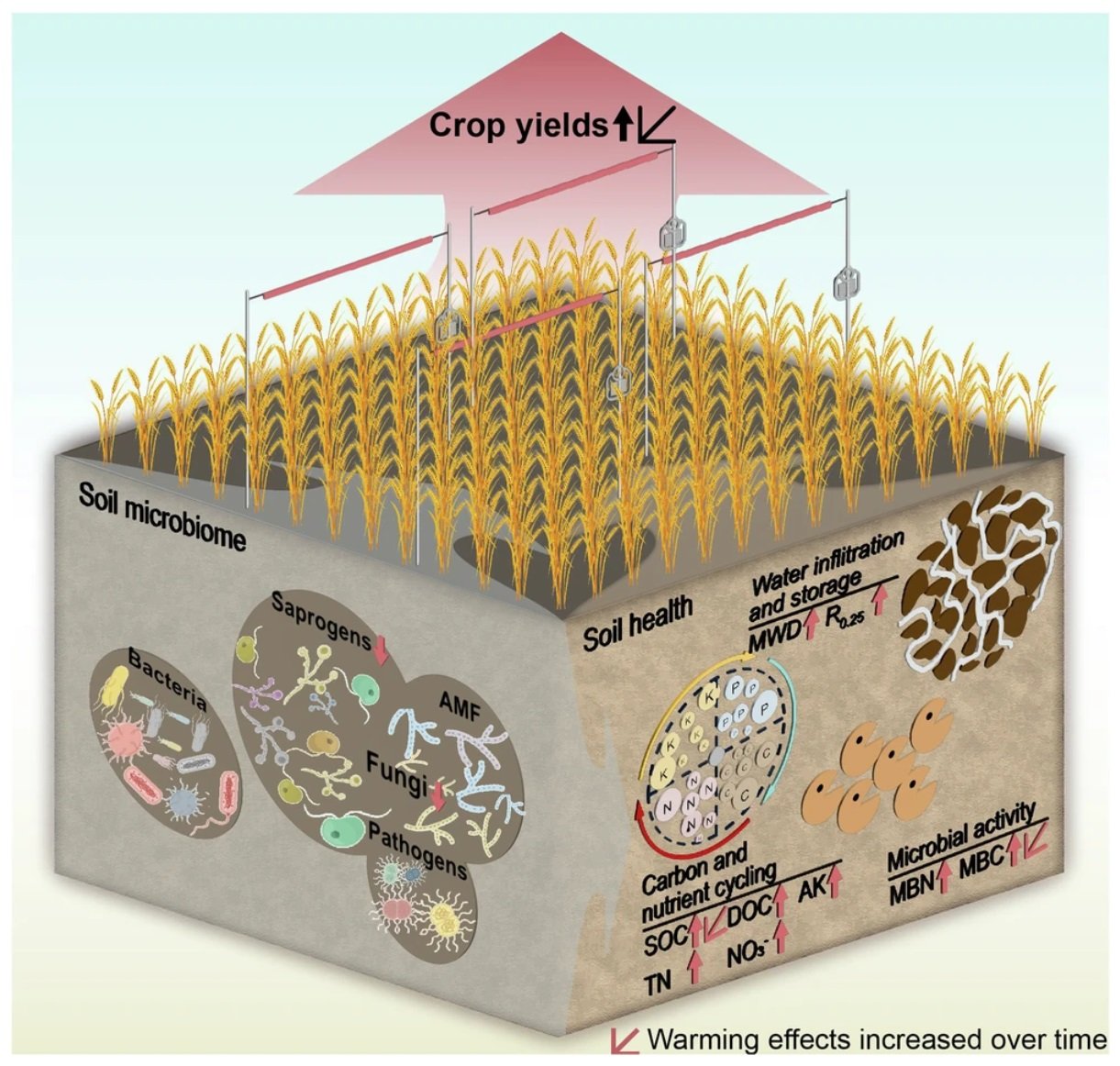
Improved soil health, with increased water infiltration and storage, carbon and nutrient cycling and microbial activity, and changes in fungal diversity have contributed to higher crop yields in conservation agriculture. Image: Teng, J., Hou, R., Dungait, J.A.J. et al. Conservation agriculture improves soil health and sustains crop yields after long-term warming. Nat Commun 15, 8785 (2024) Attribution 4.0 International CC BY 4.0 Deed
Soil health and yields improve with climate
Researchers considered 17 different properties that make up an aggregate index of soil health, the Cornell Soil Health Assessment. They then calculated the score obtained under different management conditions (conventional or conservation), depth and temperature. “The soil health score under conservation agriculture was 21.5% and 7.1% greater than conventional agriculture at 0–5 cm and 5–15 cm depth in ambient conditions, respectively.”
Furthermore, , “Warming amplified the advantages of conservation agriculture in terms of soil health, and resulted in a 31.4% and 10.1% greater soil health score than conventional agriculture at 0–5 cm and 5–15 cm depth, respectively.”
Finally, conservation agriculture under warming conditions increased soil organic carbon and fungal-rich microbial biomass with increased water infiltration and storage, carbon and nutrient cycling. In this context, the researchers noted a 9.3% increase in wheat yield over eight years.
 Photo: Pexels free to use CC0
  SOUL
SOUL Vincent Sasseville/Nunataryuk Attribution-NonCommercial-ShareAlike 2.0 Generic CC BY-NC-SA 2.0 Deed https://www.flickr.com/photos/gridarendal/49555909433