Drones are the new allies of hemp farmers in the US
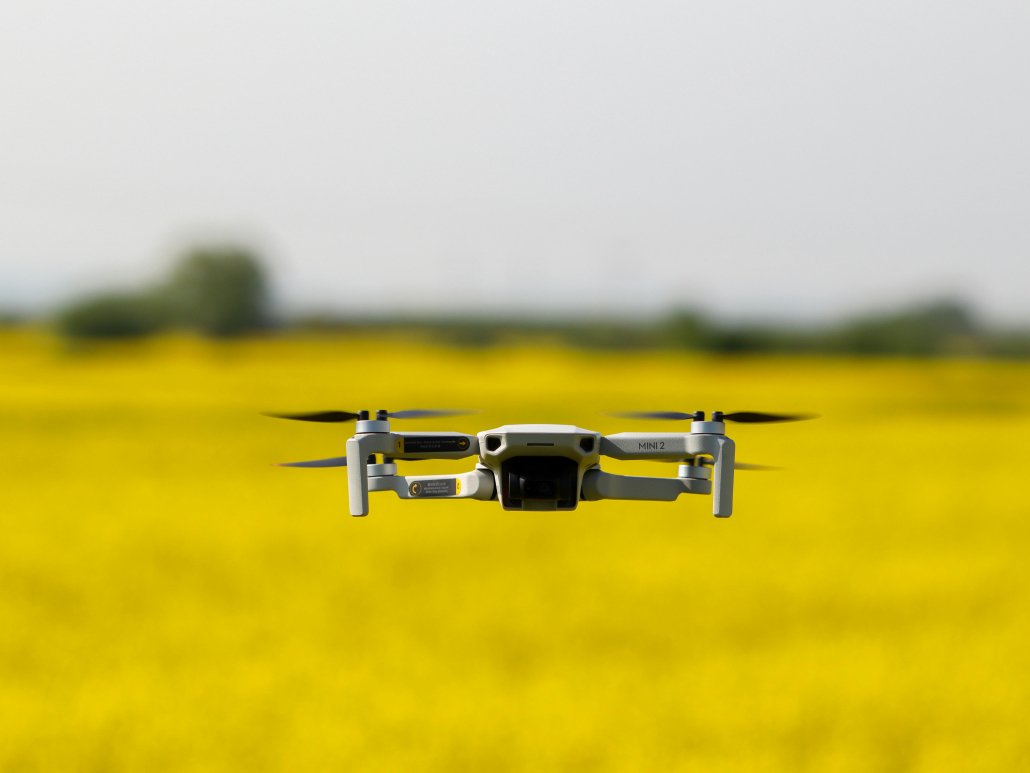 Photo: Nikola Tomašić Pexels free to use
Processing of images captured by drones, a study from the University of Florida states, makes it possible to assess the health and growth status of plants by providing guidance on the optimal fertilizer dose
by Matteo Cavallito
With the help of artificial intelligence, drones can assess the health of crops by providing crucial information to farmers. That’s the conclusion of researchers at the University of Florida‘s Institute of Food and Agricultural Sciences who used aerial imagery to determine the optimal amount of nitrogen fertilizer in sativa hemp plantations.
“We’ve shown that farmers with access to aerial images using red and near infrared (NIR) detection can spot differences in plant health by their color when scanning their fields,” Zack Brym, professor of agronomy and co-author of the study published in the journal HortScience, said in an article released by the same university. A crucial fact, he pointed out, that can determine the yield and quality of crops themselves.
A balanced fertilizer supply for hemp
In the U.S., the cultivation and trade for industrial use of cannabis sativa – which is characterized by an extremely low concentration of tetrahydrocannabinol, the plant’s psychoactive constituent – was finally legalized in 2018. Four years later, official statistics from the Department of Agriculture noted, their crops covered 500 hectares worth more than $200 million.
“Although hemp has been successfully cultivated,” the study notes, “the current lack of hemp Nitrogen fertilizer recommendations can pose a challenge for profitable hemp production from underfertilization and environmental impacts from overfertilization.”
In the first case, the authors recall, the plant may suffer from chlorosis, or yellowing of the foliage, stunted growth and reduced yield. In the second, there is a risk of producing too much leaf material with little benefit to valuable flower generation. Excess nitrogen, moreover, can spread in the environment through leaching with obvious effects on ecosystems.
Drones capture plant growth and health
For three years, the study recalls, researchers grew a popular flowering hemp variety by applying six increasing doses of nitrogen fertilizer. Using drones equipped with multispectral cameras, they successively flew over the fields a month before harvest to capture images from above. These measured how green and healthy the plants were, highlighting different levels of growth based on different nitrogen rates.
“The N application rate of 224 kg·ha−1 N resulted in significant increase in hemp biomass from 112 and 56 kg·ha−1,” the study points out, “whereas significant increases in floral yield and canopy area were observed just at 112 and 56 kg·ha−1 N.” Ultimately, the authors point out, “the study found that using a moderate amount of nitrogen – 112 to 168 kilograms per hectare – resulted in the healthiest plants and greatest flower yields.”
Artificial Intelligence is decisive
The drone images revealed clear differences in the size and color of the plants, which corresponded to the amount of biomass harvested, thus providing an accurate view of their condition in the soil. Enabling this, of course, was the use of AI to process images of canopy’s reflectance – or the measure of the percentage of light or other radiation reflected from the leaf surface – captured by drone flights.
“Canopy area and plant indices consistently showed strong positive linear correlation with aboveground biomass,” the study explains.
That means, in other words, that aerial image collection “can be an effective tool for monitoring crop growth and health while informing N management decisions in hemp cropping systems.” Thus promoting efficient fertilizer use and limiting nitrogen leakage to benefit crop yields and the environment.
 Melissa McMasters Attribution 2.0 Generic CC BY 2.0 Deed
  Angal insect Attribution-ShareAlike 4.0 International CC BY-SA 4.0 Deed
  ECHO
ECHO