Protecting the forest floor helps preserve soil carbon
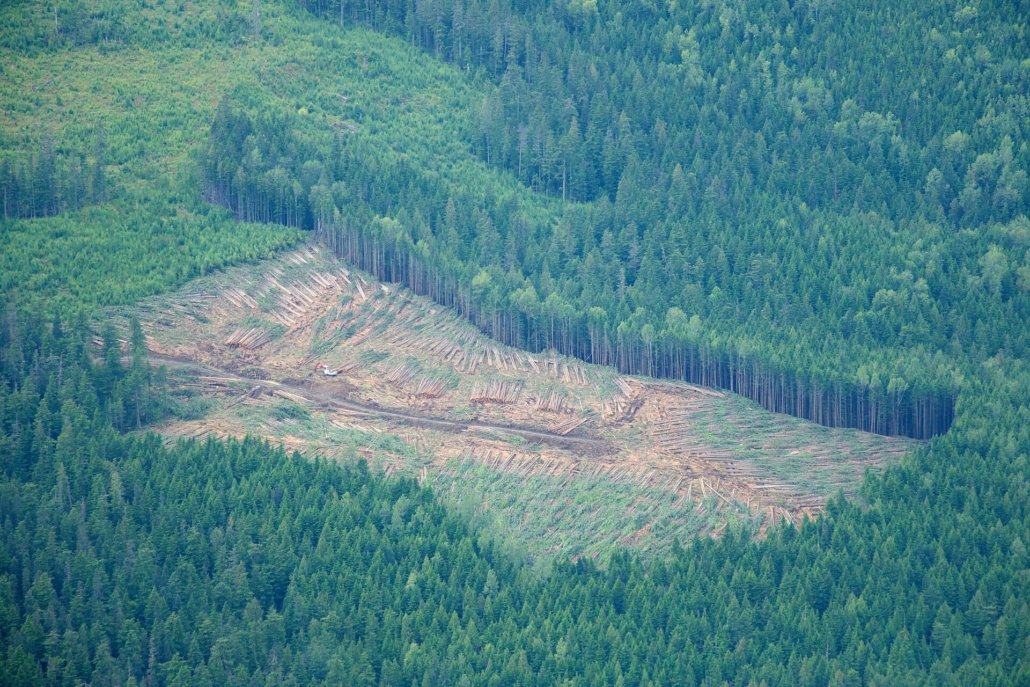 Sam Beebe, CC BY 2.0
Preserving the forest floor helps retain soil carbon after logging. Removing it, a Canadian study explains, causes losses that persist for decades
by Matteo Cavallito
Protecting the organic layer covering forest soils helps preserve their carbon even after trees are harvested. Removing it, by contrast, causes substantial losses that can persist for many years. This is the main finding of a study published in Journal of Geophysical Research: Biogeosciences, based on twenty years of observations at twelve forest sites in British Columbia, Canada.
The research shows that the effects of timber harvesting depend on harvesting practices and how well the soil surface is protected. “Protecting the forest floor from additional harvest disturbance resulted in minimal impact on soil carbon pools”, the authors write. When this cover remains intact, soil carbon stocks remain relatively stable even after two decades.
A carbon reservoir worth protecting
Forest soils hold more than 40% of the carbon stored in the world’s forests, according to estimates. Assessing the losses associated with tree harvesting, however, is complicated. Plant species, climate, soil characteristics and past management practices can all influence the results. Fires, insects and disease also alter stocks. Moreover, several studies do not clearly distinguish the effects of tree removal from those of machinery-related disturbance.
The Canadian study, covered by Eos, the American Geophysical Union’s magazine, focuses on the surface organic layer made up of decomposing plant material. The scientists analysed this layer, excluding freshly fallen leaves and other plant litter from their samples.
Protecting this cover, they explain, is a priority: “The overall effects of timber harvesting on soil carbon stocks (SCS) in these primary forests were generally minor over the 20-year period when the forest floor was undisturbed”, the study states. These findings concern SCS, however, rather than the forest’s overall balance, which also includes the carbon contained in harvested trees.
Twelve Canadian sites
The authors used data from the British Columbia Long-Term Soil Productivity programme, comparing twelve sites across four biogeoclimatic zones in the Canadian province. Each site comprised nine plots combining three levels of compaction with three organic matter removal treatments. In the first, only the trunks were removed, leaving treetops and branches on site; in the second, these residues were also removed; in the third, the surface organic layer was removed as well (an extreme experimental treatment that does not represent standard forestry practices).
Samples were collected before harvesting and 5, 10 and 20 years afterwards, examining both the organic cover and the mineral soil to a depth of 20 centimetres. Where the surface layer remained intact, its carbon stock had declined by an average of 5% after two decades. This change was not statistically significant. At the same time, stock in the mineral soil had increased by 14%.
The effects of removal persist after 20 years
Retaining harvest residues offered an additional benefit: “The difference in the SCSFF pool between stem-only harvesting and whole-tree harvesting at Year-20 represents a difference of 3.6 Mg carbon ha−1, or 15% of the initial SCSFF pool”, the study states. The difference between the two treatments therefore amounted to 15% of the initial organic-layer carbon stock, although it was only marginally statistically significant.
Under the extreme treatment, by contrast, total soil carbon had declined by 52% within five years and remained about one-third below pre-harvest levels after twenty years.
Slow recovery, especially at dry sites
Where estimates could be made, total SCS would take 22 to 86 years to return to their initial levels, assuming the observed rates remain constant. Local conditions, however, make a difference. “Sites at the lowest latitudes and largest moisture deficits (IDFdm) have not shown any sign of recovery in 2 decades”, the authors explain. Compaction, meanwhile, increased soil bulk density but had no measurable effects on carbon stocks under the experiment’s controlled conditions.
Although compaction affected the soil’s physical properties, it produced no measurable changes in carbon stocks. Protecting the organic layer and managing harvest residues therefore mattered more for soil carbon stocks.
The authors therefore stress, “future harvest operations that are designed for preservation of the forest floor by limiting excessive soil disturbance will greatly reduce potential soil carbon losses in the first two decades following harvest”. Safeguarding carbon stocks, they conclude, also requires careful planning of harvesting operations and preserving the soil’s organic cover.
 Photo: Thomas Bjørkan CC BY-SA 3.0
 Re Soil Foundation