Pollination in Australia more than halved in 50 years according to orchids
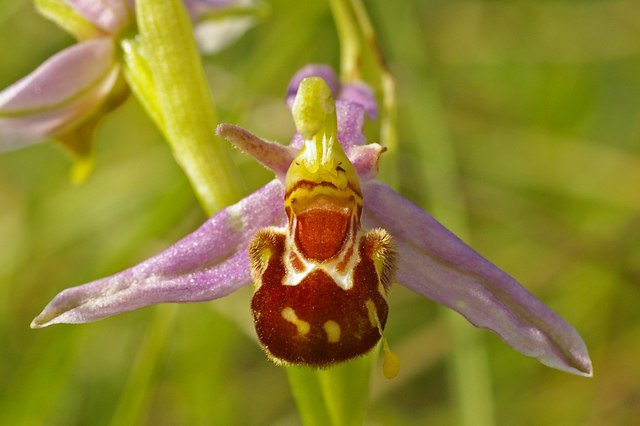 Ian Capper Attribution-ShareAlike 2.0 Generic CC BY-SA 2.0 License
 Thanks to their limited “flexibility,” orchids are early indicators of the crisis affecting insects. Since the 1970s, an analysis by the University of Canberra reveals, pollination in Australia has declined by 60%
by Matteo Cavallito
Orchids can also provide insights into global ecosystems and pollination in particular. This is highlighted by a study published in the journal Global Change Biology, which on the one hand emphasizes the ability of these flowers to act as early indicators of insect health thanks to their highly specialized biology, and on the other points out how these insects have long been under pressure, threatening both global biodiversity and food security. The research, led by a group of scientists from the University of Canberra in Australia, was also reported by the network The Conversation.
A crisis that is difficult to assess
“Pollination is vital to the reproduction of about 80% of flowering plants and global evidence suggests that pollinators may be particularly vulnerable to human disturbance, raising concerns that we may be facing a ‘pollination crisis’ where plant reproduction fails”, the research says. Several factors are driving this phenomenon, including land-use change, intensive agriculture, and the widespread use of pesticides associated with it.
Added to this is climate change, which affects temperatures and precipitation, “shifting species phenologies and ranges, placing pollinators out of sync with the timing and location of peak flowering for many plant species”.
The problem, researchers add, is that from the outside ecosystems can appear healthy even when the pollination crisis reduces insect numbers. Monitoring the phenomenon, therefore, requires relying on effective indicators. And this is where orchids come into play.

Bees and pollinating insects in general play a crucial role in ensuring our food security and supporting ecosystems. Here are five of the “services” provided by their presence. SOURCE: FAO Archives
For orchids, pollinators are irreplaceable
Plants, the authors continue, can generally be described as “flexible”: if one pollinator disappears, another can take its place. But for many orchid species this is not the case. Many of them, in fact, depend on a single pollinator or on a very small group of these insects, which are attracted by specific scents, colors, and shapes. As a result, most orchids are unable to adapt to changes—in climate, soil, and so on—that affect pollinators, with the risk of no longer being able to reproduce.
Demonstrating a long-term decline in the phenomenon, however, is extremely difficult. And studies that monitor reproduction over decades are few. While the crisis is well documented in Europe and North America, comparable evidence in Asia and Australia, in particular, is scarce. For this reason, the authors sought to fill the gap by focusing on the country’s herbaria, which, among various specimens, contain more than 10,000 orchid flowers.
Pollination in the country has fallen by 60% over half a century
The effects of pollination failure on orchid populations may not be visible for years. Many specimens, in fact, can retreat into an underground tuber when they do not flower and continue to live for decades. What they do, however, is leave traces of the presence of pollinators, which, when visiting a flower, remove packets of pollen even from dried specimens destined to be collected in herbaria.
By analyzing these preserved flowers – which work as time capsules – researchers found that pollination has declined by more than 60% since the 1970s, especially in areas characterized by intensive land use and a significant increase in temperatures.
“Declines in pollination services occurred across species pollinated by different taxa and with varying threat status”, the study explains. “Sexually deceptive species showed more pronounced declines in pollination services than food-deceptive species, whereas no decline was detected in the self-compatible species”. The phenomenon, in any case, remains global. Other studies in South Africa and the United Kingdom, with specimens also originating from the Americas and Europe, have likewise highlighted a general downward trend in pollination. “Pollination services play a vital role in the maintenance of terrestrial ecosystems globally and they are under threat from the intensification of human activities”, researchers conclude.
 Photo: Thomas Bjørkan CC BY-SA 3.0
 Re Soil Foundation