2050 is the point of no return in halting the decline in biodiversity in Great Britain
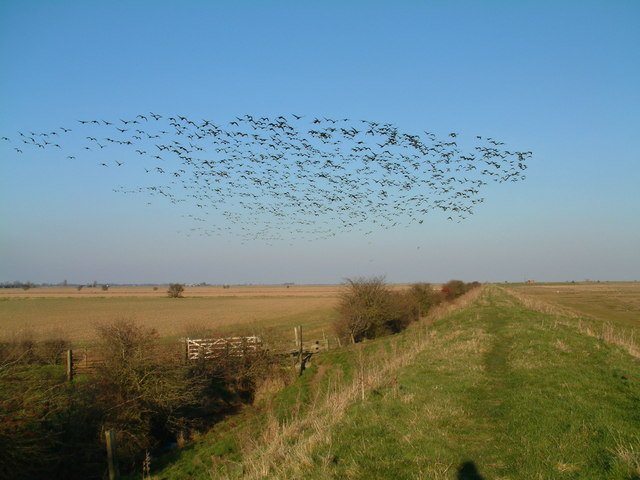 Ian Sharp Attribution-ShareAlike 2.0 Generic CC BY-SA 2.0 Deed
 In the worst-case scenario, a study highlights, at least 200 species are at risk of extinction while 9 out of 10 plant habitats will face lasting changes. And there is ever less time to reverse the course
by Matteo Cavallito
There are just over two decades left for Great Britain to make key decisions on climate mitigation and land management capable of halting an otherwise inevitable decline in biodiversity. This is the warning contained in a new study by the UK Centre for Ecology and Hydrology (UKCEH), a research institute with multiple sites in the United Kingdom and Ghana, which for the first time identifies the course changes needed in a country already particularly affected by the loss of species variety. According to the scientists, 2050 is a “point of no return” beyond which the consequences of previous initiatives for the future of wildlife and ecosystem services will become irreversible.
Climate and land-use impact on biodiversity
“Climate and land-use change are recognised as principal drivers of biodiversity change,” explains the study published in Nature Communications. These threats are reorganising biodiversity, including species range shifts and compositional change, as well as reducing species richness.” For this reason, “anticipating future change in biodiversity and ecosystems is therefore one of the most pressing issues of contemporary ecology.”
The authors therefore tried to hypothesize how biodiversity in the country could change in the coming decades by combining real data on plants, birds, and butterflies with high-resolution environmental information.
To do this, they used an approach known as Generalised Dissimilarity Model (GDM), which allows measuring how much species communities differ between locations based on environmental conditions, allowing the study of entire ecosystems and not single species. Applied to different future scenarios of climate and land-use change, the model estimates the expected variations, the appearance or disappearance of habitats, and the number of species destined for extinction.
A fifth of species could go extinct
Scientists modeled six future scenarios with different total levels of greenhouse gas emissions and variable land management practices. Studying the impact of these factors on 1,002 plants, 56 butterfly species, and 219 bird species, the authors found “extensive community reorganisation under all scenarios, with the disappearance of current bioclimates and emergence of novel ones.” Even in moderate warming scenarios, in other words, there would still be disruptions for biodiversity.
In the worst-case scenario – characterized by an increase in fossil fuel combustion and a 4-degree warming – the consequences would be decidedly severe. In total, the researchers explain, already by 2070 over 200 species belonging to three key groups – 196 plants (20% of existing British species), 31 birds (14%), and seven butterflies (12%) – would end up going extinct. These losses would exceed more than three times the historical extinction rate. Many areas of the country would lose up to 20% of their existing local species.
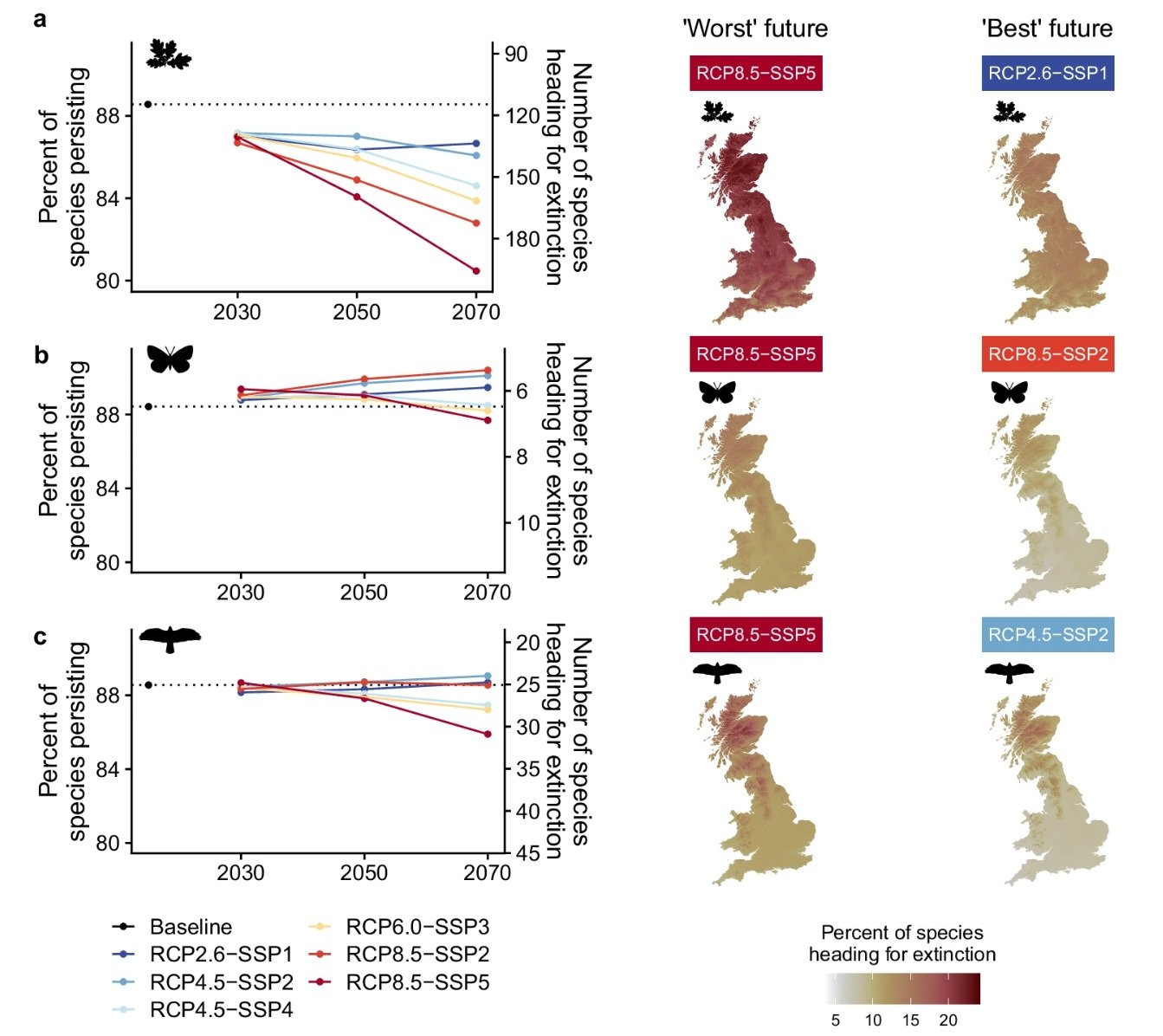
In the worst-case scenario, by 2070 many areas of the country could lose up to 20% of their existing local species. Image: Cooke, R., Burton, V.J., Brown, C. et al. “Future scenarios for British biodiversity under climate and land-use change“. Nat Commun 17, 2704 (2026). https://doi.org/10.1038/s41467-026-70064-4
Next 20 years are crucial
Even though the study focused on a certain number of species, the authors argue, the hypothesized changes would also affect other wildlife. In the most extreme scenario, they explain further, 89% of British habitats would appear very different, with a profoundly altered composition of plant species. This phenomenon would have consequences for soil health, nutrient cycling, pollination, and food production, with effects on wildlife and people.
Conversely, timely interventions such as strong action on emissions, sustainable land management, a reduction in meat and dairy consumption, and, in general, greater environmental stewardship are expected have positive effects.
“Scenarios featuring reduced emissions and a more sustainable society could bend the curve of loss, reducing species heading for extinction by 32% for plants, 14% for butterflies, and 20% for birds,” the study emphasizes. Even though the time available remains limited. “The divergence between unsustainable futures and more sustainable futures becomes more apparent from the 2050 s time slice onwards,” the scientists conclude. “Thus, we show that actions during the next 20 years are critical to mitigate the worst effects of climate and land-use change for biodiversity in Britain.”
 Gareth James CC BY-SA 2.0 Attribution-ShareAlike 2.0 Generic
  Mokkie/Wikimedia Commons – CC BY-SA 3.0
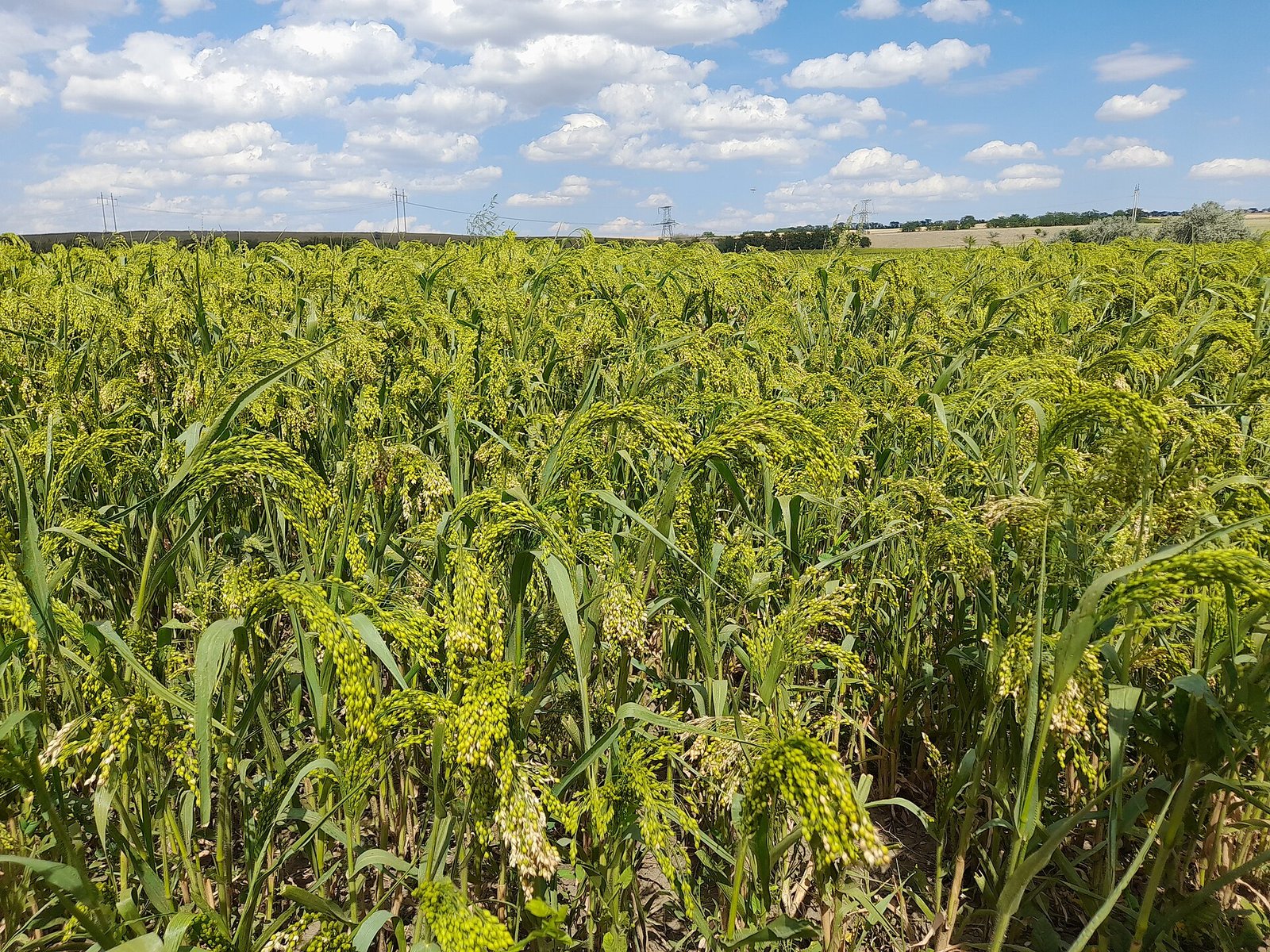 Yuriy Kvach/Wikimedia Commons – CC BY-SA 4.0